
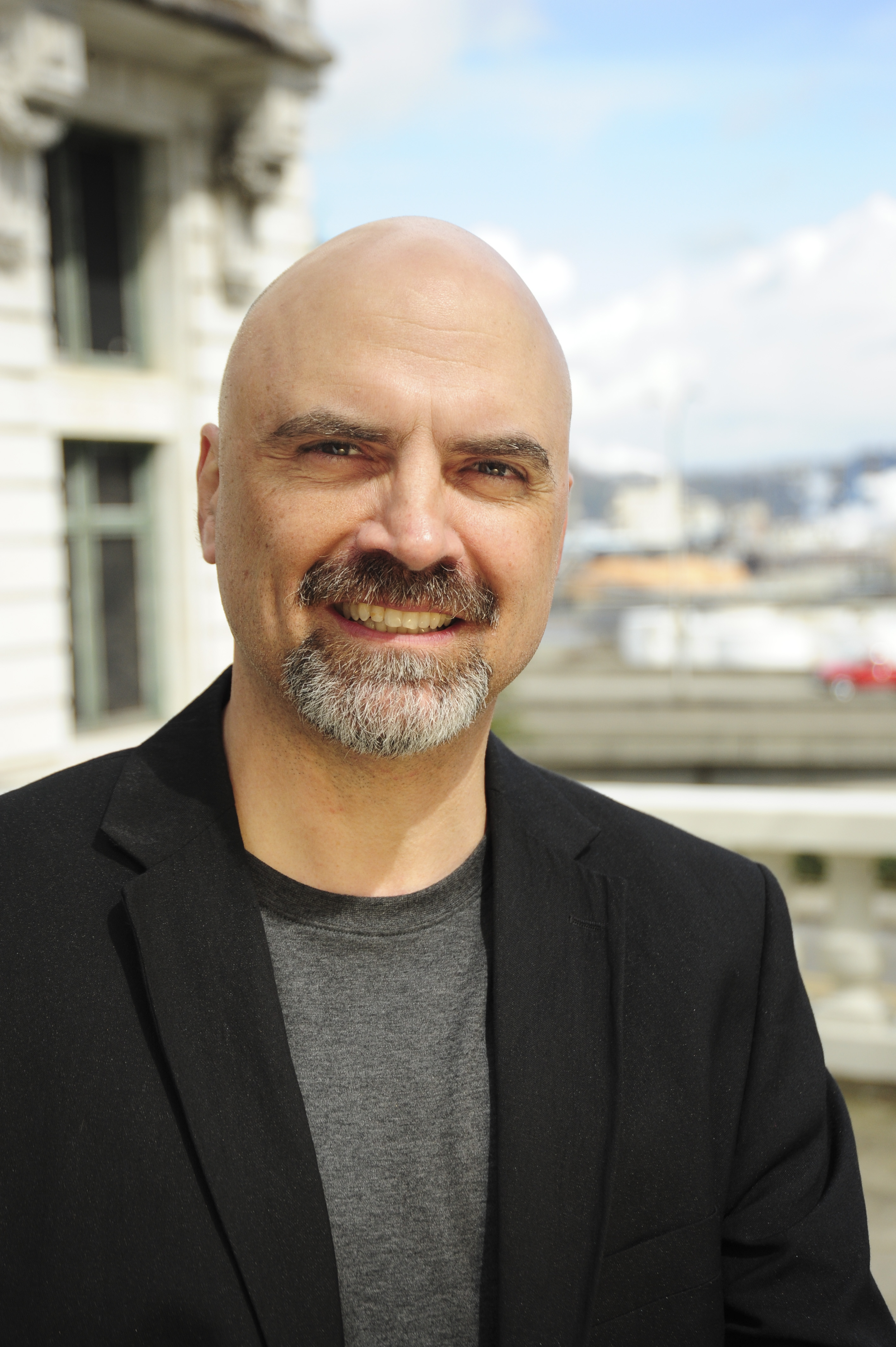
Tacoma City Council Candidate David Boe Answers Tough Urban Questions From the Tacoma Sun

Introduction:

Below are the questions and responses sent to David Boe, candidate for Tacoma City Council District #7. This at-large district is current represented by councilmember Boe who is running to be “retained” in the district.
.
The questions being asked to Tacoma City Council candidates this year from the Tacoma Sun are very specific and address such issues as the best method to restore the Winthrop Hotel, removing harmful Parking Requirements in downtown Tacoma, rebuilding Tacoma Streetcars, and addressing the Felon Dumping Ground Issue.

.

Tacoma Sun Candidate Questionnaire
Candidate:  David Boe
Position:  Tacoma City Council – At-Large No. 7
.

Q I: What education and experience do you have to qualify you to be a member of the Tacoma City Council? What books have you read that you believe that would give you insights as to how to be an effective councilmember?
.

Answer:  I guess the short answer is that since I was appointed to the Tacoma City Council in January 2010, the current City Council believes that I have the education and experience qualifications for this position.  Having been a member of the Tacoma Planning Commission the previous 5-years to the appointment (the last three-years as Vice-Chair), they recognized their need to have a member with expertise on land use issues.   I also bring my experience from serving on the Tacoma Arts Commission where I was appointed to be a member of the 1992 Cultural Plan Steering Committee.  A unique qualification that I have for this city-wide position is that my wife and I have lived in both the South End and North End of Tacoma – and as an architect I have worked on projects across every district in the city (so Boe Knows Tacoma).
.
My formal education started with completing an Associate of Arts Degree (Liberal Arts) at Normandale Community College, followed by a Bachelor of Arts in Architecture at Iowa State (Go Cyclones), and the equivalent of a Master of Architecture at the Architectural Association School of Architecture in London.  During my five years in London, I spent two-years as the Project Coordinator for the Canary Wharf Light-Railway Station .  Since 1996 I have had my own architectural practice in Downtown Tacoma – and I think the perspective of being a successful small-business owner is an important voice in the make-up of the City Council.
.
As for books that are appropriate to my brief tenure on the City Council, I think Cervantes’ ‘Don Quixote,’ Calvino’s ‘Invisible Cities, and ‘Surely You Must be Joking Mr. Feynman.
.
What many folks may not comprehend about a City Manager-led form of government is that individual council members must be able to work well with their peers on the dais – as it takes at least 5 votes to get anything accomplished.  Trained as an architect, I am ingrained with a collaborative spirit and working with my fellow council members has been the most gratifying aspect of this challenging, but rewarding, service to the citizens of Tacoma.  Having been married to the same woman for the past 29 years, I do understand the value of a good compromise on occasion.
.
Q II: Growth management
.
Question: Over the last 30 years, Pierce County has been known for suburban sprawl which has caused the loss of farmland, pollution, traffic congestion and disinvestment in Tacoma. During the last 10 years, Tacoma has grown less than 5,000 residents while Spokane grew by 13,000 and Pierce County grew by 95,000.  If you are elected, would you work to add more density to the City of Tacoma? How would your plan, if any, be different from what is in place now?
.
Answer:  Density, Density and more Density (thus the moniker ‘Density Dave’).  I was on the Planning Commission when the City Council passed the Mixed-use Center Zoning Ordinance in 2009 – but in my opinion these regulations did not go far enough to provide incentive for development – and cracking this issue open is one of the main reasons I have decided to run for a full term (that and an awareness that very few members of the past City Council(s) have had a deep understanding of urban design).  The first issue I brought to the table once on council, and with luck will be passed this year, is to go to a market base parking requirement for new construction in our urban centers and commercial zones.  Many of our zoning regulations are out-of-date and provide more barriers than incentives for new development.  I contend that the 6th Avenue Business District continues to flourish due to existing buildings being allowed to be renovated and/or converted without requiring city mandated additional off-street parking lots.
.
Another issue is Land Banking (of which the City of Tacoma is just a guilty as the private market).  We need to get development on these ‘vacant’ parcels in order to positively change the market for new development.  Right now you cannot actually lease new construction for what it costs to construct the project.  Think about it.  The cost of a new building is pretty much the same whether you build it in Tacoma or in Kirkland (not including the land that is) – but in Kirkland you can get mid-$20s to $30 per square foot whereas the market in Tacoma is closer to $12-15 per square foot.
.
So most of the development that happens in Tacoma is by individuals or companies that want to develop here (thinking with their heart more than their head in many cases) or they require significant government assistance (City, State or Federal) to make their projects pencil (e.g. UWT, museums et al, Elks).  There is no silver bullet to solve this ongoing conundrum, but we need as many development tools in the toolbox as possible AND look at every policy decision to see how it creates additional residential density in our urban centers.  For example, the route of the streetcar expansion, for me, should be the one that maximizes transit oriented development opportunities.

.
Oh, and we should not be building anymore surface parking lots in our urban centers – another change that needs to be incorporated into the zoning code (i.e. new stand alone surface parking lots should not be allowed or permitted as a primary use in our urban centers).
.
Q III: Pierce County Felon “Dumping Ground” Issues
.
Question: As you know, Tacoma and Pierce County have a disproportionate number of released felons placed by the Department of Corrections as described in the Tacoma City Club report: 30 Years of DOC in Pierce County, Was It worth It? http://cityclubtacoma.org/images/uploads/DOC_Report_final1.pdf.
Have you read this report? What specific steps would you take, if any, to reduce the number of felons being place in Tacoma and Pierce County?
.
Answer:  I had not read the Tacoma City Club Report until you referenced it here in this question, although I was a new member on the City of Tacoma Planning Commission in 2005 when the Special Needs Housing Moratorium was enacted due to the concerns about an overly high concentration of release facilities in the Hilltop.  In my opinion this report accurately portrays the situation.  Like other job growth policies that have been introduced into Tacoma over the years, it was sold as an ‘economic generator’ without looking at the possible unintended consequences of such a success (e.g. Immigration Detention Center in the Port of Tacoma).  So local leaders courted the Department of Corrections in the past, agencies and organizations were successfully set-up to meet the need, and very low cost of housing makes it economically more viable than other urban centers in the state (see Item No. 2 above).  I pledge to continue working at the local and state level for Tacoma and Pierce County to reduce the total number of work release offenders to our ‘fair share’ distribution with the rest of the state.
.
Q IV: Restoration of Winthrop Hotel
.
Question: A great many Tacomans would like to see the Winthrop Hotel restored as Spokane has restored the Davenport Hotel. What is your position on this issue? What plan would you support, if any, to restore the Winthrop Hotel back into a hotel? What ideas do you have to make this goal of Tacomans a reality?
.
Answer:  I think the best way forward is to consider putting together a multi-faceted group of developers with a wide array of funding sources – and look at dividing the building interior into a number of distinct zones.  For instance, storefront retail could be managed by a commercial retail developer, the Crystal Ballroom possibly managed by the Broadway Center (which would give it another unique venue for performances), the lower floors of the tower for student housing related to UWT, and the top floors of the tower managed by an experienced hotelier.
.
All of this will require close coordination with an entity like the Tacoma Housing Authority to work through the HUD voucher program that the current residents are using for their accommodation – and possibly look to additional housing being added, or converted, in the area to meet the existing population need.  I also think we need to look at incorporating a Historic Tacoma Public Development Authority in order to address the cause of historic buildings that are facing critical challenges like the Winthrop (e.g. Old City Hall and the now lost Luzon Building).

.
Q V: Rebuilding Tacoma
.
Question: Despite the progress made, Tacoma still has a large number of vacant lots, and empty and blighted buildings relative to other west coast cities. In fact at least two new surface level parking lots have been created downtown in the last couple of years (the Sauro site and the site where the Luzon building was). What role can you and the City of Tacoma take, if you are elected, to support the rebuilding of downtown Tacoma and Tacoma’s mixed use centers?
.
Answer:  I voted a loud ‘NO’ on Sauro.  But as noted earlier, it takes 5, not three, to win the day.  In addition to what I presented in response to Question 2, we need to look at multiple development incentive options given the size of the task – and one of these is really about educating our County, State and Federal partners about the reality of funding huge road projects that in reality just make it cheaper to build sprawl out in the rural areas.  Yes we have GMA, but if we are investing billions in new roads to make it cheaper to build in Graham, why would someone invest in Tacoma?  We really need to shift the paradigm.
.
I don’t want to get all James Howard Kunstler on you, but until we hit $8 a gallon, we’ll need to look at every opportunity to provide incentives for development in our urban centers.  Providing transit options will be a huge selling point in my opinion.  Tacoma is blessed with a wide variety of neighborhoods and growing Business Districts that are literally 10 minute by car, 20 minute by bicycle from Downtown.  McKinley Hill/East Side, South Tacoma, Central Tacoma, Hilltop, Stadium, 6th Avenue, and North End – many with amazing affordable historic housing stock.  This is a huge asset when planning for a connected city with transit, bicycle avenues, and good roads, curbs, gutters and sidewalks.  The Broadway LID has been a great boost to development and I will work to get similar projects to grow out from the neighborhood mixed-use centers to connect the entire City.  I am very proud to have worked on the Mobility Master Plan and making quality streets for pedestrians, bicycles, and transit is far, far overdue for Tacoma.
.
Q VI: Building Walkable Neighborhood Centers and Downtown
.
Cities such as Portland, Seattle, Bellingham, San Francisco have removed their off-street parking requirements to allow parking to be built based on market demand. This also has the benefit of reducing sprawl, reducing the cost of housing, reducing pollution and allowing the construction of walkable neighborhoods. Do you support removing the off-street parking requirement in downtown Tacoma and in Tacoma’s mixed use centers?
.
Answer:  I guess I should have read all of the questions before writing my earlier comments.  So do I support removing the off-street parking in requirement in Downtown Tacoma and in Tacoma’s Mixed-use Centers?  That is an absolute YES!  And with support from constituents this coming year, we can take another step to update the City of Tacoma Zoning Ordinance that still has regulations mired in 1980’s thinking.
.

Q VII: Restoring Tacoma’s Streetcars
.
Question: Many Tacomans support restoring Tacoma’s streetcar system. Gas prices are now at record levels. Do you support restoring the streetcar network in Tacoma? What steps would be needed to be taken to make this happen?
.
Answer:  Yes.  As noted previously, for me the routes need to reference the historic streetcar routes – as anyone who bicycles in Tacoma can tell you, you need to always think like a streetcar when planning your route to minimize the uphill climbs.  But we also need to make sure that the route makes damn good urban design sense AND maximizes neighborhood property for transit-oriented development potential AND we need to get real about ridership.
.
I personally think the route selected for the initial LINK was an urban design disaster once it leaves Pacific Avenue (and for those of you that like to pick on Tollefson Plaza – it’s the train that creates the majority of the problem – it doesn’t stop, it dissects the space so that is has no ability to have the much needed active frame to an open public space) – and thus it is going to take creative and critical thinking to vision routes that are appropriate for Tacoma now and the future (the current route up Commerce was based on politics and not good urban design).
.
You want to make Downtown and our Mixed-use Centers attractive for development?  Well then we better figure out how we can have a quality of life without relying on the single-occupancy vehicle.  And we are also going to have to get creative about financing and operations given the recent Pierce Transit funding situation.  I am not saying it is as easy as running the Streetcar to the Mall and/or to the Casino – but it might include long-range planning of a route to the Mall and/or to the Casino.

.
Q VIII: Pollution Issues in Tacoma
.
Question: The City of Tacoma is currently failing the pollution criteria set by the State of Washington. If elected, what specific measures would you take, if any, to reduce pollution in the city limits of Tacoma?
.
Answer:  The South Tacoma Air Quality Non-Attainment is a significant environmental health issue that is going to require close collaboration between all of the Federal, State, County and City partners to create an equitable solution (and it is an issue that in many ways is fueled by the need for a population to have inexpensive ways to heat their homes).  There is no easy way to address this issue – but I believe that my creative and collaborative skills can be an asset in developing a successful resolution.  It also is going to take some hard looks at how we think about wood fireplaces and wood stoves.
.
While Air Quality is huge –we also need to look at storm water capacities and sanitary infiltration.  I will continue to work with my council colleagues to foster and coordinate regulations that hit many of the environmental concerns on multiple levels.  For instance, the Urban Forestry project can help to increase the natural storm water capacity provided by an increase tree canopy (and reduce heat gain from the built environment) while infrastructure projects incorporate Complete Streets and Low-Impact Development Standards to address storm water issues at their source.  Tacoma has made great strides in addressing many of the industrial polluters – and in many ways we do not celebrate the advancement that we have made – but we still need to be vigilant especially regarding protecting ground water quality.
.
Q IX: Crime Reduction Proposal by City Manager Eric Anderson
.
Question: A few years ago, City Manager Eric Anderson set a goal to reduce crime in Tacoma by 50 percent in 14 months. Unfortunately, the goal was not reached.  What can be done in your opinion to reduce crime in Tacoma?
.
Answer:  We need to build on the great work already completed by the Community Policing Programs through the Police Sub-stations, great community programs like Safe Streets, and creating incentives/market for more quality affordable housing in our urban centers.  Tacoma needs to become a city of homeowners and not house renters.  Basically do you want live next door to a rental or another home owner?  Home ownership breeds strong community spirit – that and good curbs, gutters, sidewalks and street trees.
.
Q  X: Tacoma’s Central Neighborhood Council has posted dozens of articles on the electronic billboard issue located at:
http://cnc-tacoma.com/proposed-electronic-billboards.  What percentage of these articles do you estimate that you have read?
.
Answer:  I imagine I have read most if not all of them – and they have been very informative.  Well done to the CNC for leading the charge in response to this issue.
.
Q XI: What is your position in relation to the settlement proposal that the Tacoma City Council is considering regarding digital billboards?  Do you support it? If you were elected to the Tacoma City Council, would you authorize the City of Tacoma to expend financial resources to defend the Tacoma’s current 1997 billboard law?
.
Answer:  Well I did vote to proceed with the settlement precisely because it was going to require the Planning Commission to review the signage code and look into all the details of digital billboards.  Having served on the Planning Commission, and knowing the great individuals currently serving on the commission, I had complete trust in their abilities to delve into the details of the issue (something sadly we on Council are not afforded the luxury of time to allow us to typically get into the weeds).  I have been most impressed by the time and effort by the community in getting to the public hearings and submitting public comment and I have tried to make each of the Planning Commission public hearings to hear the testimony personally.
.
I have stated repeatedly that first we need to get our signage code right before we proceed to look at options for settlement or potential litigation action.  Our sign code needs to include design guidelines on the signage structure themselves in order to graphically illustrate non-conforming signs.  We also need to incorporate unequivocally clear language about the removal of non-conforming signs and have delineated a clear process for the removal of blighted signs (such as we have Code Enforcement for derelict buildings).  And for me, all non-conforming signs must come down before any new code compliant billboards are erected.
.
As for digital itself, I am not a fan of internally illuminated signs at all because they produce glare (i.e. you are seeing the light coming at you instead of reflected light off the surface of the sign).  If only indirect lighting is incorporated as a standard, I do not see how internally lit digital signs could be in compliance.
.
Q XII: Many cities near the City of Tacoma such as Fife and University Place as well as unincorporated Pierce County do not have a B&O tax which many people allege has caused businesses to move out of the City of Tacoma.  Last year, the City of Tacoma raised the B&O threshold to $250,000.  Hence, businesses in Tacoma grossing less than $250,000 pay no B&O tax.  If elected, would you support further raising the B&O tax threshold? If so, how far would you raise it?
.

Answer:  I am very proud to say that I voted a strong ‘Aye’ to the raising of the B+O threshold in my short tenure on the Council.  And yes, we need to look at ways to step-by-step remove this anti-business tax.  Having paid this tax as a small business owner, it amazes me that it is calculated on gross income.  Gross income!  I understand that this makes it simple to calculate the tax, but it totally penalizes businesses that are successful but net only a small amount of profit.  The reality is that B+O makes-up a significant amount of the City’s General Fund, so we are going to have to look at other ways to fund projects or at least look at a way of collecting a more equitable tax – and/or look at ways of funding projects and particular services outside of the General Fund.
.
Conclusion

.
It has been a privilege to serve on the City Council.
.
As a small business owner I have created jobs, maintained budgets and managed people.  As your elected City Council member I will continue to focus on job growth, controlling the line on expenses and holding the City accountable by asking tough questions.
.
I believe Tacoma is a beautiful city, but we have more work to do to improve the livability of our neighborhoods.  Through smart and responsible planning we can repair our streets and sidewalks, increase our transportation options and improve safety through-out Tacoma.
.
With your support I will continue to bring this vision forward.  I greatly appreciate your vote.

For those interested in learning more about my campaign check out http://www.voteboe.com and ‘friend’ my campaign on Face Book at ‘Vote Boe.’

To see some of my urban design thoughts for Downtown Tacoma, checkout my award winning ‘Imagine Tacoma’ blog on Exit133:  http://www.exit133.com/features/?c=Imagine_Tacoma
.
And for a little about this transition between full-time architect to full-time architect/part-time politician, check out this article from CityArts in March 2010:  http://www.cityartsonline.com/issues/tacoma/2010/03/drawing-inspiration-0 and
.
http://www.cityartsonline.com/issues/tacoma/2010/03/behind-scenes-march-tacoma-cover-shoot-david-boe
and
http://www.cityartsonline.com/issues/tacoma/2010/03/more-david-boe-interview

and Voter Pamphlet Information (page 28):  http://www.co.pierce.wa.us/xml/abtus/ourorg/aud/elections/archives/pri11/2011primaryweb.pdf

Tacoma City Council Candidate Karen Smitherman Answers Tough Urban Questions From the Tacoma Sun

.

Introduction:
.

Below are the questions and responses sent to Karen Smitherman, candidate for Tacoma City Council District #1. This district is current represented by  councilmember Spiro Manthou who is retiring from the council.  Thus, this is an open position.
.
The questions being asked to Tacoma City Council candidates this year from the Tacoma Sun are very specific and address such issues as the Winthrop Hotel, Parking Requirements, Tacoma Streetcars, and Felon Dumping Ground Issue
.
Q I:
What education and experience do you have to qualify to be a member of the Tacoma City Council? What books have you read that you believe that would give you insights as to how to be an effective councilmember?

Answer: Tacoma’s West End has been my home for more than 37 years. My husband, Bill and I raised our two daughters here where they attended Pt. Defiance Elementary School, Truman Middle School and Wilson High School. I’ve always been very active in serving our community whether it’s been as a member of our local PTA, the Pt. Defiance Zoo Society, the Tacoma Art Museum, Tacoma Urban Network, or the Pierce County Juvenile Justice Coalition. I will focus on creating local jobs, improving public safety, promoting transparency in government, providing better transportation mobility, and protecting our environment.
.
As a teacher and administrator for Tacoma Public Schools for 35 years, I’ve brought together business, labor, postsecondary institutions, organizations and agencies to solve problems and find solutions facing our children, youth and families throughout Tacoma. I received my undergraduate degree from the University of Washington in Sociology and Education and my Master’s degree from Pacific Lutheran University in Educational Administration and Principal Credentials. Where we are as a community requires a community conversation and collaborative approach to find solutions. How we define a problem will determine how we respond to it.
.
We need to have a conversation to define the benchmarks for success, accountability, and transparency. Through this crucial conversation we can lay the foundation to restore faith in government. We change the dynamics of the conversation by listening and defining together what we will fund, rather than what we will cut. It is only through this framework of benchmarks that citizens have a right to know and accountability with clear, well-defined objectives and timelines that we can hold each other accountable and avoid the blame game that can end up costing taxpayers millions of dollars. Please visit my webpage at http://www.karensmitherman.com to find out more about my vision for Tacoma.
.
The last three months, as part of the Community Awareness for Student Achievement Project, I’ve enjoyed facilitating a community book study focusing on the impact of poverty and race on student learning. A group of concerned citizens came together to read and have a conversation about how we can close the achievement gap. “Whatever It takes” by Paul Tough describes how Geoffrey Canada worked to establish the “Harlem Children’s Zone.” Our discussions on solutions to close the achievement gap begin the crucial conversation of how to ensure that all students succeed.
.
Growth Management
.
Q2:
Over the last 30 years, Pierce County has been known for suburban sprawl which has caused the loss of farmland, pollution, traffic congestion and disinvestment in Tacoma. During the last 10 years, Tacoma has grown less than 5000 residents while Spokane grew by 13,000 and Pierce County grew by 95,000. If you are elected, would you work to add more density to the City of Tacoma? How would your plan, if any, be different from what is in place now?
.
Answer: It was 20 years and 1.9 million people ago (in total population) that Washington enacted the Growth Management Act. The idea in 1990 was to divert people into places that could accommodate their number while preserving open space, critical habitats, shorelines and farmlands. The Growth Management Act was supported t put the brakes suburban sprawl and channel growth into existing cities. However, all we have to do is drive around Pierce County and question if the GMA really is producing the results it was intended to make. South Hill, Yelm Fredrickson and DuPont are all situated on the fringe of urban growth areas and have seen far greater growth than expected. The Puget Sound Regional Council adopted VISION 2040 in April 2008. According to their documents, VISION 2040 establishes a common vision for the future.

.
It consists of: an environmental framework; a regional growth strategy; policies to guide growth and development; actions to implement; and measure to track programs. I believe that all levels of government in the central Puget Sound’s four counties (King, Kitsap, Pierce, and Snohomish) will use VISION 2040 as a regional framework for making local decision.  Within the metropolitan and core cities like Tacoma, VISION 2040 supports concentrating population and employment growth in regionally designated growth centers. These centers serve as hubs for regional transportation, public services and amenities.

.

With the shape of how the South Sound developed in the last 10 years, you have to question whether the GMA really is producing the intended results. As a city we must have a vision and the leadership to move Tacoma forward and the definitely means that we must have an action plan that will increase density in Tacoma. The Executive Council of Tacoma, along with City and Community leaders must come together and develop a strong vision that addresses the reality of where we want to go in these very difficult economic times.
.
3) Pierce County Felon “Dumping Ground” Issues
.

Q III:
As you know, Tacoma and Pierce County have a disproportionate number of released felons placed by the Department of Corrections as described in the Tacoma City Club report: 30 Years of DOC in Pierce County, Was It worth It? http://cityclubtacoma.org/images/uploads/DOC_Report_final1.pdf. Have you read this report? What specific steps would you take, if any, to reduce the number of felons being place in Tacoma and Pierce County?
.

Answer: According to the City Club report released in February 2007, ”work release was originally conceived as a program of rehabilitation for offenders and a cost-effective alternative to incarceration, which provided important pre-release benefits to convicted felons.
.
Over time, Pierce County’s level of participation in the program exceeded that of most other counties within the state, leading to higher rates of post-incarceration placement within the county. In addition, offenders from other counties serving time in Pierce County correctional institutions remained in Pierce County for community custody supervision by DOC. High numbers of post-incarceration offenders residing in the county result in higher crime and other negative costs.” Our own State Legislators Jeannie Darneille, Steve Conway and Steve Kirby introduced House Bill 1733 which obtains equitable distribution of work release centers and released felons around the state. This “fair-sharing” burden must be continually re-evaluated so that Tacoma and Pierce County only receives its fair share and has the commitment that DOC has the ability to supervise those who are released into our county. The Joyce family lost Paula when a convicted felon on “pre-release” and supposedly “under supervision” smashed his car into hers. This cannot happen to another family. The system must be “designed to achieve the results it achieves.”

.
Restoration of Winthrop Hotel
.
Q IV:
A great many Tacomans would like to see the Winthrop Hotel restored as Spokane has restored the Davenport Hotel. What is your position on this issue? What plan would you support, if any, to restore the Winthrop Hotel back into a hotel? What ideas do you have to make this goal of Tacomans a reality?
.

Answer: The historic Winthrop Hotel is an architectural anchor of the north end of downtown Tacoma and its redevelopment has been identified as a priority by all three Tacoma Partnership teams lead by Tom Luce and Bruce Kendall(report to the City of Tacoma Economic Development Committee, August 31, 2010)  They stated in their report that the hotel currently houses 170 units of subsidized affordable housing, requires significant rehabilitative investment to reverse decades of neglect and is perceived by some community stakeholders to be the source of crime and other undesirable activity in this area of downtown.
.
Redevelopment of the Winthrop Hotel and the adjacent streetscape will breathe new life into the Theater District, creating a new destination for visitors and incite further reinvestment in the north end of downtown. Relocation of the tenants will give them an opportunity to live in buildings that were designed for long-term residents; an improvement over their current situation.
.
Redevelopment of the Winthrop Hotel requires three steps. (1) Address the affordable housing needs of the current residents, relocating them into more modern and appropriate housing. (2) Identify developers and a plan for redevelopment. (3) Identify financing for the redevelopment.
.
Discussions with key constituencies and the City of Tacoma must continue so that a specific plan of action can be moved forward.
.
Rebuilding Tacoma
.

Q V:
Despite the progress made, Tacoma still has a large number of vacant lots, and empty and blighted buildings relative to other west coast cities. In fact at least two new surface level parking lots have been created downtown in the last couple of years (the Sauro site and the site where the Luzon building was). What role can you and the City of Tacoma take, if you are elected, to support the rebuilding of downtown Tacoma and Tacoma’s mixed use centers?

.
Answer: Each year the Economic Development Board meets with more than 100 existing primary firms in Tacoma to address their workforce, financing, site, and regulatory needs. They also recruit new firms into Tacoma and VersaCold is a recent example. Primary firms make a product or service and export it out of the market, thereby bringing new dollars in and creating new jobs for our economy. As a member of the Tacoma City Council, I will be working with the EDB, Tacoma’s Executive Council and local Business Districts to implement high level corporate visits (recruitment trips); more deeply leverage broker relationships, as well as, partner with building owners and developers to market the area. The work of the EDB can be enhanced with the participation of the Tacoma City Council members and other public leaders. The work of the Tacoma Partnership Team, the Economic Development board and the City of Tacoma should continue this collaboration in identifying top economic development project priorities for downtown.
.
Building Walkable Neighborhood Centers and Downtown
.

Q VI:
Cities such as Portland, Seattle, Bellingham, and San Francisco have removed their off-street parking requirements to allow parking to be built based on market demand. This also has the benefit of reducing sprawl, reducing the cost of housing, reducing pollution and allowing the construction of walkable neighborhoods. Do you support removing the off-street parking requirement in downtown Tacoma and in Tacoma’s mixed use centers?
.

Answer: Yes. By reducing the off-street parking requirements, the City of Tacoma would promote higher density in our downtown core and pedestrian friendly mixed-use centers. It would also encourage alternate transportation such as streetcars, busses, light rail and bicycles. Continued collaboration between the City of Tacoma, Pierce Transit and Sound Transit will make the reduction of off-street parking sustainable and will encourage more density in our downtown core while developing “walkable” neighborhoods. Removing the off-street parking requirement will help Tacoma move away from strip-mall development and become the livable community that we all want.
.
Restoring Tacoma’s Streetcars
.

Q VII:
Many Tacomans support restoring Tacoma’s streetcar system. Gas prices are now at record levels? Do you support restoring the streetcar network in Tacoma? What steps would be needed to be taken to make this happen?

.
Answer: I strongly support the development of a streetcar system. The first step is to develop a plan where the streetcars will run; then highlight the most cost effective routes to neighborhood business district, parks and the downtown core. Secondly, there needs to be enough public support and input. This can be done through our Neighborhood Councils, Rotary meetings and other community connections.
.
Pollution Issues in Tacoma
.

Q VIII: The City of Tacoma is currently failing the pollution criteria set by the State of Washington. If elected, what specific measures would you take, if any, to reduce pollution in the city limits of Tacoma?

.
Answer: The Office of Sustainability, in partnership with the Sustainable Tacoma Commission, has been monitoring greenhouse gas reductions and sustainability efforts made by the City of Tacoma and the community. We all must become stewards of our environment. As a teacher in Tacoma, I’ve taken my 5th graders to the Tacoma Nature Center where they learned about wetlands and community conservations efforts. Our science teacher, Mr. Menke, has been working with our students to teach them about recycling, composting and establishing their own urban garden at Stanley Elementary School. As a steward of my community, I am working to change my own carbon footprint by reducing, reusing and recycling.

.
I strongly support Tacoma’s Climate Action Plan. “Tacoma’s Climate Action Plan clearly lays out what we can do together to ensure a healthier more livable environment for our children and grandchildren. The City must invest in and build upon its current infrastructure. As the region grows in the coming decades, expanding populations should be absorbed in areas where infrastructure already exists, rather than duplicating municipal services. This is not only a wiser use of tax dollars, but also brings the critical mass together to afford the amenities communities desire to be more livable, such as transportation options, better streets and sidewalks for all types of mobility, shopping and entertainment options.

.

Land use planning must drive investment in the downtown core and existing multiple-use centers. Livable, walkable, compact cities are vital to curbing climate change because it fundamentally reduces driving distances for our most common activities, such as going to work, shopping and entertaining our families.”(Green Ribbon Task Force Co-chairs Ryan Mello and Joanne Buselmeier). Please visit the City of Tacoma’s website to learn more about what we can do together to provide a healthier, more sustainable Tacoma for everyone. http://www.cityoftacoma.org
.
Crime Reduction Proposal by City Manager Eric Anderson
.

Q IX: A few years ago, City Manager Eric Anderson set a goal to reduce crime in Tacoma by 50 percent in 14 months. Unfortunately, the goal was not reached. What can be done in your opinion to reduce crime in Tacoma?
.

Answer: The original challenge set by the City Manager was to reduce blight and crime and make our community safe and clean. The Safe and Clean Initiative began in 2008, it brought together city employees and neighborhood citizens to mobilize around projects that they identified were their top priorities. They identified drug and gang houses and boarded up houses for code violations. The city amended codes to make it easier to force landlords and businesses to clean up their properties. Some of the surplus properties were identified and turned into community gardens. Neighbors are educated on how to improve their home landscape to ensure safety. The Tacoma Police Department worked on targeting car prowls, vehicle theft and junk autos. Together, neighbors working with neighbors. Safe and Clean target crimes dropped 20 percent from 2007 to 2010. Neighborhood cleanups have packed off more than 1,000 tons of debris. Allyson Griffith of Community Based Services is impressed with inspector’s new ability to send postcard warnings from their cars with about 70 percent of recipients fixing problems before they hit the expensive formal system. (Kathleen Merryman,TNT).

.

The Safe and Clean Initiative encourages neighbors to talk with one another, report crime and blight, join a community group such as your local Neighborhood Council, make your own home safe and clean. You can learn more about City services from their website at http://www.cityoftacoma.org.  In order to prevent crime and keep our community safe, all key municipal entities must play a role in cutting crime and violence. Schools, businesses, city government and social services must all work together. Leadership; working together; identifying problems and then attacking them; measuring results; doing business differently; being tough on crime and equally tough on the causes of crime produce positive results.
.
Tacoma’s Billboard Ordinances.
.

Q X: Tacoma’s Central Neighborhood Council has posted dozens of articles on the electronic billboard issue located at: http://cnc-tacoma.com/proposed-electronic-billboards. What percentage of these articles do you estimate that you have read?

Answer: After listening to members of the North end Neighborhood Council discuss the issue of electronic billboards; I decided to attend the community meeting March 12th at the Evergreen State College Tacoma campus. I then spent time reading various articles posted by the Central Neighborhood Council and read through oral and written statements made by citizens at the Planning Commission meeting March 16th.  I also listened to remarks of City Counsel Shelley Kerslake and the Planning Commission’s meeting on April 6th.
.
Q XI: What is your position in relation to the settlement proposal that the Tacoma City Council is considering regarding electronic billboards? Do you support it? If you were elected to the Tacoma City Council, would you authorize the City of Tacoma to expend financial resources to defend the Tacoma’s current 1997 billboard law?

.
Answer: Although there are a few people who support electronic billboards and a few non-profits who have received funding from Clear Channel to post advertisements on their billboards who appreciate Clear Channel’s civic involvement, 95% of those citizens who testified are strongly opposed to the Proposed Settlement Agreement (PSA) with Clear Channel. Currently, the Planning Commission is review those comments and will be making recommendations to the Tacoma City Council. Clear Channel plans to build ten jumbo digital billboards, I believe, the code is in direct conflict with the existing Comprehensive Plan land use policies for mixed-use districts.

.
The City of Tacoma agreed to accept as many as 38 digital electronic billboards in exchange for Clear Channel removing 253 existing traditional and mostly smaller billboards scattered around the city. The message is clear. No digital billboards. I clearly understand the financial implications fighting a major corporation like Clear Channel. Clear Channel is the big guy and the city is the little guy. The fight could cost the city millions of dollars. The City Council needs to stand up and defend Tacoma’s current 1997 billboard laws.
.
Tacoma’s B&O Tax

.

Q XII: Many cities near the City of Tacoma such as Fife and University Place as well as unincorporated Pierce County do not have a B&O tax which many people allege has caused businesses to move out of the City of Tacoma. Last year, the City of Tacoma raised the B&O threshold to $250,000. Hence, businesses in Tacoma grossing less than $250,000 pay no B&O tax. If elected, would you support further raising the B&O tax threshold as a number of current councilmember’s have suggested? If so, how far would you raise it?
.
Answer: The move to raise the annual taxable gross income threshold for small-business owners from $75,000 to $250,000 will benefit approximately 4,900 business owners who fall below that threshold. However, the loss of revenue is projected to be $2.8 million during the 2011-2012 biennium. It now becomes a matter of what do we want to fund. The City collected approximately $40 million in 2009. The revenue reduction makes Tacoma’s B&O tax threshold more appealing than thresholds in Seattle ($80,000), Olympia ($20,000) and Bellevue ($125,000).
.
The B&O tax is used to pay for a variety of services such as street repairs, libraries, and emergency services such as police departments and fire departments. To eliminate completely would mean a loss of $80 million into the biennium, general fund. This means less services, less police and fire protection. Raising the B&O threshold makes good business sense in these difficult economic times. It’s a bold step and demonstrates that Tacoma is a great place to do business and a great place to start a business.  I would support a raise in the B&O threshold only if we make the change revenue neutral by streamlining services and identifying other potential revenue sources.
.
________________
.

For more information see Karen Smitherman Facebook Page

Victoria Woodards Answers Tough Urban Questions From the Tacoma Sun

Below are the questions and responses sent to Victoria Woodards, candidate for Tacoma City Council position.

The questions being asked to Tacoma City Council candidates this year from the Tacoma Sun are very specific and address such issues as the Winthrop Hotel, Parking Requirements, Tacoma Streetcars, and Felon Dumping Ground Issues.

1) Jail releases


Question: The media has reported that the Pierce County Jail currently releases nearly all of the people who have been arrested in Pierce County into downtown Tacoma even if they are arrested in Orting or a remote area of the county.  Would you support a plan which would transport some or all of the jail releases to the places where they were arrested or where they live when their sentence ends?

Answer: YES

2) Growth management

Question: Over the last 30 years, Pierce County has been known for suburban sprawl which has caused the loss of farmland, pollution, traffic congestion and disinvestment in Tacoma.

If you are elected, how will you address the effects of sprawl and growth management in Pierce County and the relatively low rate of investment in Tacoma?

Answer: When I was a kid I remember driving 15 minutes out of town and feeling like I was in the country. The trip to Northwest Trek used to seem like a true adventure. Today, the trip to Northwest Trek is not the same. Tacoma has built out. I see the effects of sprawl and I want to preserve the attributes that make Tacoma and Pierce County so rich. I support development and opportunities for people to LIVE in high density areas. I believe that mixed use and high density centers create great opportunities for sustainability. I will work to create incentives for high density and mixed use centers.

3) Pierce County Felon Dumping Ground Issues


Question: As you know, Tacoma and Pierce County have a disproportionate number of released felons placed by the Department of Corrections as described in the Tacoma City Club report: 30 Years of DOC in Pierce County, Was It worth It?

If elected, what do you plan to do, if anything to reduce the number of felons placed in Tacoma and Pierce County?  Do you agree that Tacoma and Pierce County should have no more than their pro-rata share based on population?  How can the concentration of felons in Tacoma be reduced to the citys pro-rata share?

Answer: Tacoma does not deserve to be the dumping ground for released felons. I dont believe we deserve more than our fair share and I support legislation such as SB 6157 (2007-2008) which sought to change provisions of offenders who left confinement. Joint efforts with the Department of Corrections (DOC), local law enforcement, and state and local elected officials will be imperative. The strength of these collaborations can help examine statistics and determine our fair share. I will continue to work with the state legislators to create laws prohibiting more than our fair share of felons in Tacoma.

3) Restoration of Winthrop Hotel

Question: A great many Tacomans would like to see the Winthrop Hotel restored as Spokane has restored the Davenport Hotel.

What is your position on this issue?  Do you support the goal of restoring the Winthrop Hotel back into a hotel as the News Tribune and others have advocated?

What ideas do you have to make this goal of many Tacomans a reality?


Answer: I have visited the Davenport Hotel in Spokane and I recognize the value of this kind of historical landmark. Tacoma deserves to have a similar treasure in our community. Where funds are available I support the restoration of this hotel. In these tough economic times continued exploration of public/private partnerships will be the best way to make this goal a reality.


4) Rebuilding Tacoma

Question: Despite the progress made, Tacoma still has a large number of vacant lots, and empty and blighted buildings relative to other west coast cities.  What role can you and Tacoma take, if you are elected, to support the rebuilding of downtown Tacoma and Tacomas mixed use centers?

Answer: I remember when Downtown Tacoma had a department store & restaurants and few, if any, vacant buildings. I understand and have a real commitment to returning Downtown Tacoma to the place I remember. As a convener Id pull together resources to devise and implement a plan to turn Downtown Tacoma into the place it used to be.


5) Building Walkable Neighborhood Centers and Downtown

Cities such as Portland, Seattle, Bellingham, and San Francisco have removed their off-street parking requirements to allow parking to be built based on market demand.  This also has the benefit of reducing sprawl, reducing pollution and allowing the construction of walkable neighborhoods.

Do you support removing the off-street parking requirement in downtown Tacoma and in Tacomas mixed use centers?

Answer: Yes. Building walk-able neighborhoods creates successful opportunities to restore downtown and enhance our business districts into safer, greener, urban communities to be enjoyed by families, shoppers, tourists, cyclists, and diverse groups from the city.

.

6) Restoring Tacomas Streetcars

Question: Many Tacomans support restoring Tacomas streetcar system.  Gas prices have recently been at record levels. Do you support restoring the streetcar network in Tacoma?  What steps would be needed to be taken to make this happen?


Answer:
Yes. Sustainability comes from creating convenience. I believe streetcars are an opportunity to create transportation in areas that lack convenience. Public/private partnerships with Pierce County Transit, Sound Transit, as well as other transit organizations are key in the successful restoration of the streetcar network.

.

7) Pollution Issues in Tacoma

Question: Parts of the City of Tacoma are currently failing the pollution criteria set by the State of Washington. What actions will you take if elected, if any, to reduce the pollution level in the city limits of Tacoma?

Answer: The Green Climate Taskforce has made recommendation to keep the City of Tacoma green and more sustainable. To reduce the pollution level in Tacoma my plan would include utilizing the aforementioned recommendations in collaboration with the expertise of the Office of Sustainability to work toward finding new and innovative means to address this issue.

.

VIII) Crime Reduction Proposal by City Manager Eric Anderson

Question: City Manager Eric Anderson has set a goal to reduce crime in Tacoma by 50 percent in 14 months. What specific steps, if any, will you take if elected to reduce the crime rate in Tacoma?

Answer: In an effort to reduce the crime rate I would employ professionals in law enforcement who can research and explain reasonable endeavors toward reduction of crime and the increase of safety. Neighborhood watch groups and organizations such as Safe Streets will be paramount in