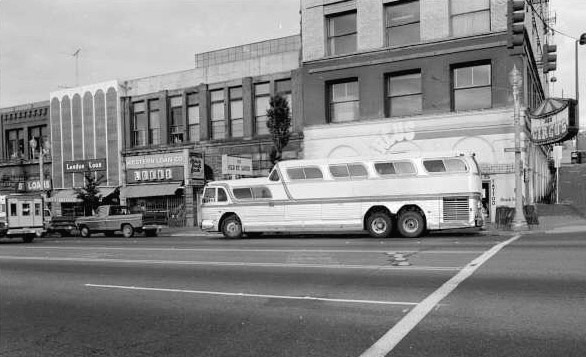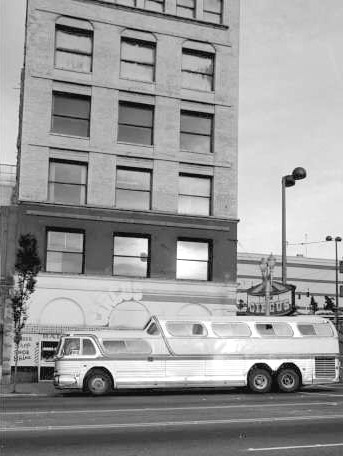
Back From the Brink: Walker Apartments in Downtown Renovated and Ready for Leasing

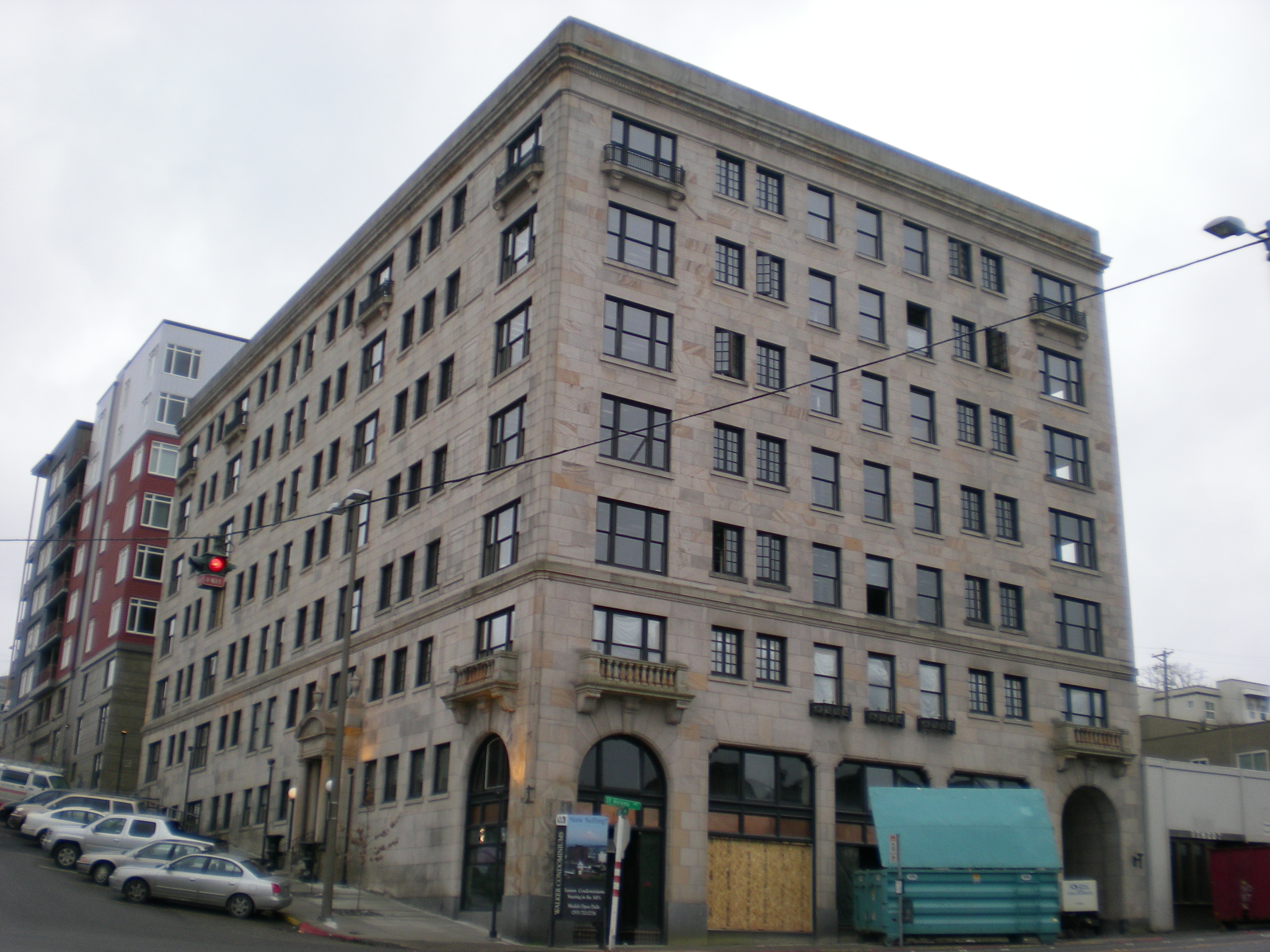
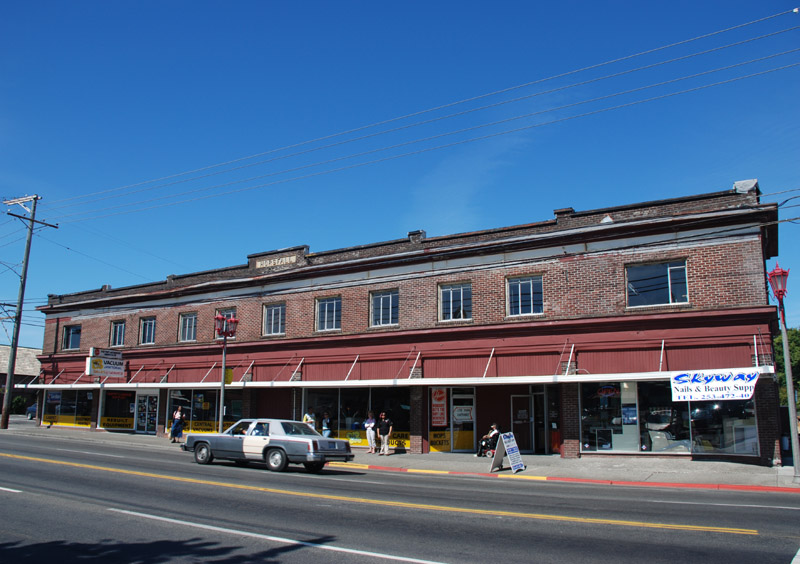
The historic Walker Building came close to adding it’s name to the list of vacant and neglected buildings in Tacoma.  Real close.

A long time apartment building, the Walker became dated and worn.

Walker_Apartments_Hotel


A few years ago, the condo boom hit Tacoma.   The plan was that the units at the Walker would be converted to condominiums and sold one by one.  A few were renovated, and the restaurant Maxwells opened on the first floor.   A secret cigar smoking room was set up for Tacoma’s illuminate to frequent.  However, when the condo market crashed, the renovations stopped and a vast majority of the units in the Walker remained unfinished and vacant.  They stay this way for years.

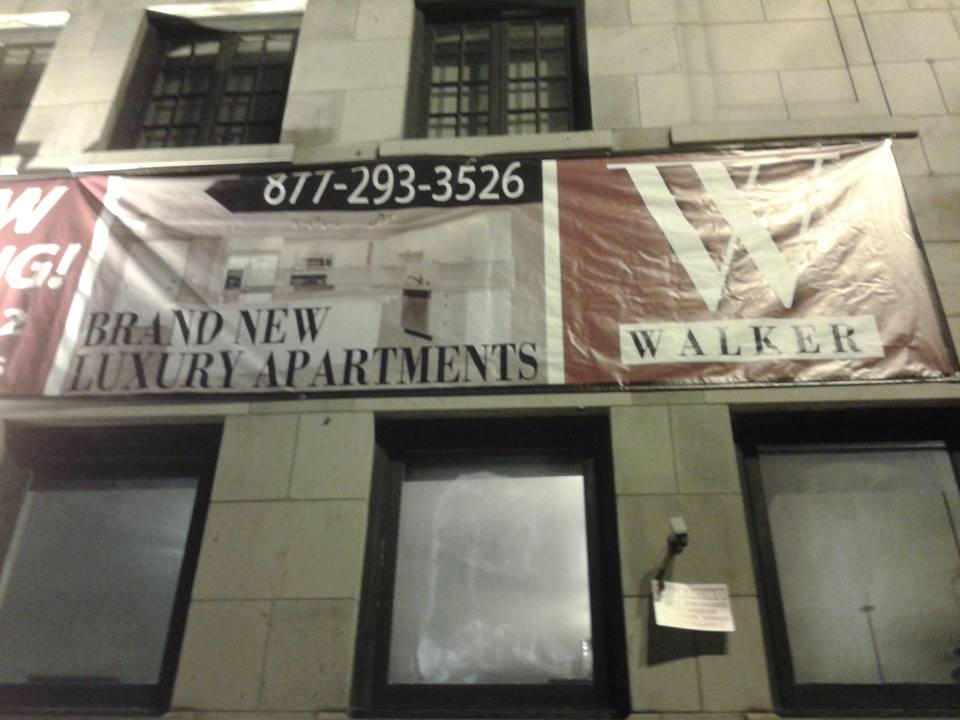
Now, however, it appears (hopefully) more units have been renovated in the Walker and they are starting to lease a new set, given that ownership changed earlier this year and that there has been significant work in the building lately.  A new sign went up yesterday on the building. Hopefully, more of the units are now ready to be occupied.


1455006_10201525729559578_316349303_n

Who will fill the apartments in the Walker?  State Farm workers? Military members? Hipsters upgrading?  We will see.  At any rate, seeing any historical building being renovated is reason enough to celebrate.  Having more people living in the grid will bring much needed additional life to the area.

From the Walker Apartment Facebook page:

1450771_764315886916870_513161952_n

1005003_764315856916873_183795633_n

1400544_767379196610539_2109037003_o

 Godspeed Walker Apartments.


34 Years After Stephen Cysewski’s Infamous Tacoma Walking Tour: Is Tacoma Finally Ready to Repair Itself?

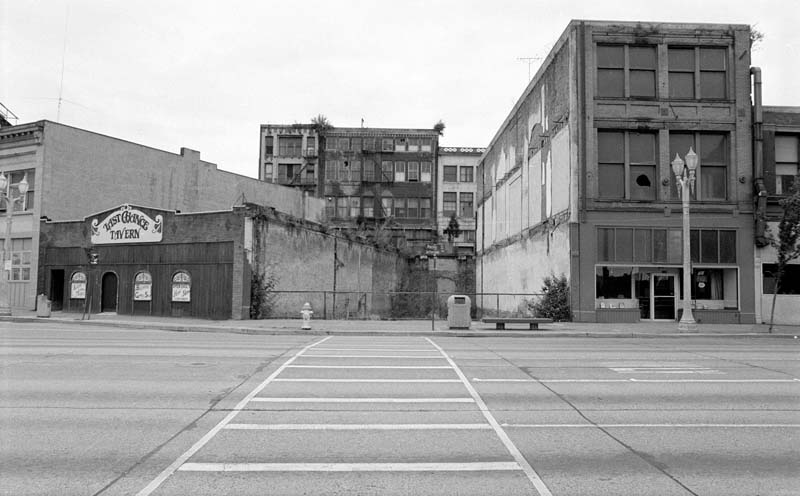
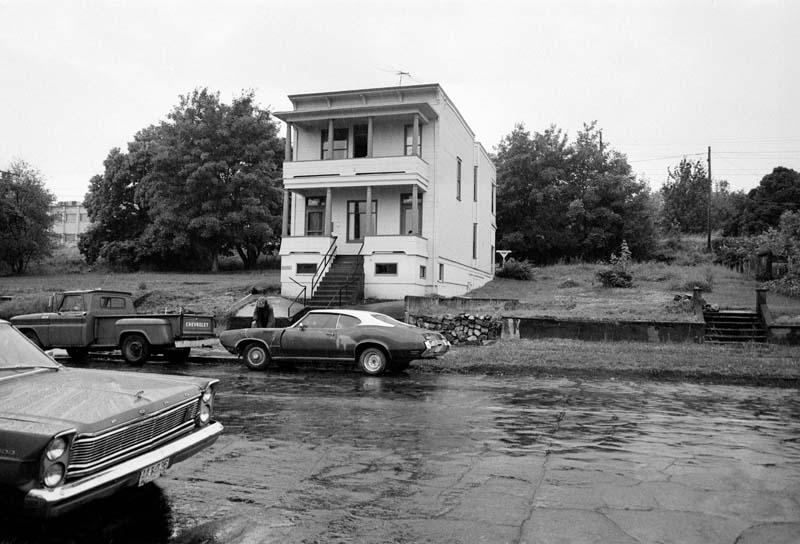
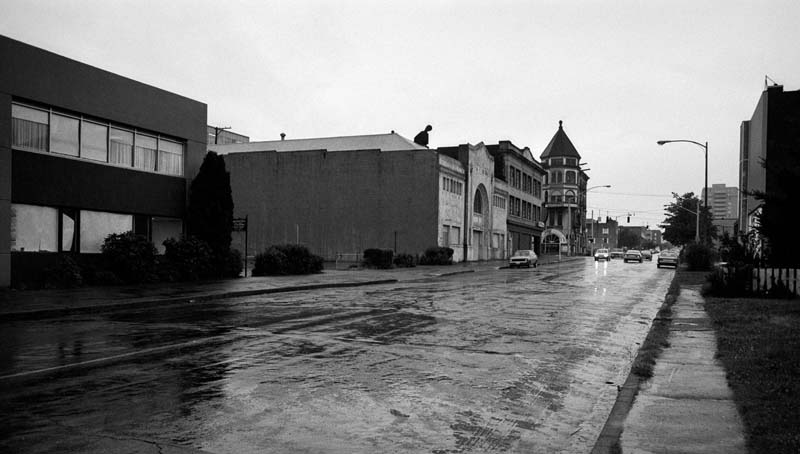
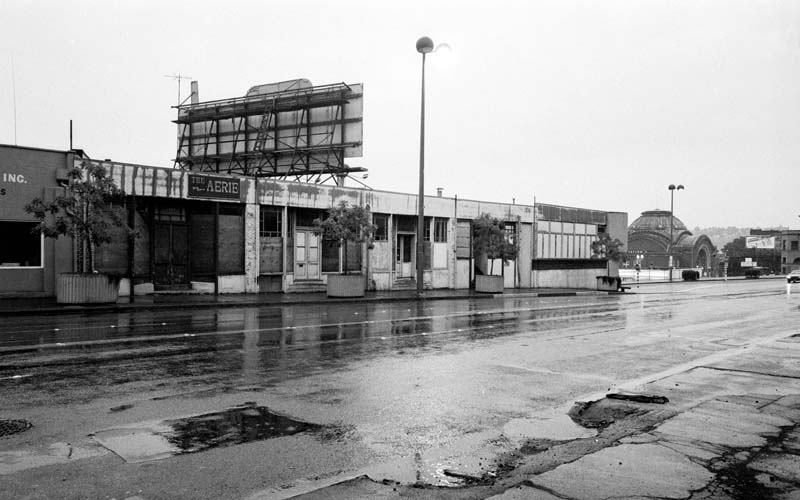
There have been countless numbers of incredible historical photos taken of Tacoma.  However, perhaps no set better captures downtown Tacoma in a moment of time as well as Stephen Cysewski’s 1979 walking tour does during Tacoma’s arguably lowest point in it’s history.  In this year, Tacoma faced an incredible sense of despair and downtown Tacoma was nearly wholesale abandoned.

tacoma005

tacoma130

tacoma136

tacoma143

It has been written that “[d]uring this period: “Downtown Tacoma experienced a long decline through the mid-20th century. Harold Moss, later the city’s mayor, characterized late 1970s Tacoma as looking “bombed out” like “downtown Beirut” (a reference to the Lebanese Civil War that occurred at that time.) “Streets were abandoned, storefronts were abandoned… City Hall was the headstone and Union Station the footstone” on the grave of downtown.”*


tacoma142

Fast forward to 2013.  

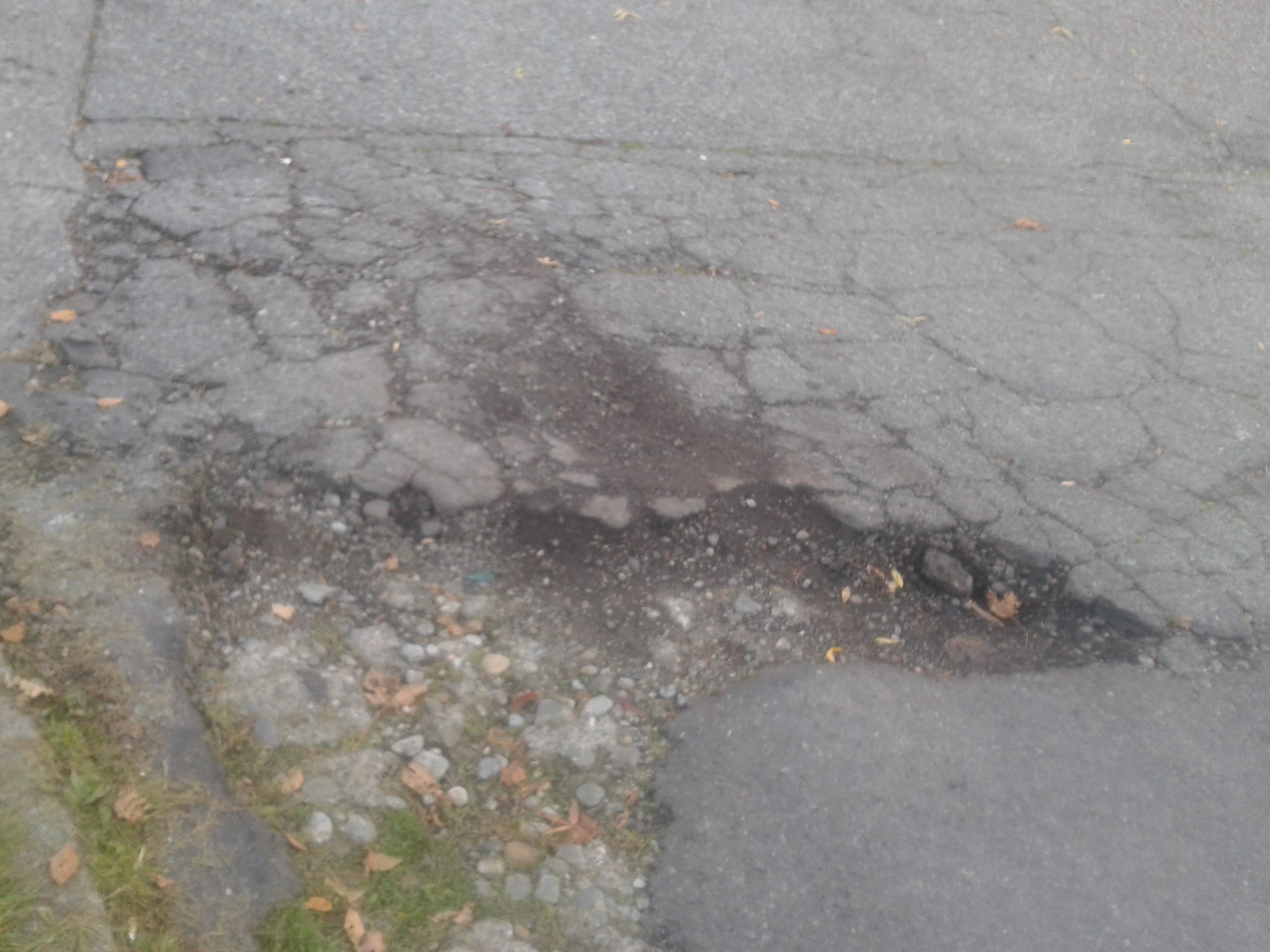
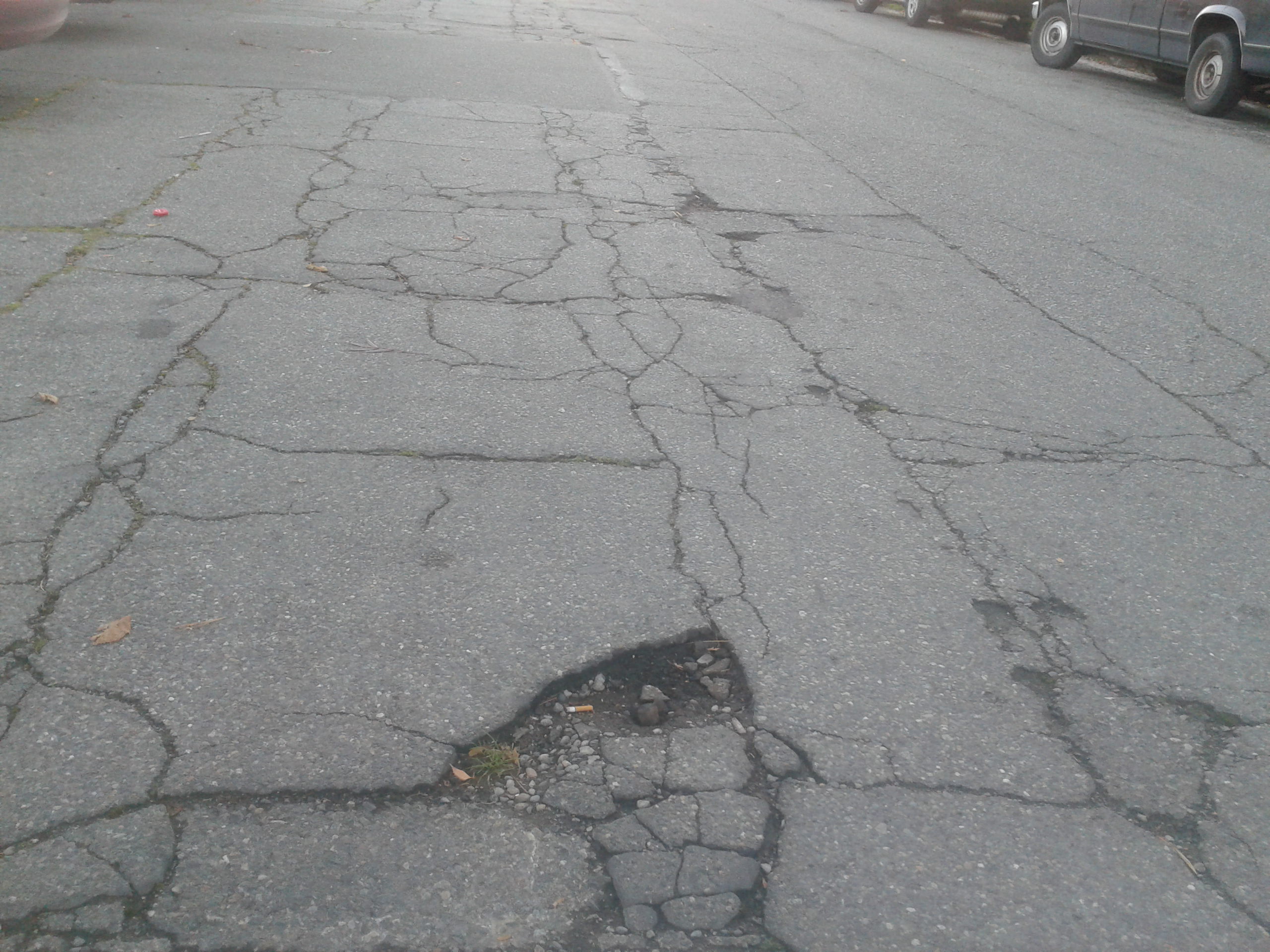
Much has been improved in Tacoma since 1979, yet some of the same challenges remain including the basic look of the city, namely the streets. 

These pictures from the Stadium District a week ago in October 2013:


2013-10-27_17.04.29

2013-10-27_17.03.53

10-25-13_A2_PHP_East_T_St_and_East_Columbia_AVE_500_500_80_s_c1


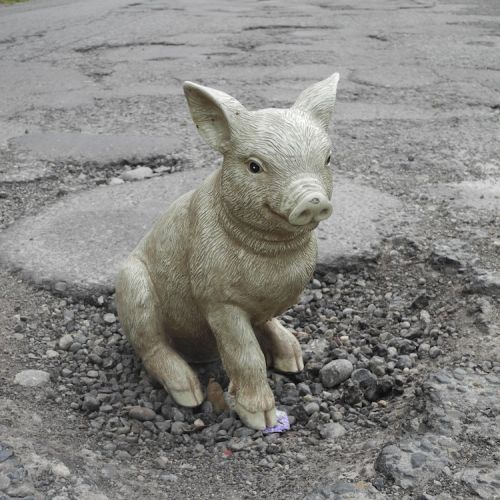
Last photo courtesy of the Tacoma Weekly’s Pothole Pig.

For Tacomans who have lived in the city more than 10 years, we face a big psychological challenge: we become acclimated to the blight in the city including the poor condition of the streets.  After awhile, the condition becomes normal for us as we look upon and attempt to swerve around a maze of potholes.  We vainly urge visitors to Tacoma, our friends and family, to look past the atrocious condition of the city and try to convince them how great the City of Destiny is: “No really its a great city!” we plead.

Proposition 1 would make a meaningful next step in doing our part to repair and rehabilitate the city as earlier generations of Tacomans have. It would permanently fix 3600 potholes every year and repave 510 neighborhood blocks over 5 years. It’s cost would be spread to large corporations like Walmart and many other large entities who often pay very little tax.

However, in the end, this measure is more about us as citizens of Tacoma than the measure itself and where we are as city in 2013.

Are we Tacomans ready to take the next step in the reconstruction of the City and repair itself via Proposition 1 or we still stuck in the inherited mindset of it’s 1979 era blightful near abandoned past?

.

1379591_10201344658752921_530708534_n

___________________

*Erik Hanberg, An Exercise in Hope, Faith, Vision, and Guts, Weekly Volcano (Tacoma), December 24, 2008.


City Council Candidate Robert Thoms Gives His Position on Critical Issues in Tacoma


Robert Thoms

Below are the questions and responses sent to Robert Thoms candidate for Tacoma City Council Position 2, formally held by Washington State Legislator Jake Fey.  Robert Thoms was appointed to this seat nearly a year ago and is running for this position as well.  The questions being asked to city council candidates this year from the Tacoma Sun are very specific and address such issues as parking, feather sign regulation/ban, and the barriers to the  efforts rebuilding Tacoma.  Patricia Lacy Davis is running against Thoms for the seat and gave her responses to the same questions here.

1) What education and experience do you have to qualify to be a member of the Tacoma City Council? What books have you read that you believe that would give you insights as to how to be an effective councilmember?
Answer: 

My education has centered around public policy and leadership, as well as around my experiences as Commander in the U.S. Navy. I attended the Department of Defense Informational School and National Defense University Joint Professional Military Education (JPME) program for officers. I also have a Bachelor of Arts in Political Science from State University of New York. I am completing my Master’s in Organizational Leadership from Gonzaga University.

My greatest education, though, has been decades of experience working around public policy and as a Navy Officer. Between 2000 and 2007, I worked as statewide Deputy Director for Senator Maria Cantwell. I was proud to open up Tacoma’s first Senate office in over 30 years to handle the specific opportunities of Tacoma businesses and constituents and to help advance Tacoma’s causes on the state and federal level. In Senator Cantwell’s office, I championed a number of successful efforts: making ASACRO take responsibility for clear-up efforts for its pollutive smelter in North Tacoma, opening the Crystal Judson Family Justice Center, and funding the “D” Street Overpass helping to open up commerce and waterfront access as well as protecting the Dome District. I understand how to develop public policy partnerships with the participation of leaders as the local, state, and federal levels. Moreover, I’ve built important relationships with public policy leaders that I am happy to leverage for Tacoma’s future.

As for books: Aftershock, The Next Economy & America’s Future, both by Robert Reich, Steven Covey’s Seven Habits of Highly Effective People (always use as a reference), and Freakonomics. Now reading Jane Jacobs’ classic, The Death and Life of Great American Cities, and many cool Star Wars books each night with my 1st grader. These books – (well, maybe not the Star Wars) – all represent my passions. I like to understand the methods and thoughts of successful leadership, and apply it using my experience, and a creative, collaborative, and thoughtful approach to policymaking. It’s what I’ve been doing for decades in public service. I am proud of the results, and look forward to continuing my work during this critical period for Tacoma’s future.

2) Growth management:
Question: Over the last 30 years, Pierce County has been known for suburban sprawl which has caused the loss of farmland, pollution, traffic congestion and disinvestment in Tacoma. During the last 10 years, Tacoma has grown less than 5000 residents while Spokane grew by 13,000 and Pierce County grew by 95,000. If you are elected, would you work to add more density to the City of Tacoma? How would your plan, if any, be different from what is in place now?
Answer:

Density is key. We have, over the last handful of years, increased the opportunities to create density in the downtown core and mixed-use centers. These are decent fist steps; however, in order to truly get the density and amenities necessary to grow I believe we need to support a better economic policies in Tacoma. I will fight hard to get the type of amenities Tacoma deserves. We need to break through the current cycle where our resident have to drive 30 minutes north to shop and spend money because we don’t have the necessary amenities locally. This is often approached as a “chicken and egg problem”: do you build the retail or the density first? I don’t believe this is an either/or proposition. Having the right amenities is important not only to drive density but also vital to job growth, especially in our state and within the high tech and advanced manufacturing sectors. This exact point was recently made on NRP regarding how Google decided to expand its Washington State footprint. http://kuow.org/post/google-breaks-ground-kirkland-expansion. We can’t reply on corporations to provide their own amenities when considering Downtown Tacoma; we have to build our own vibrancy.
.

As a Tacoma City Councilman, I will fight to assure we have contiguous blocks of development: whether it be retail (anchor tenants being ideal) or housing and businesses and great food options. I will continue to develop policies that incentivize institutional investment in Downtown Tacoma. For instance, the city must keep up with the growth of UWT and partner with them. My goal is to double the enrollment of UWT within the decade. There are many tools we can use: including empowerment zones, hub zones, tax-increment financing, and LIDs as just a start, but, I bring experience in doing this exact reinvestment into a downtown. I ran Senator Cantwell’s office in Spokane from 2000-2003 when River Park Square was conceived, developed and the vision of a vibrant downtown came to fruition. I know it can be done, but it takes leadership, investment and a commitment to results and, as your Councilman, I am already leading across all these fronts. It’s important to build density, but it’s equally important to realize that vibrant communities entail more than building extra housing units. Tacoma is in a unique position because we have a good manufacturing base to hold onto remaining opportunities in the manufacturing-based economy. We must strive more to take advantage of America’s consumer-based economy; in many ways, we are only at the ground floor of taking advantage of Tacoma’s economic opportunities.
.
In my few months on the Council, I have already put these plans into action. I helped spearhead Tacoma’s first-ever Transportation Master Plan, and corresponding Transportation Commission, which will help to develop a long-term strategy for Tacoma’s roads, buses, bikes, and rail. I have worked with UWT to develop an Entrepreneurial Incubator for Veterans, a program that allows those participating to take products to market versus standard course work, a true economy building opportunity. This can be partnered with the FabLab to literally take a concept, to product manufacture to marketplace all within a few blocks in Downtown Tacoma. Currently, UWT has great ability to expand in the enrollment of those using the most robust GI Bill in our nation’s history, the Post-9/11 GI Bill. We could expand threefold the number of students coming from JBLM alone to UWT and our regional educational institutions. These are good first steps, many of them creating important tools by which we can grow Downtown infrastructure, business, and amenities. I will continue to build public policies and partnerships to drive this progress.
.
Finally, we should sustain partnerships with our existing downtown businesses. Not only am I willing to listen, I’m willing to do the hard, practical work necessary to make this happen. I was a leader on the City’s first ever Locality Preference passed by the Council earlier this year to help articulate our intent to support our local businesses. The State has made it hard for us to provide a preference, so I pushed through ordinance 28140 on March 26th this year, to create locality and sustainability factors in the evaluation and award of City contracts. The ordinance can be viewed at http://cms.cityoftacoma.org/cityclerk/Files/CityCouncil/RecentLegislation/2013/RL20130326.pdf.

A big part of working with local business is just getting the job done. I’ve also rolled up my sleeves and helped install a sidewalk cafe at Amocat after helping them with permitting issues. I’ve personally gone to bat over licensing and permitting challenges for our small businesses. I will continue championing local businesses, as we expand our amenities to create a vibrant, populous Downtown.

3) “Feather Sign” Regulation

Question: The Tacoma City Council recently passed an ordinance to ban feather signs in some parts of Tacoma. Some businesses such as Brown and Haley use feather signs and believe they increase sales. The city of Tacoma has purportedly held off on enforcing the feather sign law until some revisions or a repeal is considered. If elected Tacoma City Council, what regulation, if any would you support concerning feather signs in Tacoma. What areas, if any, should they be banned in?
.
Answer: If certain districts want to have limits on feather signs, I’m open to that, as my job is to represent the interest of my constituents as Councilman. However, I oppose a blanket ban, as I have not been convinced an outright ban is supported by businesses or citizens. I met with several businesses – including Brown and Haley and other downtown merchants – who had already invested in feather signs. I do not believe we need a citywide ban, especially with so many having already invested in such signs.
.
On a related note, I am pleased we are having a good discussion on signage. Having the new signs promoting our waterfront have been a welcomed addition and worth celebrating.

4) Parking Management

Question: Because of varied demand, Seattle has 9 different priced parking zones with based on demand. Olympia maintains 4 different priced zones. Portland 4. Even Spokane has two different rates for parking. Yet the City of Tacoma continues to charge the same rate for parking despite wildly different demand for parking in downtown Tacoma. Failing to vary rates on demand has resulted in large parking vacancy almost void of vehicles (such as on S. 7th by Puget Sound Pizza) and other areas which a parking space can rarely be found (such as in front of the UWT on Pacific Ave) What efforts would you support, if any, to have the City of Tacoma vary rates in downtown Tacoma to more closely track demand in that area?
.
Answer:
I have traveled all over the world and lived in numerous states during my time in the Navy and I know these are many different ways to address such issues. It’s my experience that having different inter-city parking rates is sound policy. The parking discussion in the City of Tacoma is still at the infancy stage in my opinion, but it is an important discussion. I worked hard to create the first-ever Transportation Master Plan, ensuring that parking must be a major component of this plan. Earlier this year, we set aside $500,000 to create this plan in partnership with the Transportation Commission to build upon the work done to date on this issue. We need to have a realistic discussion about how to practically implement paid parking, ensure off-street parking, and forge a path for future growth in parking needs as Downtown grows. Parking was a critical component in landing State Farm in Tacoma, and we can’t always try and cobble together parking needs at the last moment. To attract additional investment and confidence in Tacoma, we must have a plan that can provide the right parking regime. Our neighborhoods are also in need of parking support, so revisiting permit parking, etc., should be a part of this discussion moving forward. We can get it right, and our Master Plan will ensure a pragmatic approach where we recognize one size does not always fit all.
.
5) Rebuilding Tacoma

.
Question: Despite the progress made, Tacoma still has a large number of vacant lots, and empty and blighted buildings relative to other west coast cities. In fact at least two new surface level parking lots have been created downtown in the last couple of years (the Sauro site and the site where the Luzon building was). What role can you and the City of Tacoma take, if you are elected, to support the rebuilding of downtown Tacoma and Tacoma’s mixed use centers?

Answer: If I’d been on the City Council, I would have opposed the Sauro development. The failure to save the Luzon building, and adequately develop that spot, is a failure of leadership and vision for Tacoma in my opinion.
.
While I’m on the Council, I am going to have a plan that goes block-by-block to create development opportunities to increase density, increase jobs, and increase the amenities that Tacomans deserve. I will settle for nothing less than ensuring we don’t have vacant “holes” throughout our city that create a ‘Jack-O-Lantern effect.’ We, as a City, have done well with mixed-use centers in neighborhoods, but we’ve lagged behind with our vision and execution Downtown. Because I represent Downtown and believe Downtown has the capacity to be developed, I will continue to search for every policy tool, partnership opportunity, to promote investment in our urban core. I look forward to learning from the many great urbanists who call Tacoma home, so we can all lean our shoulders in toward shared goals to ensure progress and success. I have already begun to partner with our neighborhood councils to convene meetings, like the one I called on July 10th to address concerns for a strategy to address crosswalks.

6) What specific policy would you seek to have passed in the City of Tacoma, if any, if elected to the city council?

.
Answer: Although I have only been serving on the City Council since January, I have already worked hard to have the city focus on several public policies that I’m very proud of.
.

Uniform school zones – I have heard a lot of concern about public safety, especially as it relates to assuring that Tacoma is a comfortable, walkable city. This legislation will assure that speed zones near Tacoma’s schools are reasonable and consistent.

.

Transportation Master Plan – I expressed concern in my first week on Council about Tacoma’s ability to plan its transportation future long-term. The Transportation Master Plan is an important tool in our policy toolkit. It helps to develop long-term plans, with the input of a Transportation Commission, for Tacoma’s multimodal transit concerns – from sidewalks and parking, to buses, rail, and even Amtrak. This sort of long-term planning is critical to making sure Tacoma has the amenities it needs to grow and prosper. We invested $500,000 to ensure we have Tacoma specific control and coordination of transportation work in our City, never again will Amtrak, Sound Transit, BNSF etc. perform projects in our City that are not dovetailed into our master plan so we leverage such investments and ensure they meet our local transportation needs, that is just as important, if not more, than any regional need.


Fiscal Sustainability Commission – The Fiscal Sustainability Task Force provides a mechanism for members of the Government Performance and Finance Committee, along with private and public sector partners, non-profit interests and labor partners, to closely examine the City’s revenue structure and budget challenges.

.

“Local preference” provision – I worked on this issue for many years with leaders like Al Lynden and Chuck Heller and on March 26th 28140 on March 26th this year, to create locality and sustainability factors in the evaluation and award of City contracts. http://cms.cityoftacoma.org/cityclerk/Files/CityCouncil/RecentLegislation/2013/RL20130326.pdf. This is the sort of simple incentive that encourages economic growth and development in Tacoma.

I’ve worked with the UWT to create the first-ever Veteran’s Entrepreneurial Program. This program is the first in the nation of its kind, and its firs. It allows veterans and service members to use their GI Bill toward the creation of business plans and products. I will work on policies that try to expand, from 11% to as much as 50%, the use of the GI Bill at our local universities. There is no reason why our universities in Pierce County should not be the universities of first choice to the service members and veterans of JBLM. This is the sort of community engagement that will help expand UWT, a critical asset for Downtown Tacoma.
.

Of course, there’s a lot more work to be done. Just to give one example, I’d like to make a run at addressing the Harbor Maintenance Tax that the Port of Tacoma pays for dredging needs we don’t need because we are a deep water port. This is a federally mandated tax that is harming our Ports in the Northwest. I want to partner with our federal delegation to ensure we address this competitive advantage it has given Canadian ports over their American competitors. This would be achieved by imposing the equivalent of the Harbor Maintenance Tax on international cargo passing from Canada across the U.S. border. Overseas cargo headed for the United States by railroad or highway would pay its fair share; Vancouver and Prince Rupert would thus lose the artificial benefit they get from the Harbor Maintenance Tax. This challenge represents tens of millions of dollars of potential additional revenue for the Port. This money could be used by the Port to go toward local needs like road and infrastructure, such as improving Port of Tacoma Road.

.

To put it briefly, there are a lot of steps Tacoma can take to better-use its resources and assets, and to plan strategically for the future. I’ve lived all around the world, and I chose Tacoma as my home, and the place to raise my family. It’s the most important decision I’ve ever made. I made it for a reason. I’m deeply invested in Tacoma, and passionate about finding ways for Tacoma to make lasting investments in itself. Please join me in making Tacoma better.


7) What policy decision, if any, has the Tacoma City Council taken in the last 10 years do you disagree with? How would you have handled the issue differently if at all?
.
Answer: There are certainly decisions I would have made differently. I would have liked to see the City, in concert with the County, ensure the Luzon didn’t fall down and, if that could not be avoided, that we lead in a solution to ensure something took its place.

I also am a firm believer in monitoring projects within my district. While I’m on City Council, I will assure District 2 that any project near the size and scope of a Wal-Mart will not take shape without Council awareness and oversight. I plan to be laser-focused on partnering with those seeking to live, work, and do business in Tacoma. I will seek to assure that the Council keeps its ear to the ground more than ever before.

To that end, I encourage anyone with questions, comments, or concerns to email me at info@votethoms.org. Thank you all for the great conversations and the chance of serve.

– Councilman Robert Thoms

__________________

More more information on Robert’s campaign, see his campaign page.

Previously posted : Patricia Lecy-Davis gives her response to the same questions via the Tacoma Sun.

City Council Candidate Patricia Lecy-Davis Gives Her Position on Critical Issues in Tacoma

9622778071_6f230cc8bb_z


.

Below are the questions and responses sent to Patricia Lacy-Davis candidate for Tacoma City Council Position 2, formally held by Washington State Legislator Jake Fey.  Robert Thoms was appointed to this seat nearly a year ago and is running for this position as well.  The questions being asked to city council candidates this year from the Tacoma Sun are very specific and address such issues as parking, feather sign regulation/ban, and the barriers to the  efforts rebuilding Tacoma. 

.
1) What education and experience do you have to qualify to be a member of the Tacoma City Council? What books have you read that you believe that would give you insights as to how to be an effective councilmember?

Answer: 
Being a business owner in a creative service industry gives me a Myriad of skills needed to serve our community.
-Acceptance
-Intuition
-Initiative
-Listening
-Flexibility
-Communication
– Authenticity
-Commitment
-Humility
.
Understanding the needs of clients who sometimes are not able to clearly communicate what they actually want, sometimes not being able to confidently ask for what they need, and often mistaking the reality of other unspoken needs and desires being able to be addressed by a simple service seems very much like the job expected from a council member. I find most times people just want to be paid attention, authentically listened to and validated for their feelings. Occasionally there is not an actual solution, but being heard is enough.
Also employing creative people has taught me to be satisfied being a partner in this particular stage of someone’s growth. People are on their own journeys that belong to them. I simply am here to mentor and support someone to his or her next phase of evolution. Many of my staff members have gone on to be their own business owners. Some have chosen other careers. There is always a shelf life, and we all just show up as best we can for that period of time.
As an ALF alumni, becoming a servant leader is the most rewarding role to be engaged in.
.
Books: Now Discover Your Strengths, The Tipping Point, The Four Agreements, Reveille for Radicals, and Who Moved My Cheese.
.

2) Growth management: Question: Over the last 30 years, Pierce County has been known for suburban sprawl which has caused the loss of farmland, pollution, traffic congestion and disinvestment in Tacoma. During the last 10 years, Tacoma has grown less than 5000 residents while Spokane grew by 13,000 and Pierce County grew by 95,000. If you are elected, would you work to add more density to the City of Tacoma? How would your plan, if any, be different from what is in place now?
.
Answer: 
There is a great need for collaboration between Tacoma and Pierce County regarding this issue. The expansion of communities farther out from our core create a drain on services, increasing costs, and continue to disconnect us more and more. Density is a crucial piece of the puzzle for the future of transportation, quality of schools, the environment, and even food safety and sustainability. We need to recognize that trading farmland for strip malls is not the way to responsibly enhance our society. Looking for innovative ways to grow food, and create clean energy is very achievable in our area, and we really need to have a regional conversation about what we want Tacoma to “GROW” like in the next 5/10/20 years.
.
3) “Feather Sign” Regulation Question: The Tacoma City Council recently passed an ordinance to ban feather signs in some parts of Tacoma. Some businesses such as Brown and Haley use feather signs and believe they increase sales. The city of Tacoma has purportedly held off on enforcing the feather sign law until some revisions or a repeal is considered. If elected Tacoma City Council, what regulation, if any would you support concerning feather signs in Tacoma. What areas, if any, should they be banned in?
.
Answer: 
I’m very frustrated by the recent decision made by council regarding feather signs. Not because I like them, nor do I really want to see a plethora of them downtown OR down So. Tacoma Way. My frustration is the personal bias with which this decision was made. Also making a blanket restriction on them so quickly rather than taking the initiative to develop a comprehensive sign code involving businesses in the conversation from neighborhoods, mixed use and commercial centers was unfair. I do not believe that all businesses are the same, and have the same needs and strategies to attract clients. There are many communities dealing with this discussion currently, and we could learn from some of them solutions that have been determined.
.
4) Parking Management Question: Because of varied demand, Seattle has 9 different priced parking zones with based on demand. Olympia maintains 4 different priced zones. Portland 4. Even Spokane has two different rates for parking. Yet the City of Tacoma continues to charge the same rate for parking despite wildly different demand for parking in downtown Tacoma. Failing to vary rates on demand has resulted in large parking vacancy almost void of vehicles (such as on S. 7th by Puget Sound Pizza) and other areas which a parking space can rarely be found (such as in front of the UWT on Pacific Ave) What efforts would you support, if any, to have the City of Tacoma vary rates in downtown Tacoma to more closely track demand in that area?
.
Answer:
I believe that paid parking is, and has been a good thing for most businesses in Tacoma based on the feedback I have heard from both businesses and customers. The purpose of paid parking is and SHOULD be solely for creating a regular 15% vacancy for visitors. The complaints about parking have usually been from folks who do not understand that purpose, and want to park in front of their own businesses, or did not realize the past problems of City employees consistently taking up all available parking. Not all businesses have the same customer patterns and needs, nor do all areas have the same parking patterns, so It is crucial that we become resilient and intentional with our system. The cost of the long term garages need to be balanced with the cost of on street parking, so that frequent parking moves to garages affordably. 
It must be more attractive for someone to desire paying for garage long term parking vs. continuing to park on the street. In the UWT area, the 2 hour limit is a challenge because students tend to push the envelope by parking to attend their classes. Adjusting that area to 90 min. may be a solution, since the parking fill rate is more like 105%, spaces fill at about a 20-30 second rate. Other areas may warrant a longer limit because 2 hours is not long enough to go to the dentist, or doing lunch AND shopping is not possible, In that area, maybe the rate should be higher and limit longer. 
We have the technology, we should employ the willingness to be resilient and flexible with this system to make it work to it’s fullest potential. The most frustrating part is the aggressive ticketing for things that are seemingly “unrelated” to parking, like tabs expired, wheels not turned when there is no hill, and being too far from the curb. There should also be a gracious commitment to at least a 5 min. leeway on ticketing. “Revenue” is not supposed to be a directive of the system.
.
5) Rebuilding Tacoma Question: Despite the progress made, Tacoma still has a large number of vacant lots, and empty and blighted buildings relative to other west coast cities. In fact at least two new surface level parking lots have been created downtown in the last couple of years (the Sauro site and the site where the Luzon building was). What role can you and the City of Tacoma take, if you are elected, to support the rebuilding of downtown Tacoma and Tacoma’s mixed use centers?
.
Answer: 
Our building codes and regulations need to be aligned with our stated desires. Our regulatory inconsistencies are a huge barrier in Tacoma. If we could get out of the way and provide a clear path for things like “Live/work” “Work/live”, apodments, communal living, and urban growing, density wouldn’t be an issue. I have a hard time understanding why it costs more to rehab an old building, than tear it down and build new. There are ways to exempt the 60/40 flaggings of needing to do seismic upgrades, for people who are “doing the right thing” innovatively and efficiently. 
Putting in a sprinkler system that costs the building owner 1000’s of dollars shouldn’t go against their threshold of investment casting them more regulation and money. They should get a credit for it. I will continue to work with Planning and development services to break down these barriers on or off council. I have created working relationships with directors of theses departments and have frequently helped business and building owners communicate effectively getting to good desired end results. It can get better still though. There is a willingness to craft a culture of getting to “yes.”
.
6) What specific policy would you seek to have passed in the City of Tacoma, if any, if elected to the city council? 7) What policy decision, if any, has the Tacoma City Council taken in the last 10 years do you disagree with? How would you have handled the issue differently if at all?
.
Answer:
I would advocate for Business B&O restructuring. I’m not talking about getting rid of B&O but creating a more innovative and sustainable methodology. I’ve been educated on some specific language that ends up in us leaving a great deal of money on the table, and I also feel that the concept of “exemption” could be attached to more of an incentive type program like rewarding businesses for innovative and green practices, paid sick leave, etc. Give the “Good Actors” ways to submit for exemptions rather than a blanket gross earning threshold.

Also, there is a great need for the challenge of “Lowest Bid” language in contracts. This has a lot of unintended consequences, often results in poor quality of work, breeds bad practices, and low wages, and often costs more in the long run by the job not being done correctly the first time.
__________________

More more information on Patricia’s campaign, see her campaign Facebook page.

Justin Camarata Joins Tacoma Sun as a Political Analyst for 2013 Elections

pic1.
.
.
Compared to Seattle’s contentious local elections, the primary election for City of Tacoma voters is a sleeper.  The only race on my ballot was for the Port Commissioner. Yet, there will be come some excitement in November as two Tacoma City Council races are in play as well as a Tacoma School Board race:
.
1) Olgy Diaz is challenging councilmember Joe Lonergan for the seat on District #5.
.
2) Patricia Lacy-Davis is challenging councilmember Robert Thoms for District #2.

.
Thankfully, Tacoma resident Justin Camarata has agreed to help out in the effort for the Tacoma Sun and sift through all of the press releases and media images and get to the heart of the issues.
.
Here is his bio:
.
“Justin Camarata is a University of Washington graduate in Political Science and a North End resident. He works in account management and marketing for Seattle-area internet companies and, when his two small boys allow, volunteers for Tacoma commissions and causes including the Ethics Board, the North End Neighborhood Council, and various political campaigns. He is particularly interested in exploring the intersection of new urbanism, local government, and technology. (He’s still trying to dream up the next great urban mobile app.) Books that have influenced Justin’s thinking on cities and urban issues include Jane Jacobs’ ‘The Death and Life of Great American Cities,’ Donald Shoup’s ‘The High Cost of Free Parking,’ and P.D. Smith’s ‘City: A Guidebook for the Urban Age.'”
.
You can find Justin  and connect with him on his on Facebook, LinkedIn profile, Google+,.
.
Justin is a veracious student, reader and everything Tacoma.   Exit 133 defunct condo map?  He had watched it rise and fall.  Tacoma’s Chinese tunnels? He has walked them.  Former Mayor Bill Baarma’s 456 page 1973 Doctoral Thesis on the City Manager system? Memorized.
.
I look forward to Camarata’s future posts on this year’s election for the betterment of the City of Destiny and to advise the rest of us on all things Tacoma.
.
-Erik Bjornson

.

308002_736045392400_273246751_n

A Conversation with Candidate Jeannie Darneille

Below are the questions and responses sent to Jeannie Darneille candidate for Washington State Sendate District #27.

The questions being asked to Washington State Legislative candidates this year from the Tacoma Sun are very specific and address such issues as the best method rebuilding Tacoma Streetcars, digital billboards, pollution in Tacoma and addressing the Felon Dumping Ground Issue.

1) Education and Experience
Question:
What education and experience do you have to qualify to be a member of the Washington State Legislature? What books have you read that you believe that would give you insights as to how to be an effective legislator?
Answer:
My legislative and professional careers have dovetailed to prepare me well for service in the Washington State Senate.  I have served for 12 years in the Washington House of Representatives, and have held many positions of influence:  I was elected to leadership as a Vice Chair of the Democratic Caucus, and appointed to chair two important fiscal committees, General Government Appropriations and the Caseload Forecast Council.  I have also served as the vice chair of the House Ways and Means Committee for the last two years, and have developed an in-depth understanding of the state budget.  My professional career as a director of non profit community based organizations has given me a comprehensive understanding of the way state services are provided, and a passion to provide these in cost-effective, results-centered ways.  I have, both in my professional and legislative career, depended on my ability to draw people together to reach consensus.  My legislative career shows a long history of fighting for Pierce County and Tacoma, whether it is funding for the Washington State History Museum, or fighting to assure that Pierce County is not the dumping ground for felons.
As the eldest of six in a military family, our family moved enough that I attended 15 schools by the time I graduated from high school. I received my bachelor’s degree in art history at Western Washington University, with a Masters in Education (Higher Education Administration) at Colorado State University.
Books: I am reading “The Quotable Kennedys” by Bill Adler, but find that reading current research and analysis pertaining to issues facing government consumes more of my time than reading books.
2) Growth management:
Question:
Over the last 30 years, Pierce County has been known for suburban sprawl which has caused the loss of farmland, pollution, traffic congestion and disinvestment in Tacoma. During the last 10 years, Tacoma has grown less than 5000 residents while Spokane grew by 13,000 and Pierce County grew by 95,000. If you are elected, would you work to add more density to the City of Tacoma? How would your plan, if any, be different from what is in place now?
Answer: The Legislature can require local governments to strictly conform to growth management principles, and work on educating stakeholders and the public on the advantages to denser communities.
Our local government can take steps to reduce urban sprawl and add density to the City of Tacoma by working collaboratively with the Washington State Departments of Commerce and Transportation to promote the development of multi- family homes near affordable transit options.  Especially in the denser Tacoma areas, we need to find ways to provide housing where there is the greatest amount of demand so that rental prices don’t continue to creep upwards and prevent families from living in the most livable and walkable areas or aren’t forced to move out.  Fortunately, much of my community supports increasing urban density and creating livable, walkable neighborhoods in Tacoma.  I’ve worked to create more density in downtown Tacoma through revitalization efforts to enhance those goals.
3) Pierce County Felon “Dumping Ground” Issues
Question: Despite the recent laws passed in the Legislature, Tacoma and Pierce County have a disproportionate number of released felons placed by the Department of Corrections as described in the Tacoma City Club report: 30 Years of DOC in Pierce County, Was It worth It?http://cityclubtacoma.org/images/uploads/DOC_Report_final1.pdf.   Have you read this report? What specific steps would you take, if any, to reduce the number of felons being place in Tacoma and Pierce County? Does the Department of Corrections need more oversight as to where they place and/or subsidize felons to live?
Answer:
Criminal justice issues have been a priority for me during my legislative tenure. I have learned that transitioning felons back into society after their incarceration is over has to be one of the most complex issues that society faces. 97% of all felons do return to the community.  As with many other issues, the role of the state Legislature in where felons live when they are released from prison is nuanced.  The legislature passed a bill known as “The Fair Share Law” which requires a released felon under supervision of the Department of Corrections to return to their county of origin.  However, fair share only applies to those under supervision:  those who are not under supervision may live wherever they wish.  Our community is currently facing a situation where community members are upset over the potential of a halfway house for former felons, which is bringing to light the different roles and responsibilities of local vs. state governments.
I have a long history of working to protect Pierce County from becoming home to a disproportionate number of felons:  I was the only vote in the House of Representatives against placing the civil commitment center for sex offenders on McNeil Island, and I will continue to address the issues of re-integrating felons into the community after their sentences are over.  I also have a long history of trying to help former felons re-integrate into the community, and worked for 9 years on a bill that helped 140,000 people who had served their prison terms regain their voting rights.  I think that balancing regulation with programs that help felons re-integrate is the appropriate role for the state.
Former County Prosecutor Gerry Horne led the effort to educate the Pierce County delegation in the legislature about this issue and I continue to attend bi-monthly meetings convened by current Prosecutor Mark Lindquist on this issue.
4) Rebuilding Tacoma
Question: Despite the progress made, Tacoma still has a large number of vacant lots, and empty and blighted buildings relative to other west coast cities. In fact at least two new surface level parking lots have been created downtown in the last couple of years (the Sauro site and the site where the Luzon building was). What role can you and the Washington State Legislature take, if you are elected, to support the rebuilding of downtown Tacoma and Tacoma’s mixed use centers?
Answer:
Tacoma has suffered from the recession in many ways. Many businesses have been forced to close and the populace is experiencing high unemployment. But, the progress made in rebuilding Tacoma is significant, and the museum district, the theater district, the University of Washington Tacoma, and vibrant business districts like 6th Avenue all attest to this. Rebuilding Tacoma is a venture that requires all levels of government and civic participation to achieve. The state capital budget has, and can continue to assist in rebuilding Tacoma. Projects like the Foss Waterway Seaport Museum have been funded through the capital budget, and I have been proud to work with local organizations that are willing to do the work to create appropriate projects.  Transit and density are extremely important in rebuilding Tacoma, to create the walkable and liveable communities that people seek.
5) Restoring Tacoma’s Streetcars
Question:Many Tacomans support restoring Tacoma’s streetcar system. The latest Sound Transit measure passed by voters sets aside money for LINK extension in Tacoma. Gas prices are now near record levels. Do you support restoring the streetcar network in Tacoma? What steps on the legislative level, would be needed to be taken to make this happen?
Answer:
While I do support restoring Tacoma’s streetcars I have not seen their restoration as a high priority by local government.  I think streetcars can be an important part of the transit system, but, from a legislative standpoint, there is limited support available to transit-oriented projects. Legislative Transportation committees deal exclusively with roads, highways, and our ferry system. The Washington State Constitution restricts the use of the gas tax funding to streets and roads, and it cannot be used to support transit.  As a result, transit agencies are dependent upon the sales tax, which is extremely vulnerable to a recession.  All transit agencies are facing large budget shortfalls and are struggling to even maintain existing services.  I have supported legislation to increase the funding options for transit systems, and feel that overall reform to our revenue system is needed to fully address the needs for mass transit.  I would also support using revenue collected from tolls to fund transit options.
6) Pollution Issues in Tacoma
Question: The City of Tacoma is currently failing the air quality criteria set by the State of Washington. If elected, what specific measures would you take, if any, to reduce pollution in the city limits of Tacoma?
Answer:
Again, pollution issues require a collaborative approach between citizen groups, state and local government, the federal government, industry and the public.  The largest single source of greenhouse gas emissions continues to be transportation, and reducing the use of single occupant vehicles is the single most important thing that we can do to reduce this form of pollution.  All of the issues applying to growth management are applicable here:  creating density and reducing sprawl, creating walkable communities, and encouraging transit and transit-oriented development projects for expanding access to affordable housing.
The South Tacoma Air Quality Non-Attainment points out another important role that the State can play in reducing pollution include addressing the issue of wood smoke (a bill was passed in the legislature last year to address this, which I supported) and incorporation of the Complete Streets and Low Impact Development standards to address storm water pollution.  The state also plays a very important role through the Puget Sound clean up.  As the chair of the General Government Appropriations Committee, and vice chair of the Ways and Means Committee, I have worked to balance huge deficits in the state budget in a way that protects funding for Puget Sound clean up, educating people about storm water runoff, and other environmental projects.
7) Crime Reduction Proposal by City Manager Eric Anderson
Question: A few years ago, former City Manager Eric Anderson set a goal to reduce crime in Tacoma by 50 percent in 14 months. Unfortunately, the goal was not reached. What can be done in your opinion to reduce crime in Tacoma?
Answer:
There are no easy answers to this question. The causes that increase criminal activity are found in the areas of undiagnosed and untreated mental illness, untreated chemical dependency, poverty, joblessness, lack of education and training, a lack of civic engagement, anger and despair, and many others. No single approach will result in longtime benefit to individuals, their families, or the community. Programs that are evidence-based are the key, but we need wider access to them. They include everything from access to quality healthcare, early childhood education, and expanding training that leads to family wage jobs.  Crime rates rise and fall with unemployment rates. When opportunities to make money vocationally decline, quick pay-off crimes like robberies go up. That’s one of the reasons why it’s so important we ensure that citizens have access to vocation training and our system allows for retraining as our industries evolve
VIII) Tacoma’s Billboard Ordinances
Question: Tacoma’s Central Neighborhood Council has posted dozens of articles on the electronic billboard issue located at:
http://cnc-tacoma.com/proposed-electronic-billboards. What percentage of these articles do you estimate that you have read?
Answer:
I have followed this issue.
9) Billboards Issue
Question: As you know, the Tacoma City Council has banned digital billboard. However, there have been attempts in the Washington State Legislature to pre-empt cities, as other states have done, and place more billboards, including digital billboards throughout the state.
What is your position on the issue?
Answer:
I would oppose these efforts.
_________________
For more information, see Jeannie Darneille’s website.

Laurie Jinkins Takes a Stand on the Issues in the Tacoma Sun

Below are the questions and responses sent to Laurie Jinkins candidate for Washington State Legislature District #27.

The questions being asked to Washington State Legislative candidates this year from the Tacoma Sun are very specific and address such issues as the best method rebuilding Tacoma Streetcars, digital billboards, pollution in Tacoma and addressing the Felon Dumping Ground Issue. 

Tacoma Sun Candidate Questionnaire Candidate: Laurie Jinkins Position: Washington State Legislature District #27

1) Education and Experience

Question: What education and experience do you have to qualify to be a member of the Washington State Legislature? What books have you read that you believe that would give you insights as to how to be an effective legislator?

Answer:

I earned my bachelor’s and master’s degrees  in Business from the University of Wisconsin-Madison and later a Juris Doctor from Seattle University School of Law (then the University of Puget Sound School of Law). I also completed executive studies at Harvard University’s Kennedy School of Government.  I started my career litigating child abuse and neglect cases for the state Attorney General’s Office. I then shifted my career toward public health, eventually serving as an assistant secretary of health at the state Department of Health before taking the position of deputy director of the Tacoma-Pierce County Health Department, where I continues to serve.  I’ve spent 25 years serving the community on numerous non-profit boards and feel that work has really helped me understand the community in important ways.

Books:  RR Anderson’s, Tacomic series; A lesson before dying; Taylor Branch’s MLK biography trilogy; People Magazine subscriber for over 20 years; Profiles in Courage; Autobiography of Robert Moses, Dykes to Watch Out For, A good Rain and The Worst Hard Time both by Timothy Egan; Garlic and Sapphires by Ruth Reichl; Nickel and Dimed by Barbara Ehrenreich; Plato’s collected Dialogues; Blink and The tipping point both by Malcolm Gladwell, Backlash by Susan Faludi; The Way We Really Are by Stephanie Coontz; The Social Transformation of American Medicine by Paul Starr; Calvin & Hobbes; King of the World by David Remnick; Friday Night Lights by H.G. Bissinger; The Jewish Book of Why; The hour I first believed by Wally Lamb Live from New York:  An uncensored history of Saturday Night Live; The Ayatollah Begs to Differ and The Ayatollahs’ Democracy both by my brother in law Hooman Majd; Never Work for a Jerk; A Walk in the Woods by Bill Bryson; Soul of a Citizen by Paul Rogat Loeb; Ann Rule murder mysteries; Everything bad is Good for You by Steven Johnson; Boomerang:  Travels in the New Third World by Michael Lewis; Into Thin Air by Jon Krakauer; Wild:  From Lost to found on the Pacific Crest Trail by Cheryl  Strayed; Inside National Health Reform by John E McDonough; Malcolm X:  A Life of Reinvention by Manning Marable; and Tattoos on the Heart by Gregory Boyle.
2) Growth management:

Question: Over the last 30 years, Pierce County has been known for suburban sprawl which has caused the loss of farmland, pollution, traffic congestion and disinvestment in Tacoma. During the last 10 years, Tacoma has grown less than 5000 residents while Spokane grew by 13,000 and Pierce County grew by 95,000. If you are elected, would you work to add more density to the City of Tacoma? How would your plan, if any, be different from what is in place now?

Answer:

I tend to be a data driven person.  I think that the data speaks for itself, but must be combined with evidence that urban density can work successfully with affordability. In order to increase growth in Tacoma, mixed use development and integration of low income housing throughout a community are imperative. Additionally, we live in a capitalist society.  The only way to increase density, and preserve open space and farmland is if those who own it can make more money by keeping it as farmland than they can by selling it for development.
3) Pierce County Felon “Dumping Ground” Issues

Question: Despite the recent laws passed in the Legislature, Tacoma and Pierce County have a disproportionate number of released felons placed by the Department of Corrections as described in the Tacoma City Club report: 30 Years of DOC in Pierce County, Was It worth It?http://cityclubtacoma.org/images/uploads/DOC_Report_final1.pdf. Have you read this report? What specific steps would you take, if any, to reduce the number of felons being place in Tacoma and Pierce County? Does the Department of Corrections need more oversight as to where they place and/or subsidize felons to live?

Answer:

The “fair share” legislation passed by the legislature a number of years ago is both working and not working at the same time.  It has assured that released offenders return to their “home” county, but, the legislation doesn’t require placement below the county level.  This means that a released offender who identifies Pierce County as their “home” community can locate anywhere within Pierce County.  Locally, this results in some of our neighborhoods having a much higher population of released offenders than is ideal.  My legislative colleagues and I pay a great deal of attention to DOC implementation of this legislation because it was the Pierce County Delegation that spearheaded it.  We need to continue to work with local communities and DOC to assure that particular neighborhoods don’t become dumping grounds for released offenders.  Data does tell us that providing released felons who would otherwise be homeless with housing vouchers for a limited period of time actually decreases recidivism.  However, more oversight about where this subsidized housing is located may be helpful.  Frankly, one of the most important things we can do is make sure that both our incarceration and release policies are based on what research tells us works.
4) Rebuilding Tacoma

Question: Despite the progress made, Tacoma still has a large number of vacant lots, and empty and blighted buildings relative to other west coast cities. In fact at least two new surface level parking lots have been created downtown in the last couple of years (the Sauro site and the site where the Luzon building was). What role can you and the Washington State Legislature take, if you are elected, to support the rebuilding of downtown Tacoma and Tacoma’s mixed use centers?

Answer:

While serving on the Capitol Budget and Transportation committees, I was a co-sponsor of the 2012 Jobs Now Act. This investment into our state’s infrastructure will create new schools, affordable housing, and crucial investments in transportation, as well as over 18,000 jobs in our state. Here in the 27th district, the Jobs Act will build an allied health building at TCC, advance the cleanup of Ruston Way & Commencement Bay, help renovate of the Broadway Center & Foss Seaport, and expand our low-income housing resources. When re-elected, I will continue to work to use the capitol budget to fund improvement to infrastructure and much needed jobs.

5) Restoring Tacoma’s Streetcars

Question: Many Tacomans support restoring Tacoma’s streetcar system. The latest Sound Transit measure passed by voters sets aside money for LINK extension in Tacoma. Gas prices are now near record levels. Do you support restoring the streetcar network in Tacoma? What steps on the legislative level, would be needed to be taken to make this happen?

Answer:

I would love to see a vibrant, expansive public transit system throughout Tacoma and the greater Puget Sound, but even with the funds from the last Sound Transit measure it is still incredibly difficult to fund large projects like the expansion of Tacoma’s streetcar system.

6) Pollution Issues in Tacoma

Question: The City of Tacoma is currently failing the air quality criteria set by the State of Washington. If elected, what specific measures would you take, if any, to reduce pollution in the city limits of Tacoma?

Answer:

I was the prime sponsor of SHB 2326, which was signed by the Governor this past legislative session.  Pierce County is the only Washington jurisdiction out of compliance with federal clean air standards due to particulate matter in our air.  As a result, our residents suffer more health consequences and businesses wishing to locate in Pierce County must meet more stringent air quality standards.  This results in severely negative economic development consequences for our community.  A majority of this problem is caused by the use of wood burning stoves.  I was able to work with public health, municipal governments, business, community advocates and environmentalists to craft a bill that will help bring us into clean air attainment, resulting in a healthier community.

7) Crime Reduction Proposal by City Manager Eric Anderson
Question: A few years ago, former City Manager Eric Anderson set a goal to reduce crime in Tacoma by 50 percent in 14 months. Unfortunately, the goal was not reached. What can be done in your opinion to reduce crime in Tacoma?

Answer:

I believe that there are several steps necessary to reduce crime in Tacoma.   First and foremost, we must strengthen the economy, helping to create jobs, and providing food, shelter, and other essential services to those in need.  Second, there are a number of gang and other proven prevention activities that we should continue to fund and expand.  An investment in proven prevention interventions is nearly always a cheaper, more long term fix than investing in incarceration.  Finally, we need continue investments in evidence based policing, so that we are using the proven interventions our law enforcement personnel need to respond to crime quickly and efficiently.

Without additional revenue sources we’ll be hard pressed to maintain current services,  let alone increase services, and that is why I advocate for revenue reform. I believe that we need a tax system that is fair, adequate and stable. Washington State’s current tax base relies too heavily on regressive, unreliable taxes, and I am a leader in promoting systemic reform. It will take committed legislators and citizens some time to replace our regressive system with a progressive tax system, however, I am committed to making this happen.
VIII) Tacoma’s Billboard Ordinances

Question: Tacoma’s Central Neighborhood Council has posted dozens of articles on the electronic billboard issue located at:

http://cnc-tacoma.com/proposed-electronic-billboards. What percentage of these articles do you estimate that you have read?

Answer:

0%, but thanks for the link.  I’ll try to read some of these over the interim.

9) Billboards Issue

As you know, the Tacoma City Council has banned digital billboard. However, there have been attempts in the Washington State Legislature to pre-empt cities, as other states have done, and place more billboards, including digital billboards throughout the state.

What is your position on the issue?

Answer:

I oppose efforts for the state legislature to pre-empt cities’ efforts to restrict billboard use.

____________________

For more information, see Laurie Jinkins website.

Jack Connelly Talks With the Tacoma Sun

Below are the questions and responses sent to Jack Connelly, candidate for Washington State Senate District #27.

The questions being asked to Washington State Legislative candidates this year from the Tacoma Sun are very specific and address such issues as the best method rebuilding Tacoma Streetcars, digital billboards, pollution in Tacoma and addressing the Felon Dumping Ground Issue. 

Tacoma Sun Candidate Questionnaire Candidate: John Connelly Position: Washington State Senate District #27

1) Education and Experience

Question: What education and experience do you have to qualify to be a member of the Washington State Legislature? What books have you read that you believe that would give you insights as to how to be an effective legislator?

Answer:

Education: Lakes High School, 1974; Stanford University, B.A. Human Biology 1978 (also fulfilled requirements for degree in Psychology;) J.D. University of California, Hastings College of Law, 1981; Ongoing courses in continuing legal education, both as student and as a lecturer.

Experience: Work as an attorney and advocate for 31 years. Worked through college and law school, first in the cannery at Nalleys, then as a swim coach in Palo Alto, and Lakewood. During Law School I clerked for a law firm in Palo Alto after my first year, then with Gordon, Thomas, Honeywell in Tacoma after my second year. After Law School I returned to Tacoma and began working with Gordon, Thomas, Honeywell as an attorney. I became a partner in 1986 and board chair (managing partner) in 2000 and 2001. I was a two time member of the Board of trustees of the Tacoma Pierce County Bar Association and invited onto the Board of the Washington State Association for Justice. I held several offices in the Washington State Association for Justice, including chair of the legislative committee – a committee I served on for a number of years. In 2005 I was elected President of WSAJ. I ran the campaign against I-330. As a lawyer, I received a number of honors including, WSAJ Trial Lawyer of the year in 2000, American Board of Trial Advocates Trial Lawyer of the Year in 2007, Membership in Best Lawyers in America, Selection as one of the top 100 lawyers in Washington State by Washington Law and Politics Magazine and one of Seattle Area’s best lawyers by Seattle Magazine.

During my tenure with the Washington State Association for Justice I worked on legislative issues and served on the legislative committee for a number of years. I also served for a period on the Tacoma Pierce County Bar Associations Legislative Committee.

In my work I have handled civil rights and injury cases on behalf of minorities (e.g. the Puyallup School District case), the elderly, abused children (e.g. the OK Boys Ranch cases); disabled, firefighters (Pang Warehouse fire, 30 Mile Fire), Police Officers (Lakewood Police Shootings), people whose rights have been undermined by the State (cases against the Department of Corrections and DSHS) some employment cases (Barbara Corey, Cases by employees of Dale Washam) and other cases on behalf of families and people whose rights have been violated. The skills from this advocacy and negotiation are directly transferable to the work in the legislature.

Books: I am a fairly voracious reader and all the books I read influence my thinking. I particularly like reading anything about John F. Kennedy and Abraham Lincoln. Examples of recent books I have read include:

Jack Kennedy, Elusive Hero, Christopher Mathews

Bill Bradley, We Can All Do Better

Team of Rivals (Book on Tape); Doris Kearns Goodwin

George Washington’s Sacred Fire, Peter Lillback, Jerry Newcombe

Home Grown Democrat, Garrison Keillor (Book on Tape)

The Fiery Trial, Abraham Lincoln and American Slavery, Eric Foner

The Cost of Choice, Women Evaluate the Impact of Abortion, Erika Bachiochi

Lyndon Johnson, Master of the Senate, Robert A. Caro

2) Growth management:

Question: Over the last 30 years, Pierce County has been known for suburban sprawl which has caused the loss of farmland, pollution, traffic congestion and disinvestment in Tacoma. During the last 10 years, Tacoma has grown less than 5000 residents while Spokane grew by 13,000 and Pierce County grew by 95,000. If you are elected, would you work to add more density to the City of Tacoma? How would your plan, if any, be different from what is in place now?

Answer: Yes. We need to continue to build Tacoma’s inner core. Tacoma has some of the most beautiful areas in the State. We need to make sure we are keeping the city beautiful for people visiting it. This includes excellent parks and small things such as filling potholes and mowing right of ways. One of the great difficulties with Tacoma right now is that it is not seen as an attractive area for businesses, including small businesses.

This causes them to move to strip malls outside the city and in suburban areas rather than into Tacoma. It is extremely important that we begin working to make Tacoma a more livable and attractive city. We have done a good job with the museums but need to continue this work. This includes continuing the “promenade” from the Thea Foss waterway all the way to Point Ruston and on to Point Defiance. It includes repairing our infrastructure in areas such as the Hilltop and Martin Luther King Way. It includes encouraging and assisting small businesses in the downtown area, in East Tacoma, on the hilltop and throughout Tacoma. Work in the legislature to assist small businesses must include review of the B&O tax structure and review of the amount of regulation so that we are not strangling small , start-up businesses before they can get up and going. Additionally, we need to improve our voice.

Spokane runs certain events such as Bloomsday and the Hoopfest which draw thousands to the City and its message to those people coming into the city reflects great civic pride. Tacoma needs similar events and needs to make sure that its message after events such as the Fourth of July celebration (Freedom Fair) on the waterfront is similarly positive. We did this with the Tall Ships. We can do more of this. I should finally note that we absolutely must improve our schools so that people want to move into Tacoma and want to start their businesses here. We have many opportunities such as at the Port of Tacoma to bring more business and more residents to Tacoma. Extension of I-167 to the Port would add jobs and allow much new spinoff business. But people are only going to want to move and live here if we are working on building a beautiful city with quality schools and amenities that continue to make Tacoma a great place to live.

3) Pierce County Felon “Dumping Ground” Issues

Question: Despite the recent laws passed in the Legislature, Tacoma and Pierce County have a disproportionate number of released felons placed by the Department of Corrections as described in the Tacoma City Club report: 30 Years of DOC in Pierce County, Was It worth It? http://cityclubtacoma.org/images/uploads/DOC_Report_final1.pdf. Have you read this report? What specific steps would you take, if any, to reduce the number of felons being place in Tacoma and Pierce County? Does the Department of Corrections need more oversight as to where they place and/or subsidize felons to live?

Answer:

Yes. I have read the report and have worked in this area. At our law firm we have handled cases involving felons who are “dumped” in Tacoma. This increases the crime rate and exposes residents to increased risks. One of the most difficult things for a felon who has been incarcerated is transitioning back into society. The Department of Corrections needs to spend more time overseeing how the individual felon is going to be transitioned, who he/she is going to live with and how they are going to avoid reoffending. Specific steps include creating an ombudsman position for this purpose, partnering with nonprofit and for profit groups who provide resources for released felons, (the Irma Gary House is an example) assisting with creation of new similar groups to work with transitioning of felons so that they have a meaningful chance of returning to society, finding work and leading a productive life; working to place limits on the number of acceptances in this area, and making sure that DOC has positions available in other areas.

5) Rebuilding Tacoma

Question: Despite the progress made, Tacoma still has a large number of vacant lots, and empty and blighted buildings relative to other west coast cities. In fact at least two new surface level parking lots have been created downtown in the last couple of years (the Sauro site and the site where the Luzon building was). What role can you and the Washington State Legislature take, if you are elected, to support the rebuilding of downtown Tacoma and Tacoma’s mixed use centers?

Answer:

This needs to be an area of primary focus right now. Our delegation to Olympia in past years has not focused on business and the downtown core. That fact and the recession has contributed to the empty storefronts and empty downtown core that we are all familiar with. Rebuilding of downtown Tacoma will require a focus on business, especially small business, working with the Chamber of Commerce to make Tacoma a city that is friendly to business, obtaining funds and federal monies for infrastructure such as I-167 to the Port of Tacoma, infrastructure on the hilltop and East Tacoma, and assistance to businesses throughout the city. Partnerships with groups such as the Incubator and the Chamber should occur to increase participation and “buy in” to this development.

This is an important time for Tacoma and this time could be seized as a major transition point. The additional business coming into the Port of Tacoma, if properly embraced, could bring much meaningful change to this City. The additional business could bring a tremendous amount of spinoff business. In order for this to occur we are going to have to make sure that we are making it easy for this to occur. This will require good ingress and egress from the Port, will require a City that is welcoming to business and will require work to make the city more attractive and livable for employees and business leaders.

The changes identified in this question won’t occur until we begin to work to make them occur. The Sauro site, for example, could be the site of another skyscraper. Plans for such have been available. In order for that to occur, however, we need to work to attract businesses to the City so that a developer will be able to meet occupancy requirements and thus build it. Similarly, the Luzon site is a fantastic site for a business if Tacoma has an active busy, city core. I was asked at the last minute to try to step in and work with a group that wanted to save it. The historic building could have been saved and used for a business but businesses were not interested in locating in Tacoma at the time.

6) Restoring Tacoma’s Streetcars

Question: Many Tacomans support restoring Tacoma’s streetcar system. The latest Sound Transit measure passed by voters sets aside money for LINK extension in Tacoma. Gas prices are now near record levels. Do you support restoring the streetcar network in Tacoma? What steps on the legislative level, would be needed to be taken to make this happen?

Answer:

I would love to see the streetcar system continue to grow. We need to continue to build and improve our mass transit. The current streetcars are nice but don’t serve a wide enough area and, therefore, aren’t used as much as they could be. The answers to the previous questions about improving the City and its inner core all are important in building a City in which streetcar service makes sense and is used to reach the businesses in the City. As we build up the inner core there will be additional reason for streetcars.

From a legislative standpoint we need to take those steps that will assist small businesses (as well as large businesses) to build up our business base in the City. We need to continue to approve city amenities (including schools) and make Tacoma an attractive place for people to live. We need to take advantage of those funds and grants allocated to mass transit. The Hilltop would be another nice place for streetcars as we continue to build up the MLK Way corridor with Evergreen College as an anchor.
7) Pollution Issues in Tacoma

Question: The City of Tacoma is currently failing the air quality criteria set by the State of Washington. If elected, what specific measures would you take, if any, to reduce pollution in the city limits of Tacoma?

Answer: I think we do need to try to hold fast to pollution standards and work with businesses which aren’t getting there. We have been infamous for the “aroma of Tacoma.” This has improved markedly over the past years. Specific steps to reduce pollution include generation of funding to stop pollution from storm water runoff – including possible polluter pays approaches ( after notice and an opportunity to cure), legislative funding and support of projects such as the Puget Sound Action Agenda to protect and preserve Puget Sound, enforcement of goals for reduction of carbon emissions including tax incentives for success and potential payments for failing to achieve standards, continued work, research and funding of clean energy alternatives, potential amendment of the Growth Management Act to make local plans consistent with greenhouse gas emission limits (helping to build a livable city that is less reliant on automobiles). Development of mass transit and energy efficient alternatives to transit that involves more pollutants.

VIII) Crime Reduction Proposal by former City Manager Eric Anderson
Question: A few years ago, former City Manager Eric Anderson set a goal to reduce crime in Tacoma by 50 percent in 14 months. Unfortunately, the goal was not reached. What can be done in your opinion to reduce crime in Tacoma?

Answer: Build up the business core. Provide jobs. Build community centers. Give Tacoma a strong positive voice and include all residents in the positive feeling about Tacoma and its residents. More events which build community. Less antagonism between Police and residents. Build strong and innovative schools so that kids feel good about going to school and good about their communities. Invest in early childhood education and keep parents involved in schools so that kids do not drop out. Studies have shown that good early childhood education keeps kids in school.

My wife and I are also involved in Safe Streets. This method of getting the community involved in prevention of crime is effective.

Continue to support Police services and ensure that the model followed by Police is to “protect and serve” the community.

9) Tacoma’s Billboard Ordinances

Question: Tacoma’s Central Neighborhood Council has posted dozens of articles on the electronic billboard issue located at:http://cnc-tacoma.com/proposed-electronic-billboards. What percentage of these articles do you estimate that you have read?

Answer:

I have read quite a few of them and all of them included in the TNT. I have followed this issue fairly closely.

10) Billboards Issue

As you know, the Tacoma City Council has banned digital billboard. However, there have been attempts in the Washington State Legislature to pre-empt cities, as other states have done, and place more billboards, including digital billboards throughout the state.

What is your position on the issue?

Answer

I don’t like digital billboards within the City. They are a major distraction and not attractive. I don’t think they add to the City’s sense of organization and well being.

____________________

For more information, see Jack Connelly’s website.


Tacoma City Council Candidate Michael Hardy Answers Tough Urban Questions From the Tacoma Sun

Introduction:

Below are the questions and responses sent to Michael Hardy, candidate for Tacoma City Council District #7. This at-large district is current represented by councilmember David Boe who is running to be “retained” in the district.
.
The questions being asked to Tacoma City Council candidates this year from the Tacoma Sun are very specific and address such issues as the best method to restore the Winthrop Hotel, removing harmful Parking Requirements in downtown Tacoma, rebuilding Tacoma Streetcars, and addressing the Felon Dumping Ground Issue.
.
Tacoma Sun Candidate Questionnaire
Candidate:  Micheal Hardy
Position:  Tacoma City Council – At-Large No. 7

.
Q I: What education and experience do you have to qualify you to be a member of the Tacoma City Council? What books have you read that you believe that would give you insights as to how to be an effective council member?
.
Answer: Graduating from Pierce College with Honors was a great accomplishment for me, and my AA degree included many business related courses. My studies at The Evergreen State College included classes in Project Management and Environmental Science. Serving as Commander of one of the largest Veterans Service Organization in the state has helped to prepare me for this position, as has my commitment as President of the Board of a local Non-Profit. No particular book has stood out as a guide to being an advocate of Tacomans; but Wolf’s Non-profit Management books have helped sharpen my focus, as has a series on Project management.
.
2) Growth management
.
Q II: Over the last 30 years, Pierce County has been known for suburban sprawl which has caused the loss of farmland, pollution, traffic congestion and disinvestment in Tacoma. During the last 10 years, Tacoma has grown less than 5000 residents while Spokane grew by 13,000 and Pierce County grew by 95,000.  If you are elected, would you work to add more density to the City of Tacoma? How would your plan, if any, be different from what is in place now?

Answer: Tacoma’s strength and character comes from its open area’s and its space. I would work to get the empty buildings rented,  the vacant storefronts leased, the empty condo towers that promised so much, and delivered so little, occupied. My plans would center on the population that is already in place, and the business owners who are working  hard yet struggling. These are the people who realize the beauty and opportunities that Tacoma has to offer. What we need downtown is jobs that offer permanent employment, not walking paths and exit Pagodas.
.
It has to be economic development that becomes the backbone of our elected leaders. To sit on our hands and watch Russel Investments move, and Nalley Valley shut down is maddening to Tacomans. These were firms who cared about Tacoma, who spent time here and enjoyed giving back and participating. Spending money to recruit business from outside Tacoma is not the same as having a business that wants to be here because they like it here.
.
Small business owners need the support that Tacoma can offer. Instead of being targeted as “cash cows”  for the city coffers they should be treated as partners. Business helps create an identity to communities. The infrastructure needed for these companies is already in place and with city support these firms will be here for decades. It is not my plan to pack more buildings into what we have, and ruin what I consider a gem.

3) Pierce County Felon “Dumping Ground” Issues
.
Q III: As you know, Tacoma and Pierce County have a disproportionate number of released felons placed by the Department of Corrections as described in the Tacoma City Club report: 30 Years of DOC in Pierce County, Was It worth It? http://cityclubtacoma.org/images/uploads/DOC_Report_final1.pdf.  Have you read this report? What specific steps would you take, if any, to reduce the number of felons being place in Tacoma and Pierce County?
.
Answer: Yes, the report has some great points, but should have been more in depth.  I would have liked input to the selection process used to place these felons and deviants in areas of Tacoma questioned. The report cites “saving money” as a reason for setting up work release centers but said nothing about how much it actually cost us, as residents. If property values decrease because neighborhoods become more dangerous, this hasn’t saved any money.
.
The “sprawl” issue discussed earlier should be added to this equation.  How many good families left Tacoma because of the felons, predators, and drug dealers that this policy placed among us?  How many businesses? The actual cost is much more to the residents than what this report or the News Tribunes series of stories leads us to believe.
.
Finally, I would like to see exactly where in Tacoma these offenders were placed. How many in East Tacoma, how many in the South End? Was placement fair or were these criminals placed in the less affluent areas of Tacoma – areas less likely to complain.
.
The Pierce County Sheriff’s web page relating to sex offenders and other criminals  misleads us. For example, in the District 1 area around Orchard and N 15th, there are three offenders within a one mile radius. But several blocks away in District 3, in the area of 12th and Union, there are 11 offenders residing inside a half mile radius. District 5 has nine “offenders” within a half mile radius of 66th and Warner, but one of these offender sites lists “multiple” residents, unnamed (in contrast to the other neighborhoods).
.
Why report differently? If we report by the half mile in districts 3 and 5, we should measure by the half mile in district 1.  If we list the offenders by name in districts 1 and 3, we should do the same in district 5. And “multiple offenders” is just not specific enough. (Info from the Pierce County Sheriff web page.)

4) Restoration of Winthrop Hotel
.
Question IV: A great many Tacomans would like to see the Winthrop Hotel restored as Spokane has restored the Davenport Hotel. What is your position on this issue? What plan would you support, if any, to restore the Winthrop Hotel back into a hotel?What ideas do you have to make this goal of Tacomans a reality?
.
Answer: Yes, and I am one of the people who would love to see the Winthrop restored. But I don’t remember the Davenport being restored by Spokane; it was a private contractor whose business was restoring properties. Times have changed a bit since Walt Worthy did his rehab of the Davenport. Financing is undoubtedly harder to come by, but developers might be in a more generous mood with the business climate stalled. In order to receive my support the project would have to make financial sense, and use local talent to staff the construction jobs. And by local, I don’t mean workers coming down here from Seattle.
.
This job should be done as a private construction project. The city of Tacoma should not be in the hotel business, but could provide incentives to attract a better project. Examples of this would be including some low income housing in the project, to give the developer guaranteed income while helping low income residents. A grant might help the project, and maybe tax incentives could be offered.

.
5) Rebuilding Tacoma
.
Q V: Despite the progress made, Tacoma still has a large number of vacant lots, and empty and blighted buildings relative to other west coast cities. In fact at least two new surface level parking lots have been created downtown in the last couple of years (the Sauro site and the site where the Luzon building was). What role can you and the City of Tacoma take, if you are elected, to support the rebuilding of downtown Tacoma and Tacoma’s mixed use centers?
.
Answer: The government of the City of Tacoma already has a strong presence in downtown Tacoma, as does the Federal and State Governments. Private industries and business are needed to cap off the project that became a long and costly revitalization effort. We have to remember that rebuilding Tacoma means more than just spending money downtown. Tacoma is a vast area, with many neighborhoods that also have problems. If downtown is beautiful, but the area surrounding downtown is blighted, nobody is going to make the effort to travel downtown.
.
And honestly I like the downtown area as it is. I like that I can drive downtown  without gridlock, and I like that I can find parking in a reasonable amount of time. To me, the wonder of Tacoma, especially downtown, is the open spaces and panoramic views. The merging of ocean and mountain with our rolling hills and landscape is beautiful.
Mixed use centers are excellent solutions to “empty and blighted” buildings mentioned in this question –  they can be acquired and refurbished at reasonable cost. And still leave us with green space. The properties mentioned are not just surface level parking lots, they are what is left of 1) a 20 foot hole in the middle of downtown and 2) a dilapidated building that was on the verge of collapse.
.
And there were no options. We had a major employer that wanted to be here, and needed parking. There was no-one else who had a plan to develop this property, or showed interest. This was a win-win situation. The problem was the same with the other property –  there was no interest or plan to restore or rehab. Tacoma couldn’t leave a pile of brick and glass on the street. So, they  became a parking lots.
.
The term “vacant lots” is a developers term, a negotiating expression to acquire property at a reduced cost. Your “vacant lot” is my “natural space”, or “open field.” Other cities DO have this type of property – Tacoma is not unique in having sections of undeveloped land.
.
However, what we do with these properties is unique. We grow veggies there, and plant flowers, and walk our dogs. We take off our shoes and run our feet through the grass. Residents of Tacoma do not see an empty field and dream of development, and neither should Tacoma’s leaders. We should see the beauty in what we have, not in the changes we can make.

Building Walkable Neighborhood Centers and Downtown
.
Q VI: Cities such as Portland, Seattle, Bellingham, San Francisco have removed their off-street parking requirements to allow parking to be built based on market demand. This also has the benefit of reducing sprawl, reducing the cost of housing, reducing pollution and allowing the construction of walkable neighborhoods. Do you support removing the off-street parking requirement in downtown Tacoma and in Tacoma’s mixed use centers?

Answer: No. The city is not responsible for providing long term parking. Building apartment buildings and office towers that neglected parking is selfish and irresponsible. There are costs to living downtown, and parking is one cost that should be the burden of the property owner or vehicle owner. Building neighborhood centers or Mixed Use Centers that do not have parking available is short-sighted and wasteful. Paid parking during business hours helps customers, and businesses.  Short term paid parking is beneficial to downtown. The benefits of better parking design accrue to the community, rather than to the building, or property owner.

To have the designs of Seattle or Portland a goal of Tacoma would be a huge mistake. These cities are awful for walking and parking is a challenge. Understanding what we have here is the first step to making Tacoma the envy of the nation. There is not a better waterfront in the world, and our downtown is very accessible and user friendly. We don’t have to shoehorn other buildings and cram more development into our tight spaces. There are better options.

Restoring Tacoma’s Streetcars

Q VII: Many Tacomans support restoring Tacoma’s streetcar system. Gas prices are now at record levels. Do you support restoring the streetcar network in Tacoma? What steps would be needed to be taken to make this happen?

Answer: No, I support bus routes over streetcars. Streetcars create more noise and traffic confusion. Streetcars are so much more expensive initially and have to be dedicated to a particular route. Overhead conductors are ugly, and require more poles to be placed.  The system as a whole makes me think of a jumbled birds nest. The infrastructure is already in place for buses, and when needs change, or streets are blocked by accidents or emergency vehicles, buses are easily rerouted.

Pollution Issues in Tacoma
.
Q VIII: The City of Tacoma is currently failing the pollution criteria set by the State of Washington. If elected, what specific measures would you take, if any, to reduce pollution in the city limits of Tacoma?
.
Answer:  Emissions from diesel and gasoline engines are the biggest contributors to fine particle pollution, but in Pierce County smoke from wood stoves are also a major problem.
The county’s air quality consistently drops in winter when more people heat their homes by burning wood. There are estimates that 75,000 homes are heated with wood burning stoves.
I have also heard a report about Tacoma’s air problem that suggested that the topographical features and terrain of Pierce County was a hindrance to free air flow.

.
Our vehicles get tested at every other registration period, so I don’t believe it is OUR vehicles. Our current pollution problem is due in part to our greatest asset, the Port of Tacoma. Truck traffic is huge in this area as we have one main road that handles vast numbers of combination vehicles. Locomotive delivery systems have not shown much improvement. We won’t close the port. No ban on wood stoves, or other heating systems is supported by me at this time. And changing the terrain is impossible.

Crime Reduction Proposal by City Manager Eric Anderson

Q IX: A few years ago, City Manager Eric Anderson set a goal to reduce crime in Tacoma by 50 percent in 14 months. Unfortunately, the goal was not reached.  What can be done in your opinion to reduce crime in Tacoma?

Answer: City Manager Anderson’s goal is commendable and is working. These things take time, and the TPD has been very effective in identifying the major criminals in our area and putting them behind bars. Eric Anderson’s goal is supported by me, and I would be willing to give the city manager any tools or resources that he needs to get the job done.

Q X: Tacoma’s Central Neighborhood Council has posted dozens of articles on the electronic billboard issue located at : http://cnc-tacoma.com/proposed-electronic-billboards.  What percentage of these articles do you estimate that you have read?

Answer: I have read some of them. This does not seem to be an impossible hurdle, or a problem that can only be handled by legal action. As more and more cities and states ban these distracting signs it will become evident to Clear Channel that their signs are dangerous and put public safety at risk. A voter referendum on this matter would certainly help, as would public boycotts on any products advertised by Clear Channel.

Q XI What is your position in relation to the settlement proposal that the Tacoma City Council is considering regarding digital billboards?  Do you support it? If you were elected to the Tacoma City Council, would you authorize the City of Tacoma to expend financial resources to defend the Tacoma’s current 1997 billboard law?

Answer: Yes to a point. Negotiation seems to be an even better alternative, as brightness and contrast, as well as length of time of a particular ad appears are all negotiating points. So is donating billboard time to highlight city programs, and emergency situations such as Amber Alerts – which could be shown within minutes. Locating an unfair number of billboards in any section of town would not be acceptable to me.

Q XII: Many cities near the City of Tacoma such as Fife and University Place as well as unincorporated Pierce County do not have a B&O tax which many people allege has caused businesses to move out of the City of Tacoma.  Last year, the City of Tacoma raised the B&O threshold to $250,000.  Hence, businesses in Tacoma
grossing less than $250,000 pay no B&O tax.  If elected, would you support further raising the B&O tax threshold? If so, how far would you raise it?
.

Answer: The B&O Tax is fair, where it sits. There are costs associated with living in an area as beautiful as Tacoma. The costs must be shared by all of us, residents and business alike. For new business, waiving the B&O tax for the first year seems reasonable, and for small business waiving the B&O tax for two years should help them establish a customer base.     Comparing Tacoma to Fife or University Place is just not fair, as we have so much more to offer. Consider that no business ever really pays a tax. Only the buyer of the product or service pays a tax. The business increases the cost of the product to compensate for the tax, and the increase in cost makes the product less competitive in the marketplace. Taxes always create a black market, or underground market, as both producers and purchases look for ways to get around them. As a result, the city will always lose money by the imposition of new taxes. Look at the cigarette tax as a great example. People did not stop smoking, they just stopped buying from businesses in the city, and went to the tribes. The city and state have not earned a penny more from the increased taxes as they did before the hike. The effect was penalizing the profits of the business owners.

___________________

For more information, see Vote Michael Hardy on Facebook.

Tacoma City Council Candidate David Boe Answers Tough Urban Questions From the Tacoma Sun

Introduction:

Below are the questions and responses sent to David Boe, candidate for Tacoma City Council District #7. This at-large district is current represented by councilmember Boe who is running to be “retained” in the district.
.
The questions being asked to Tacoma City Council candidates this year from the Tacoma Sun are very specific and address such issues as the best method to restore the Winthrop Hotel, removing harmful Parking Requirements in downtown Tacoma, rebuilding Tacoma Streetcars, and addressing the Felon Dumping Ground Issue.

.

Tacoma Sun Candidate Questionnaire
Candidate:  David Boe
Position:  Tacoma City Council – At-Large No. 7
.

Q I: What education and experience do you have to qualify you to be a member of the Tacoma City Council? What books have you read that you believe that would give you insights as to how to be an effective councilmember?
.

Answer:  I guess the short answer is that since I was appointed to the Tacoma City Council in January 2010, the current City Council believes that I have the education and experience qualifications for this position.  Having been a member of the Tacoma Planning Commission the previous 5-years to the appointment (the last three-years as Vice-Chair), they recognized their need to have a member with expertise on land use issues.   I also bring my experience from serving on the Tacoma Arts Commission where I was appointed to be a member of the 1992 Cultural Plan Steering Committee.  A unique qualification that I have for this city-wide position is that my wife and I have lived in both the South End and North End of Tacoma – and as an architect I have worked on projects across every district in the city (so Boe Knows Tacoma).
.
My formal education started with completing an Associate of Arts Degree (Liberal Arts) at Normandale Community College, followed by a Bachelor of Arts in Architecture at Iowa State (Go Cyclones), and the equivalent of a Master of Architecture at the Architectural Association School of Architecture in London.  During my five years in London, I spent two-years as the Project Coordinator for the Canary Wharf Light-Railway Station .  Since 1996 I have had my own architectural practice in Downtown Tacoma – and I think the perspective of being a successful small-business owner is an important voice in the make-up of the City Council.
.
As for books that are appropriate to my brief tenure on the City Council, I think Cervantes’ ‘Don Quixote,’ Calvino’s ‘Invisible Cities, and ‘Surely You Must be Joking Mr. Feynman.
.
What many folks may not comprehend about a City Manager-led form of government is that individual council members must be able to work well with their peers on the dais – as it takes at least 5 votes to get anything accomplished.  Trained as an architect, I am ingrained with a collaborative spirit and working with my fellow council members has been the most gratifying aspect of this challenging, but rewarding, service to the citizens of Tacoma.  Having been married to the same woman for the past 29 years, I do understand the value of a good compromise on occasion.
.
Q II: Growth management
.
Question: Over the last 30 years, Pierce County has been known for suburban sprawl which has caused the loss of farmland, pollution, traffic congestion and disinvestment in Tacoma. During the last 10 years, Tacoma has grown less than 5,000 residents while Spokane grew by 13,000 and Pierce County grew by 95,000.  If you are elected, would you work to add more density to the City of Tacoma? How would your plan, if any, be different from what is in place now?
.
Answer:  Density, Density and more Density (thus the moniker ‘Density Dave’).  I was on the Planning Commission when the City Council passed the Mixed-use Center Zoning Ordinance in 2009 – but in my opinion these regulations did not go far enough to provide incentive for development – and cracking this issue open is one of the main reasons I have decided to run for a full term (that and an awareness that very few members of the past City Council(s) have had a deep understanding of urban design).  The first issue I brought to the table once on council, and with luck will be passed this year, is to go to a market base parking requirement for new construction in our urban centers and commercial zones.  Many of our zoning regulations are out-of-date and provide more barriers than incentives for new development.  I contend that the 6th Avenue Business District continues to flourish due to existing buildings being allowed to be renovated and/or converted without requiring city mandated additional off-street parking lots.
.
Another issue is Land Banking (of which the City of Tacoma is just a guilty as the private market).  We need to get development on these ‘vacant’ parcels in order to positively change the market for new development.  Right now you cannot actually lease new construction for what it costs to construct the project.  Think about it.  The cost of a new building is pretty much the same whether you build it in Tacoma or in Kirkland (not including the land that is) – but in Kirkland you can get mid-$20s to $30 per square foot whereas the market in Tacoma is closer to $12-15 per square foot.
.
So most of the development that happens in Tacoma is by individuals or companies that want to develop here (thinking with their heart more than their head in many cases) or they require significant government assistance (City, State or Federal) to make their projects pencil (e.g. UWT, museums et al, Elks).  There is no silver bullet to solve this ongoing conundrum, but we need as many development tools in the toolbox as possible AND look at every policy decision to see how it creates additional residential density in our urban centers.  For example, the route of the streetcar expansion, for me, should be the one that maximizes transit oriented development opportunities.

.
Oh, and we should not be building anymore surface parking lots in our urban centers – another change that needs to be incorporated into the zoning code (i.e. new stand alone surface parking lots should not be allowed or permitted as a primary use in our urban centers).
.
Q III: Pierce County Felon “Dumping Ground” Issues
.
Question: As you know, Tacoma and Pierce County have a disproportionate number of released felons placed by the Department of Corrections as described in the Tacoma City Club report: 30 Years of DOC in Pierce County, Was It worth It? http://cityclubtacoma.org/images/uploads/DOC_Report_final1.pdf.
Have you read this report? What specific steps would you take, if any, to reduce the number of felons being place in Tacoma and Pierce County?
.
Answer:  I had not read the Tacoma City Club Report until you referenced it here in this question, although I was a new member on the City of Tacoma Planning Commission in 2005 when the Special Needs Housing Moratorium was enacted due to the concerns about an overly high concentration of release facilities in the Hilltop.  In my opinion this report accurately portrays the situation.  Like other job growth policies that have been introduced into Tacoma over the years, it was sold as an ‘economic generator’ without looking at the possible unintended consequences of such a success (e.g. Immigration Detention Center in the Port of Tacoma).  So local leaders courted the Department of Corrections in the past, agencies and organizations were successfully set-up to meet the need, and very low cost of housing makes it economically more viable than other urban centers in the state (see Item No. 2 above).  I pledge to continue working at the local and state level for Tacoma and Pierce County to reduce the total number of work release offenders to our ‘fair share’ distribution with the rest of the state.
.
Q IV: Restoration of Winthrop Hotel
.
Question: A great many Tacomans would like to see the Winthrop Hotel restored as Spokane has restored the Davenport Hotel. What is your position on this issue? What plan would you support, if any, to restore the Winthrop Hotel back into a hotel? What ideas do you have to make this goal of Tacomans a reality?
.
Answer:  I think the best way forward is to consider putting together a multi-faceted group of developers with a wide array of funding sources – and look at dividing the building interior into a number of distinct zones.  For instance, storefront retail could be managed by a commercial retail developer, the Crystal Ballroom possibly managed by the Broadway Center (which would give it another unique venue for performances), the lower floors of the tower for student housing related to UWT, and the top floors of the tower managed by an experienced hotelier.
.
All of this will require close coordination with an entity like the Tacoma Housing Authority to work through the HUD voucher program that the current residents are using for their accommodation – and possibly look to additional housing being added, or converted, in the area to meet the existing population need.  I also think we need to look at incorporating a Historic Tacoma Public Development Authority in order to address the cause of historic buildings that are facing critical challenges like the Winthrop (e.g. Old City Hall and the now lost Luzon Building).

.
Q V: Rebuilding Tacoma
.
Question: Despite the progress made, Tacoma still has a large number of vacant lots, and empty and blighted buildings relative to other west coast cities. In fact at least two new surface level parking lots have been created downtown in the last couple of years (the Sauro site and the site where the Luzon building was). What role can you and the City of Tacoma take, if you are elected, to support the rebuilding of downtown Tacoma and Tacoma’s mixed use centers?
.
Answer:  I voted a loud ‘NO’ on Sauro.  But as noted earlier, it takes 5, not three, to win the day.  In addition to what I presented in response to Question 2, we need to look at multiple development incentive options given the size of the task – and one of these is really about educating our County, State and Federal partners about the reality of funding huge road projects that in reality just make it cheaper to build sprawl out in the rural areas.  Yes we have GMA, but if we are investing billions in new roads to make it cheaper to build in Graham, why would someone invest in Tacoma?  We really need to shift the paradigm.
.
I don’t want to get all James Howard Kunstler on you, but until we hit $8 a gallon, we’ll need to look at every opportunity to provide incentives for development in our urban centers.  Providing transit options will be a huge selling point in my opinion.  Tacoma is blessed with a wide variety of neighborhoods and growing Business Districts that are literally 10 minute by car, 20 minute by bicycle from Downtown.  McKinley Hill/East Side, South Tacoma, Central Tacoma, Hilltop, Stadium, 6th Avenue, and North End – many with amazing affordable historic housing stock.  This is a huge asset when planning for a connected city with transit, bicycle avenues, and good roads, curbs, gutters and sidewalks.  The Broadway LID has been a great boost to development and I will work to get similar projects to grow out from the neighborhood mixed-use centers to connect the entire City.  I am very proud to have worked on the Mobility Master Plan and making quality streets for pedestrians, bicycles, and transit is far, far overdue for Tacoma.
.
Q VI: Building Walkable Neighborhood Centers and Downtown
.
Cities such as Portland, Seattle, Bellingham, San Francisco have removed their off-street parking requirements to allow parking to be built based on market demand. This also has the benefit of reducing sprawl, reducing the cost of housing, reducing pollution and allowing the construction of walkable neighborhoods. Do you support removing the off-street parking requirement in downtown Tacoma and in Tacoma’s mixed use centers?
.
Answer:  I guess I should have read all of the questions before writing my earlier comments.  So do I support removing the off-street parking in requirement in Downtown Tacoma and in Tacoma’s Mixed-use Centers?  That is an absolute YES!  And with support from constituents this coming year, we can take another step to update the City of Tacoma Zoning Ordinance that still has regulations mired in 1980’s thinking.
.

Q VII: Restoring Tacoma’s Streetcars
.
Question: Many Tacomans support restoring Tacoma’s streetcar system. Gas prices are now at record levels. Do you support restoring the streetcar network in Tacoma? What steps would be needed to be taken to make this happen?
.
Answer:  Yes.  As noted previously, for me the routes need to reference the historic streetcar routes – as anyone who bicycles in Tacoma can tell you, you need to always think like a streetcar when planning your route to minimize the uphill climbs.  But we also need to make sure that the route makes damn good urban design sense AND maximizes neighborhood property for transit-oriented development potential AND we need to get real about ridership.
.
I personally think the route selected for the initial LINK was an urban design disaster once it leaves Pacific Avenue (and for those of you that like to pick on Tollefson Plaza – it’s the train that creates the majority of the problem – it doesn’t stop, it dissects the space so that is has no ability to have the much needed active frame to an open public space) – and thus it is going to take creative and critical thinking to vision routes that are appropriate for Tacoma now and the future (the current route up Commerce was based on politics and not good urban design).
.
You want to make Downtown and our Mixed-use Centers attractive for development?  Well then we better figure out how we can have a quality of life without relying on the single-occupancy vehicle.  And we are also going to have to get creative about financing and operations given the recent Pierce Transit funding situation.  I am not saying it is as easy as running the Streetcar to the Mall and/or to the Casino – but it might include long-range planning of a route to the Mall and/or to the Casino.

.
Q VIII: Pollution Issues in Tacoma
.
Question: The City of Tacoma is currently failing the pollution criteria set by the State of Washington. If elected, what specific measures would you take, if any, to reduce pollution in the city limits of Tacoma?
.
Answer:  The South Tacoma Air Quality Non-Attainment is a significant environmental health issue that is going to require close collaboration between all of the Federal, State, County and City partners to create an equitable solution (and it is an issue that in many ways is fueled by the need for a population to have inexpensive ways to heat their homes).  There is no easy way to address this issue – but I believe that my creative and collaborative skills can be an asset in developing a successful resolution.  It also is going to take some hard looks at how we think about wood fireplaces and wood stoves.
.
While Air Quality is huge –we also need to look at storm water capacities and sanitary infiltration.  I will continue to work with my council colleagues to foster and coordinate regulations that hit many of the environmental concerns on multiple levels.  For instance, the Urban Forestry project can help to increase the natural storm water capacity provided by an increase tree canopy (and reduce heat gain from the built environment) while infrastructure projects incorporate Complete Streets and Low-Impact Development Standards to address storm water issues at their source.  Tacoma has made great strides in addressing many of the industrial polluters – and in many ways we do not celebrate the advancement that we have made – but we still need to be vigilant especially regarding protecting ground water quality.
.
Q IX: Crime Reduction Proposal by City Manager Eric Anderson
.
Question: A few years ago, City Manager Eric Anderson set a goal to reduce crime in Tacoma by 50 percent in 14 months. Unfortunately, the goal was not reached.  What can be done in your opinion to reduce crime in Tacoma?
.
Answer:  We need to build on the great work already completed by the Community Policing Programs through the Police Sub-stations, great community programs like Safe Streets, and creating incentives/market for more quality affordable housing in our urban centers.  Tacoma needs to become a city of homeowners and not house renters.  Basically do you want live next door to a rental or another home owner?  Home ownership breeds strong community spirit – that and good curbs, gutters, sidewalks and street trees.
.
Q  X: Tacoma’s Central Neighborhood Council has posted dozens of articles on the electronic billboard issue located at:
http://cnc-tacoma.com/proposed-electronic-billboards.  What percentage of these articles do you estimate that you have read?
.
Answer:  I imagine I have read most if not all of them – and they have been very informative.  Well done to the CNC for leading the charge in response to this issue.
.
Q XI: What is your position in relation to the settlement proposal that the Tacoma City Council is considering regarding digital billboards?  Do you support it? If you were elected to the Tacoma City Council, would you authorize the City of Tacoma to expend financial resources to defend the Tacoma’s current 1997 billboard law?
.
Answer:  Well I did vote to proceed with the settlement precisely because it was going to require the Planning Commission to review the signage code and look into all the details of digital billboards.  Having served on the Planning Commission, and knowing the great individuals currently serving on the commission, I had complete trust in their abilities to delve into the details of the issue (something sadly we on Council are not afforded the luxury of time to allow us to typically get into the weeds).  I have been most impressed by the time and effort by the community in getting to the public hearings and submitting public comment and I have tried to make each of the Planning Commission public hearings to hear the testimony personally.
.
I have stated repeatedly that first we need to get our signage code right before we proceed to look at options for settlement or potential litigation action.  Our sign code needs to include design guidelines on the signage structure themselves in order to graphically illustrate non-conforming signs.  We also need to incorporate unequivocally clear language about the removal of non-conforming signs and have delineated a clear process for the removal of blighted signs (such as we have Code Enforcement for derelict buildings).  And for me, all non-conforming signs must come down before any new code compliant billboards are erected.
.
As for digital itself, I am not a fan of internally illuminated signs at all because they produce glare (i.e. you are seeing the light coming at you instead of reflected light off the surface of the sign).  If only indirect lighting is incorporated as a standard, I do not see how internally lit digital signs could be in compliance.
.
Q XII: Many cities near the City of Tacoma such as Fife and University Place as well as unincorporated Pierce County do not have a B&O tax which many people allege has caused businesses to move out of the City of Tacoma.  Last year, the City of Tacoma raised the B&O threshold to $250,000.  Hence, businesses in Tacoma grossing less than $250,000 pay no B&O tax.  If elected, would you support further raising the B&O tax threshold? If so, how far would you raise it?
.

Answer:  I am very proud to say that I voted a strong ‘Aye’ to the raising of the B+O threshold in my short tenure on the Council.  And yes, we need to look at ways to step-by-step remove this anti-business tax.  Having paid this tax as a small business owner, it amazes me that it is calculated on gross income.  Gross income!  I understand that this makes it simple to calculate the tax, but it totally penalizes businesses that are successful but net only a small amount of profit.  The reality is that B+O makes-up a significant amount of the City’s General Fund, so we are going to have to look at other ways to fund projects or at least look at a way of collecting a more equitable tax – and/or look at ways of funding projects and particular services outside of the General Fund.
.
Conclusion

.
It has been a privilege to serve on the City Council.
.
As a small business owner I have created jobs, maintained budgets and managed people.  As your elected City Council member I will continue to focus on job growth, controlling the line on expenses and holding the City accountable by asking tough questions.
.
I believe Tacoma is a beautiful city, but we have more work to do to improve the livability of our neighborhoods.  Through smart and responsible planning we can repair our streets and sidewalks, increase our transportation options and improve safety through-out Tacoma.
.
With your support I will continue to bring this vision forward.  I greatly appreciate your vote.

For those interested in learning more about my campaign check out http://www.voteboe.com and ‘friend’ my campaign on Face Book at ‘Vote Boe.’

To see some of my urban design thoughts for Downtown Tacoma, checkout my award winning ‘Imagine Tacoma’ blog on Exit133:  http://www.exit133.com/features/?c=Imagine_Tacoma
.
And for a little about this transition between full-time architect to full-time architect/part-time politician, check out this article from CityArts in March 2010:  http://www.cityartsonline.com/issues/tacoma/2010/03/drawing-inspiration-0 and
.
http://www.cityartsonline.com/issues/tacoma/2010/03/behind-scenes-march-tacoma-cover-shoot-david-boe
and
http://www.cityartsonline.com/issues/tacoma/2010/03/more-david-boe-interview

and Voter Pamphlet Information (page 28):  http://www.co.pierce.wa.us/xml/abtus/ourorg/aud/elections/archives/pri11/2011primaryweb.pdf

Tacoma City Council Candidate Karen Smitherman Answers Tough Urban Questions From the Tacoma Sun

.

Introduction:
.

Below are the questions and responses sent to Karen Smitherman, candidate for Tacoma City Council District #1. This district is current represented by  councilmember Spiro Manthou who is retiring from the council.  Thus, this is an open position.
.
The questions being asked to Tacoma City Council candidates this year from the Tacoma Sun are very specific and address such issues as the Winthrop Hotel, Parking Requirements, Tacoma Streetcars, and Felon Dumping Ground Issue
.
Q I:
What education and experience do you have to qualify to be a member of the Tacoma City Council? What books have you read that you believe that would give you insights as to how to be an effective councilmember?

Answer: Tacoma’s West End has been my home for more than 37 years. My husband, Bill and I raised our two daughters here where they attended Pt. Defiance Elementary School, Truman Middle School and Wilson High School. I’ve always been very active in serving our community whether it’s been as a member of our local PTA, the Pt. Defiance Zoo Society, the Tacoma Art Museum, Tacoma Urban Network, or the Pierce County Juvenile Justice Coalition. I will focus on creating local jobs, improving public safety, promoting transparency in government, providing better transportation mobility, and protecting our environment.
.
As a teacher and administrator for Tacoma Public Schools for 35 years, I’ve brought together business, labor, postsecondary institutions, organizations and agencies to solve problems and find solutions facing our children, youth and families throughout Tacoma. I received my undergraduate degree from the University of Washington in Sociology and Education and my Master’s degree from Pacific Lutheran University in Educational Administration and Principal Credentials. Where we are as a community requires a community conversation and collaborative approach to find solutions. How we define a problem will determine how we respond to it.
.
We need to have a conversation to define the benchmarks for success, accountability, and transparency. Through this crucial conversation we can lay the foundation to restore faith in government. We change the dynamics of the conversation by listening and defining together what we will fund, rather than what we will cut. It is only through this framework of benchmarks that citizens have a right to know and accountability with clear, well-defined objectives and timelines that we can hold each other accountable and avoid the blame game that can end up costing taxpayers millions of dollars. Please visit my webpage at http://www.karensmitherman.com to find out more about my vision for Tacoma.
.
The last three months, as part of the Community Awareness for Student Achievement Project, I’ve enjoyed facilitating a community book study focusing on the impact of poverty and race on student learning. A group of concerned citizens came together to read and have a conversation about how we can close the achievement gap. “Whatever It takes” by Paul Tough describes how Geoffrey Canada worked to establish the “Harlem Children’s Zone.” Our discussions on solutions to close the achievement gap begin the crucial conversation of how to ensure that all students succeed.
.
Growth Management
.
Q2:
Over the last 30 years, Pierce County has been known for suburban sprawl which has caused the loss of farmland, pollution, traffic congestion and disinvestment in Tacoma. During the last 10 years, Tacoma has grown less than 5000 residents while Spokane grew by 13,000 and Pierce County grew by 95,000. If you are elected, would you work to add more density to the City of Tacoma? How would your plan, if any, be different from what is in place now?
.
Answer: It was 20 years and 1.9 million people ago (in total population) that Washington enacted the Growth Management Act. The idea in 1990 was to divert people into places that could accommodate their number while preserving open space, critical habitats, shorelines and farmlands. The Growth Management Act was supported t put the brakes suburban sprawl and channel growth into existing cities. However, all we have to do is drive around Pierce County and question if the GMA really is producing the results it was intended to make. South Hill, Yelm Fredrickson and DuPont are all situated on the fringe of urban growth areas and have seen far greater growth than expected. The Puget Sound Regional Council adopted VISION 2040 in April 2008. According to their documents, VISION 2040 establishes a common vision for the future.

.
It consists of: an environmental framework; a regional growth strategy; policies to guide growth and development; actions to implement; and measure to track programs. I believe that all levels of government in the central Puget Sound’s four counties (King, Kitsap, Pierce, and Snohomish) will use VISION 2040 as a regional framework for making local decision.  Within the metropolitan and core cities like Tacoma, VISION 2040 supports concentrating population and employment growth in regionally designated growth centers. These centers serve as hubs for regional transportation, public services and amenities.

.

With the shape of how the South Sound developed in the last 10 years, you have to question whether the GMA really is producing the intended results. As a city we must have a vision and the leadership to move Tacoma forward and the definitely means that we must have an action plan that will increase density in Tacoma. The Executive Council of Tacoma, along with City and Community leaders must come together and develop a strong vision that addresses the reality of where we want to go in these very difficult economic times.
.
3) Pierce County Felon “Dumping Ground” Issues
.

Q III:
As you know, Tacoma and Pierce County have a disproportionate number of released felons placed by the Department of Corrections as described in the Tacoma City Club report: 30 Years of DOC in Pierce County, Was It worth It? http://cityclubtacoma.org/images/uploads/DOC_Report_final1.pdf. Have you read this report? What specific steps would you take, if any, to reduce the number of felons being place in Tacoma and Pierce County?
.

Answer: According to the City Club report released in February 2007, ”work release was originally conceived as a program of rehabilitation for offenders and a cost-effective alternative to incarceration, which provided important pre-release benefits to convicted felons.
.
Over time, Pierce County’s level of participation in the program exceeded that of most other counties within the state, leading to higher rates of post-incarceration placement within the county. In addition, offenders from other counties serving time in Pierce County correctional institutions remained in Pierce County for community custody supervision by DOC. High numbers of post-incarceration offenders residing in the county result in higher crime and other negative costs.” Our own State Legislators Jeannie Darneille, Steve Conway and Steve Kirby introduced House Bill 1733 which obtains equitable distribution of work release centers and released felons around the state. This “fair-sharing” burden must be continually re-evaluated so that Tacoma and Pierce County only receives its fair share and has the commitment that DOC has the ability to supervise those who are released into our county. The Joyce family lost Paula when a convicted felon on “pre-release” and supposedly “under supervision” smashed his car into hers. This cannot happen to another family. The system must be “designed to achieve the results it achieves.”

.
Restoration of Winthrop Hotel
.
Q IV:
A great many Tacomans would like to see the Winthrop Hotel restored as Spokane has restored the Davenport Hotel. What is your position on this issue? What plan would you support, if any, to restore the Winthrop Hotel back into a hotel? What ideas do you have to make this goal of Tacomans a reality?
.

Answer: The historic Winthrop Hotel is an architectural anchor of the north end of downtown Tacoma and its redevelopment has been identified as a priority by all three Tacoma Partnership teams lead by Tom Luce and Bruce Kendall(report to the City of Tacoma Economic Development Committee, August 31, 2010)  They stated in their report that the hotel currently houses 170 units of subsidized affordable housing, requires significant rehabilitative investment to reverse decades of neglect and is perceived by some community stakeholders to be the source of crime and other undesirable activity in this area of downtown.
.
Redevelopment of the Winthrop Hotel and the adjacent streetscape will breathe new life into the Theater District, creating a new destination for visitors and incite further reinvestment in the north end of downtown. Relocation of the tenants will give them an opportunity to live in buildings that were designed for long-term residents; an improvement over their current situation.
.
Redevelopment of the Winthrop Hotel requires three steps. (1) Address the affordable housing needs of the current residents, relocating them into more modern and appropriate housing. (2) Identify developers and a plan for redevelopment. (3) Identify financing for the redevelopment.
.
Discussions with key constituencies and the City of Tacoma must continue so that a specific plan of action can be moved forward.
.
Rebuilding Tacoma
.

Q V:
Despite the progress made, Tacoma still has a large number of vacant lots, and empty and blighted buildings relative to other west coast cities. In fact at least two new surface level parking lots have been created downtown in the last couple of years (the Sauro site and the site where the Luzon building was). What role can you and the City of Tacoma take, if you are elected, to support the rebuilding of downtown Tacoma and Tacoma’s mixed use centers?

.
Answer: Each year the Economic Development Board meets with more than 100 existing primary firms in Tacoma to address their workforce, financing, site, and regulatory needs. They also recruit new firms into Tacoma and VersaCold is a recent example. Primary firms make a product or service and export it out of the market, thereby bringing new dollars in and creating new jobs for our economy. As a member of the Tacoma City Council, I will be working with the EDB, Tacoma’s Executive Council and local Business Districts to implement high level corporate visits (recruitment trips); more deeply leverage broker relationships, as well as, partner with building owners and developers to market the area. The work of the EDB can be enhanced with the participation of the Tacoma City Council members and other public leaders. The work of the Tacoma Partnership Team, the Economic Development board and the City of Tacoma should continue this collaboration in identifying top economic development project priorities for downtown.
.
Building Walkable Neighborhood Centers and Downtown
.

Q VI:
Cities such as Portland, Seattle, Bellingham, and San Francisco have removed their off-street parking requirements to allow parking to be built based on market demand. This also has the benefit of reducing sprawl, reducing the cost of housing, reducing pollution and allowing the construction of walkable neighborhoods. Do you support removing the off-street parking requirement in downtown Tacoma and in Tacoma’s mixed use centers?
.

Answer: Yes. By reducing the off-street parking requirements, the City of Tacoma would promote higher density in our downtown core and pedestrian friendly mixed-use centers. It would also encourage alternate transportation such as streetcars, busses, light rail and bicycles. Continued collaboration between the City of Tacoma, Pierce Transit and Sound Transit will make the reduction of off-street parking sustainable and will encourage more density in our downtown core while developing “walkable” neighborhoods. Removing the off-street parking requirement will help Tacoma move away from strip-mall development and become the livable community that we all want.
.
Restoring Tacoma’s Streetcars
.

Q VII:
Many Tacomans support restoring Tacoma’s streetcar system. Gas prices are now at record levels? Do you support restoring the streetcar network in Tacoma? What steps would be needed to be taken to make this happen?

.
Answer: I strongly support the development of a streetcar system. The first step is to develop a plan where the streetcars will run; then highlight the most cost effective routes to neighborhood business district, parks and the downtown core. Secondly, there needs to be enough public support and input. This can be done through our Neighborhood Councils, Rotary meetings and other community connections.
.
Pollution Issues in Tacoma
.

Q VIII: The City of Tacoma is currently failing the pollution criteria set by the State of Washington. If elected, what specific measures would you take, if any, to reduce pollution in the city limits of Tacoma?

.
Answer: The Office of Sustainability, in partnership with the Sustainable Tacoma Commission, has been monitoring greenhouse gas reductions and sustainability efforts made by the City of Tacoma and the community. We all must become stewards of our environment. As a teacher in Tacoma, I’ve taken my 5th graders to the Tacoma Nature Center where they learned about wetlands and community conservations efforts. Our science teacher, Mr. Menke, has been working with our students to teach them about recycling, composting and establishing their own urban garden at Stanley Elementary School. As a steward of my community, I am working to change my own carbon footprint by reducing, reusing and recycling.

.
I strongly support Tacoma’s Climate Action Plan. “Tacoma’s Climate Action Plan clearly lays out what we can do together to ensure a healthier more livable environment for our children and grandchildren. The City must invest in and build upon its current infrastructure. As the region grows in the coming decades, expanding populations should be absorbed in areas where infrastructure already exists, rather than duplicating municipal services. This is not only a wiser use of tax dollars, but also brings the critical mass together to afford the amenities communities desire to be more livable, such as transportation options, better streets and sidewalks for all types of mobility, shopping and entertainment options.

.

Land use planning must drive investment in the downtown core and existing multiple-use centers. Livable, walkable, compact cities are vital to curbing climate change because it fundamentally reduces driving distances for our most common activities, such as going to work, shopping and entertaining our families.”(Green Ribbon Task Force Co-chairs Ryan Mello and Joanne Buselmeier). Please visit the City of Tacoma’s website to learn more about what we can do together to provide a healthier, more sustainable Tacoma for everyone. http://www.cityoftacoma.org
.
Crime Reduction Proposal by City Manager Eric Anderson
.

Q IX: A few years ago, City Manager Eric Anderson set a goal to reduce crime in Tacoma by 50 percent in 14 months. Unfortunately, the goal was not reached. What can be done in your opinion to reduce crime in Tacoma?
.

Answer: The original challenge set by the City Manager was to reduce blight and crime and make our community safe and clean. The Safe and Clean Initiative began in 2008, it brought together city employees and neighborhood citizens to mobilize around projects that they identified were their top priorities. They identified drug and gang houses and boarded up houses for code violations. The city amended codes to make it easier to force landlords and businesses to clean up their properties. Some of the surplus properties were identified and turned into community gardens. Neighbors are educated on how to improve their home landscape to ensure safety. The Tacoma Police Department worked on targeting car prowls, vehicle theft and junk autos. Together, neighbors working with neighbors. Safe and Clean target crimes dropped 20 percent from 2007 to 2010. Neighborhood cleanups have packed off more than 1,000 tons of debris. Allyson Griffith of Community Based Services is impressed with inspector’s new ability to send postcard warnings from their cars with about 70 percent of recipients fixing problems before they hit the expensive formal system. (Kathleen Merryman,TNT).

.

The Safe and Clean Initiative encourages neighbors to talk with one another, report crime and blight, join a community group such as your local Neighborhood Council, make your own home safe and clean. You can learn more about City services from their website at http://www.cityoftacoma.org.  In order to prevent crime and keep our community safe, all key municipal entities must play a role in cutting crime and violence. Schools, businesses, city government and social services must all work together. Leadership; working together; identifying problems and then attacking them; measuring results; doing business differently; being tough on crime and equally tough on the causes of crime produce positive results.
.
Tacoma’s Billboard Ordinances.
.

Q X: Tacoma’s Central Neighborhood Council has posted dozens of articles on the electronic billboard issue located at: http://cnc-tacoma.com/proposed-electronic-billboards. What percentage of these articles do you estimate that you have read?

Answer: After listening to members of the North end Neighborhood Council discuss the issue of electronic billboards; I decided to attend the community meeting March 12th at the Evergreen State College Tacoma campus. I then spent time reading various articles posted by the Central Neighborhood Council and read through oral and written statements made by citizens at the Planning Commission meeting March 16th.  I also listened to remarks of City Counsel Shelley Kerslake and the Planning Commission’s meeting on April 6th.
.
Q XI: What is your position in relation to the settlement proposal that the Tacoma City Council is considering regarding electronic billboards? Do you support it? If you were elected to the Tacoma City Council, would you authorize the City of Tacoma to expend financial resources to defend the Tacoma’s current 1997 billboard law?

.
Answer: Although there are a few people who support electronic billboards and a few non-profits who have received funding from Clear Channel to post advertisements on their billboards who appreciate Clear Channel’s civic involvement, 95% of those citizens who testified are strongly opposed to the Proposed Settlement Agreement (PSA) with Clear Channel. Currently, the Planning Commission is review those comments and will be making recommendations to the Tacoma City Council. Clear Channel plans to build ten jumbo digital billboards, I believe, the code is in direct conflict with the existing Comprehensive Plan land use policies for mixed-use districts.

.
The City of Tacoma agreed to accept as many as 38 digital electronic billboards in exchange for Clear Channel removing 253 existing traditional and mostly smaller billboards scattered around the city. The message is clear. No digital billboards. I clearly understand the financial implications fighting a major corporation like Clear Channel. Clear Channel is the big guy and the city is the little guy. The fight could cost the city millions of dollars. The City Council needs to stand up and defend Tacoma’s current 1997 billboard laws.
.
Tacoma’s B&O Tax

.

Q XII: Many cities near the City of Tacoma such as Fife and University Place as well as unincorporated Pierce County do not have a B&O tax which many people allege has caused businesses to move out of the City of Tacoma. Last year, the City of Tacoma raised the B&O threshold to $250,000. Hence, businesses in Tacoma grossing less than $250,000 pay no B&O tax. If elected, would you support further raising the B&O tax threshold as a number of current councilmember’s have suggested? If so, how far would you raise it?
.
Answer: The move to raise the annual taxable gross income threshold for small-business owners from $75,000 to $250,000 will benefit approximately 4,900 business owners who fall below that threshold. However, the loss of revenue is projected to be $2.8 million during the 2011-2012 biennium. It now becomes a matter of what do we want to fund. The City collected approximately $40 million in 2009. The revenue reduction makes Tacoma’s B&O tax threshold more appealing than thresholds in Seattle ($80,000), Olympia ($20,000) and Bellevue ($125,000).
.
The B&O tax is used to pay for a variety of services such as street repairs, libraries, and emergency services such as police departments and fire departments. To eliminate completely would mean a loss of $80 million into the biennium, general fund. This means less services, less police and fire protection. Raising the B&O threshold makes good business sense in these difficult economic times. It’s a bold step and demonstrates that Tacoma is a great place to do business and a great place to start a business.  I would support a raise in the B&O threshold only if we make the change revenue neutral by streamlining services and identifying other potential revenue sources.
.
________________
.

For more information see Karen Smitherman Facebook Page

City Council Candidate Anders Ibsen Answers Tough Urban Questions From the Tacoma Sun

Introduction:

Below are the questions and responses sent to Anders Ibsen, candidate for Tacoma City Council District #1. This district is current represented by  councilmember Spiro Manthou who is retiring from the council.  Thus, this is an open position.
The questions being asked to Tacoma City Council candidates this year from the Tacoma Sun are very specific and address such issues as the Winthrop Hotel, Parking Requirements, Tacoma Streetcars, and Felon Dumping Ground Issue

.

Q I: What education and experience do you have to qualify to be a member of the Tacoma City Council? What books have you read that you believe that would give you insights as to how to be an effective council member?

Answer: I am a lifelong Tacoman with a direct stake in my neighborhood’s success. Through my work on the North End Neighborhood Council, Pierce Conservation District, and my service as a Safe Streets neighborhood watch organizer, I developed an intimate awareness of my district’s needs, and forged strong connections with civic leaders, business organizations and law enforcement officials. I look forward to bringing that same level of energy and civic dedication to City Hall as District 1’s elected representative.
.
My education is similarly rooted in our community. I attended St. Patrick’s School, Truman Middle School, Stadium High School, and graduated in the first-ever class of the Tacoma School of the Arts. I achieved my Bachelor of Arts in Political Science and Sociology from the Evergreen State College.
.
To find out more about my professional background, accomplishments, and vision for Tacoma, feel free to visit my website at http://www.andersibsen.com
Some of my favorite books that have influenced my public service career include “Politics” and “Rhetoric” by Aristotle, “The Worldly Philosophers” by Robert Heilbroner, and “Pedagogy of the Oppressed” by Paulo Freire.
.
2) Growth management
.
Q II: Over the last 30 years, Pierce County has been known for suburban sprawl which has caused the loss of farmland, pollution, traffic congestion and disinvestment in Tacoma. During the last 10 years, Tacoma has grown less than 5000 residents while Spokane grew by 13,000 and Pierce County grew by 95,000. If you are elected, would you work to add more density to the City of Tacoma? How would your plan, if any, be different from what is in place now?
.
Answer: Sprawl is a complex trend with multiple causes. Suburbanization results from most well-paying jobs being in urban centers, while urban centers are progressively becoming more expensive to live in; the development of a transportation infrastructure exclusively devoted to the single-occupancy vehicle; and the commuter culture that results from both of these developments.
.
Our solutions must be equally multi-faceted. We need to invest heavily in our mixed-use centers and downtown core, to both provide an excellent quality of life for the people who live and work in our city, as well as meaningful transportation options for Tacoma residents. In addition, we need to address the economic aspect to the problem of sprawl, namely by growing more living-wage jobs for Tacomans, and embracing a balanced approach to housing that encourages Tacomans of all income levels to choose to live in the same neighborhoods together.
.
Pierce County Felon “Dumping Ground” Issues
.
Q III: As you know, Tacoma and Pierce County have a disproportionate number of released felons placed by the Department of Corrections as described in the Tacoma City Club report: 30 Years of DOC in Pierce County, Was It worth It?. Have you read this report? What specific steps would you take, if any, to reduce the number of felons being placed in Tacoma and Pierce County?

Answer: Yes, I generally support the City’s Club’s recommendations. We must continue working with state stakeholders to ensure a “fair share” of released offenders across the state, and continue to use zoning to ensure that offenders are not disproportionately concentrated in certain areas of our community.
.
Restoration of Winthrop Hotel
.
Q IV: A great many Tacomans would like to see the Winthrop Hotel restored as Spokane has restored the Davenport Hotel. What is your position on this issue? What plan would you support, if any, to restore the Winthop Hotel back into a hotel? What ideas do you have to make this goal of Tacomans a reality?
.
Answer: Our city, like many others, has learned the hard way that high-rise, low-income developments are a poorly planned hazard to the community – and to their tenants. The Winthrop is gorgeously constructed, and would make a wonderful hotel again. I support taking long-term steps to revitalize the Winthrop, provided we can ensure that 100% of its tenants find affordable housing in the community. Our prosperity should not come at the expense of our most vulnerable citizens.
.
5) Rebuilding Tacoma
.
Q V: Despite the progress made, Tacoma still has a large number of vacant lots, and empty and blighted buildings relative to other west coast cities. In fact at least two new surface level parking lots have been created downtown in the last couple of years (the Sauro site and the site where the Luzon building was). What role can you and the City of Tacoma take, if you are elected, to support the rebuilding of downtown Tacoma and Tacoma’s mixed use centers?
.
Answer: Making our urban core and mixed-use centers open for business means providing quality infrastructure and public services that will make them attractive to investors. Business owners will not decide to move into an area unless they feel the surrounding area is safe, clean and accessible. Removing burdensome and outmoded regulations like the off-street parking requirement for downtown is equally desirable.
.
Building Walkable Neighborhood Centers and Downtown
.
Q VI: Cities such as Portland, Seattle, Bellingham, San Francisco have removed their off-street parking requirements to allow parking to be built based on market demand. This also has the benefit of reducing sprawl, reducing the cost of housing, reducing pollution and allowing the construction of walkable neighborhoods. Do you support removing the off-street parking requirement in downtown Tacoma and in Tacoma’s mixed use centers?
.
Answer: Yes, absolutely. Off-street parking requirements are a destructive anachronism that contributes to sprawl, and limit the growth of livable urban communities.
I support an immediate removal for the downtown, and a pragmatic, case-by-case removal for our neighborhood districts that takes local concerns and conditions into account.
.
Restoring Tacoma’s Streetcars
.
Q VII: Many Tacomans support restoring Tacoma’s streetcar system. Gas prices are now at record levels. Do you support restoring the streetcar network in Tacoma? What steps would be needed to be taken to make this happen?
.
Answer: I definitely support the expansion of our streetcar system into our neighborhoods and mixed-use districts. In particular, I support expanding the Link through the 6th Ave District and connecting it with the TCC transit center.
This will be a significant capital investment upfront, but the long-term dividends will eclipse the short-term costs, and I think the voters will come to the same conclusion if the city requires their support. If the funding comes to a ballot measure, I will be an eager and vocal supporter of it.
.
Pollution Issues in Tacoma
.
Q VIII: The City of Tacoma is currently failing the pollution criteria set by the State of Washington. If elected, what specific measures would you take, if any, to reduce pollution in the city limits of Tacoma?
.
Answer: When it comes to ensuring a clean, healthy environment for Tacoma, I believe our biggest challenge is simply implementing and expanding on the progressive policies we already have.
.
In 2008, our Climate Action Plan identified three areas of emphasis for combating climate change and ensuring a healthier environment for all Tacomans: offering transportation alternatives to single-occupancy vehicles; finding new ways of conserving energy through our infrastructure and day-to-day activities; and encouraging the development of dense, walkable and livable neighborhoods.
.
We have begun to address these priorities through policies like the establishment of the Office of Sustainability, the Mobility Master Plan, and the increased height limit in mixed-use centers. Implementing and refining policies like these should be strong priorities in order for our city to meet the state’s standards.
.
When it comes to new policy, areas for improvement should definitely include a removal of the off-street parking requirement for our downtown core and our mixed-use centers. I also support the creation of a municipal Transfer of Development Rights program to further encourage density. Finally, I am highly interested in exploring the possibility
of a retrofitting program to help homeowners and businesses conserve energy in a cost-effective way.
.
Crime Reduction Proposal by City Manager Eric Anderson
.
Q IX: A few years ago, City Manager Eric Anderson set a goal to reduce crime in Tacoma by 50 percent in 14 months. Unfortunately, the goal was not reached. What can be done in your opinion to reduce crime in Tacoma?
.
Answer: I subscribe to the “Broken Windows” school of thought on public safety, which stipulates that crime is merely a byproduct of social disorder. In other words, crime doesn’t exist in a vacuum. Deeper environmental factors like unemployment and blight negatively impact social norms, which makes criminal behavior more likely.
.
A successful public safety strategy has three components: prevention, intervention and suppression. Prevention simply means addressing the root causes of social disorder by providing more decent-paying jobs, cleaning up our neighborhoods, and in general providing a decent quality of life for every citizen. Intervention means reaching out to at-risk individuals (particularly children) to offer constructive alternatives to crime. And suppression means working with law enforcement to apprehend offenders and secure our neighborhoods. A balanced approach that takes all three factors into account is key.
.
In many respects, Safe and Clean has laid a solid foundation for future work, even if its initial efforts fell short. I am a big admirer of the Community Based Services program (a streamlined delivery of city services like police protection and code enforcement based on local input), and believe in expanding it to every neighborhood in our city.
.
Q X: Tacoma’s Central Neighborhood Council has posted dozens of articles on the electronic billboard issue located at : http://cnc-tacoma.com/proposed-electronic-billboards. What percentage of these articles do you estimate that you have read?
.
Answer: I have read easily more than half. I applaud citizen leaders like Doug Schafer and R.R. Anderson for their advocacy on this crucial issue, and for investing so much time and energy into educating the public.
.
Q XI: What is your position in relation to the settlement proposal that the Tacoma City Council is considering regarding electronic billboards? Do you support it? If you were elected to the Tacoma City Council, would you authorize the City of Tacoma to expend financial resources to defend the Tacoma’s current 1997 billboard law?
.
Answer: As an executive board member of the North End Neighborhood Council, I voted with my colleagues last March to oppose the current settlement decision. I am disappointed that the city did not choose to defend a clearly constitutional law against Clear Channel’s baseless accusations. If elected, I would support a full legal defense of our 1997 billboard law.
.
Q XII: Many cities near the City of Tacoma such as Fife and University Place as well as unincorporated Pierce County do not have a B&O tax which many people allege has caused businesses to move out of the City of Tacoma. Last year, the City of Tacoma raised the B&O threshold to $250,000. Hence, businesses in Tacoma grossing less than $250,000 pay no B&O tax. If elected, would you support further raising the B&O tax threshold as a number of current council members have suggested? If so, how far would you raise it?
.
Answer: I think the city is moving in the right direction on the B&O tax. Because it applies to gross earnings, the B&O tax can be very regressive, as businesses can still technically owe the tax even if they are losing money.
.
That said, a narrow emphasis on tax breaks as an economic development strategy can be problematic. For one thing, there is no guarantee that the savings produced from a tax break will be spent on hiring new workers, spent in the city limits, or even spent at all. For another, less revenue means less services. That means less street repair, police protection and code enforcement for neighborhoods struggling to attract investment, for example.
.
We need to adopt a pragmatic tax policy that can successfully balance our immediate needs with our long-term priorities as a city. While I am not opposed to raising the B&O threshold further, I would only support moving further in that direction if the changes were revenue-neutral, would not impact the delivery of city services, and could be connected to a measurable economic benefit.
.
_______________________
.

For more information see Anders Ibsen Facebook Page

Mayoral Candidate Jim Merritt Answers Tough Urban Questions From the Tacoma Sun

Introduction:

Below are the questions and responses sent  Jim Merritt, candidate for Mayor of Tacoma.

The questions being asked to Tacoma City Council candidates this year from the Tacoma Sun are very specific and address such issues as the Winthrop Hotel, Parking Requirements, Tacoma Streetcars, and Felon Dumping Ground Issue

1) Jail releases

Question: The media has reported that the Pierce County Jail currently releases nearly all of the people who have been arrested in Pierce County into downtown Tacoma even if they are arrested in Orting or a remote area of the county. Would you support a plan which would transport some or all of the jail releases to the places where they were arrested or where they live when their sentence ends?

Answer:

Yes, I feel it is reasonable to transport people back to where they were arrested or where they lived prior to their arrest. It is not acceptable for Tacoma to be the only area in the State of Washington where new releases are placed in this manner. We must push for better control of this situation.

2) Growth management

Question: Over the last 30 years, Pierce County has been known for suburban sprawl which has caused the loss of farmland, pollution, traffic congestion and disinvestment in Tacoma. If you are elected, how will you address the effects of sprawl and growth management in Pierce County? How would that plan be different, if at all, from what is in place now?

Answer:

I am against suburban sprawl with all of its ramifications. I believe in promoting dense growth in the urban centers. I have rejected working on projects that contribute to urban sprawl in my architectural practice. A reasonable and basically open discussion of the early stages of the planning and permitting process is important. The idea is a matter of the community needing to be well aware of the impact of proposed projects. This does not need to be laborious and onerous to identify issues to consider. The community can be helpful to work toward endorsed solutions at this early stage. The developer/investor will know the criteria for the project. It should be easy to explain in a two page document about an upcoming project which would benefit the community. We need to understand the impacts of large-scale developments before a project is committed but at the same time move the project along to provide family wage jobs in a timely manner. This is part of being a “customer friendly” city to encourage significant job growth.

3) Pierce County Felon “Dumping Ground” Issues

Question: As you know, Tacoma and Pierce County have a disproportionate number of released felons placed by the Department of Corrections as described in the Tacoma City Club report: 30 Years of DOC in Pierce County, Was It worth It?

Answer:

No, it has not been worth it. Tacoma and Pierce County has suffered a high crime rate because it has been used as a dumping ground in the past. I continue to get reports that this practice still is occurring.

If elected, what do you plan to do, if anything to reduce the number of felons placed in Tacoma and Pierce County? Do you agree that Tacoma and Pierce County should have no more than their pro-rata share based on population? How can the concentration of felons be reduced to its pro-rata share?

Tacoma and Pierce County should have no more than its pro-rata share based on population. As Mayor of Tacoma I will work closely with the Tacoma-Pierce County Sheriff Department and Pierce County Courts in creating a solid and plan for released felons. This plan will include placing felons back in the cities or states where they lived prior to their sentence.
4) Restoration of Winthrop Hotel

Question: A great many Tacomans would like to see the Winthrop Hotel Elks Temple restored as Spokane has restored the Davenport Hotel. What is your position on this issue? What plan would you support?
What ideas do you have to make this goal of Tacomans a reality?

Answer:

Yes, I support the restoration of the Winthrop Hotel and the Elks Temple. As an architect I have a solid understanding and experience in preserving many Tacoma buildings such as: Washington State Historical Society Museum; Tacoma Union Station; Carlton Center; Jefferson Square; Colonial Square and the Tacoma Rialto Theatre, just to name a few. I have given presentations to several business and civic groups in Tacoma, with detailed plans for restoring the Elks Temple and have met with business entrepreneurs in offering ideas for restoring the Elks temple. I will proactively work to see that both of these projects are completed with positive results. We must get these two projects done. The Elks appears to have a winning formula which I support and I have ideas to move the Winthrop forward and relocate the subsidized housing.

5) Rebuilding Tacoma

Question: Despite the progress made, Tacoma still has a large number of vacant lots, and empty and blighted buildings relative to other west coast cities. What role can you and Pierce County take, if you are elected, to support the rebuilding of downtown Tacoma and Tacoma’s mixed use centers?

Answer:

As an architect, I have led many projects that have helped to revitalize Tacoma’s downtown and its neighborhoods. I worked to restore Union Station into the beautiful federal courthouse it is today. I collaborated with the UW Tacoma to convert the Pinkerton building into the Institute of Technology. Historic structures should be seen as assets, not a liability. Just look at what happened to the Luzon building. That whole block used to be lined with historic buildings and now sits under-utilized as a parking lot. As mayor, I will continue to find creative, new uses for blighted areas. I fully support the Focus also on the mixed use centers with a comprehensive master plan approach that really includes the citizens in each neighborhood involved in the planning.


6) Building Walkable Neighborhood Centers and Downtown

Cities such as Portland, Seattle, Bellingham, San Francisco have removed their off-street parking requirements to allow parking to be built based on market demand. This also has the benefit of reducing sprawl, reducing pollution and allowing the construction of walkable neighborhoods. Do you support removing the off-street parking requirement in downtown Tacoma and in Tacoma’s mixed use centers?

Answer:

I support removing the off-street parking requirement in downtown and in Tacoma’s mixed use centers. Tacoma needs to move away from strip-mall style development and become more pedestrian friendly. The emphasis also must include a comprehensive transportation system (ie street cars, etc.) to make the auto less necessary.

7) Restoring Tacoma’s Streetcars

Question: Many Tacomans support restoring Tacoma’s streetcar system. Gas prices are now at record levels. Pierce County plays a large role in transportation systems in Tacoma. Do you support restoring the streetcar network in Tacoma? What steps would be needed to be taken to make this happen?

Answer:

Yes, I support a Tacoma streetcar system. The steps needed to make this happen are:

1)Design and develop where the streetcars would travel through Tacoma highlighting the most effective routes, business districts; neighborhood areas, etc.

2)Host a series of Town Hall meetings to inform and gain public input

3)Develop a plan which will tie the dense zones (ie mixed use centers)

VIII) Pollution Issues in Tacoma

Question: The City of Tacoma is currently failing the pollution criteria set by the State of Washington. What role can Pierce County play to reduce pollution in the city limits of Tacoma?

Answer:

Tacoma and Pierce County can work closely by implementing these three plans:

1) Develop a full network of bike pathways through the City to reduce auto use.

2) Work for a concentrated tree planting program throughout the city to include a “reforestation” of the tideflats (with significant edge plantings of significant scale to make a difference.)

3) Collaborate with all the neighborhoods of the City to develop an effective and well received plan developed through a grassroots approach to define appropriate mixed use urban living and working centers throughout our city. My strategies are to work with the neighborhoods and all interest groups to define a future that would embrace the needs for living and working in a quality “green” built environment.

9) Crime Reduction Proposal by City Manager Eric Anderson

Question: City Manager Eric Anderson has set a goal to reduce crime in Tacoma by 50 percent in 14 months. Given the predominant role Pierce County plays on the criminal justice system, what steps will you support the County government in taking so that the City of Tacoma can succeed?

Answer:

In addition to working with the Tacoma-Pierce County Sheriff’s Department and Pierce County Courts to return released felons to the counties where they were arrested and to improve the tracking of felons released here, I will encourage the County and City government to increase job training, local job creation, and other educational opportunities. I support the County and City in working with neighborhoods and local non-profit organizations to assist in the fulfillment of basic needs of families. The County should also emulate the programs of other Cities that have successfully reduced their crime rate.

My approach as an architect will be to gather information from other locales to implement effective remedies. We need to include the private sector in the City’s initiative.

Candidate Joe Lonergan Answers Tough Urban Questions From the Tacoma Sun

Introduction:

Below are the questions and responses sent to Joe Lonergan, candidate for Tacoma City Council position.
The questions being asked to Tacoma City Council candidates this year from the Tacoma Sun are very specific and address such issues as the Winthrop Hotel, Parking Requirements, Tacoma Streetcars, and Felon Dumping Ground Issue

1) Jail releases

Question: The media has reported that the Pierce County Jail currently releases nearly all of the people who have been arrested in Pierce County into downtown Tacoma even if they are arrested in Orting or a remote area of the county.  Would you support a plan which would transport some or all of the jail releases to the places where they were arrested or where they live when their sentence ends.

Answer: Tacoma Police are currently in discussions with County corrections officials about alternatives to releasing offenders from outlying cities into Tacoma.  The Council’s Public Safety committee has expressed interest in this, and I agree it’s worth pursuing.  However, I caution that it’s not a major solution to Tacoma crime issues–just one of many incremental contributors.  I have actively worked on other grassroots solutions and will continue to.

2) Growth management


Question: Over the last 30 years, Pierce County has been known for suburban sprawl which has caused the loss of farmland, pollution, traffic congestion and disinvestment in Tacoma.
If you are elected, how will you address the effects of sprawl and growth management in Pierce County and the relatively low rate of investment in Tacoma?

Answer: The Puget Sound Regional Council’s “VISION 2040” is an ambitious plan to concentrate the growth of both people and jobs in five Metropolitan cities including Tacoma.  Already this trend was starting when the economic downturn hit.  With intelligent development of mixed use centers, and with COUNTY officials helping steer growth to the cities, rather than creating more and more residential development in places lacking the needed schools, roads, etc. we can “bend the trend.”  I will hold Pierce County leaders accountable on this.

3) Pierce County Felon “Dumping Ground” Issues

Question: As you know, Tacoma and Pierce County have a disproportionate number of released felons placed by the Department of Corrections as described in the Tacoma City Club report: 30 Years of DOC in Pierce County, Was It worth It?

If re-elected, what do you plan to do, if anything to reduce the number of felons placed in Tacoma and Pierce County?  Do you agree that Tacoma and Pierce County should have no more than their pro-rata share based on population?  How can the concentration of felons in Tacoma be reduced to the city’s pro-rata share?

Answer: Senators Mike Carrell and Debbie Regala led the way in legislation two years ago that has virtually ended the imbalance in releases to Pierce County.  It will of course take time for the errors of the past to be corrected. Continued efforts to make sure offenders are both monitored and assisted to find legal employment must continue even in this time of State budget shortages.  I will insist on this.


4) Restoration of Winthrop Hotel

Question: A great many Tacomans would like to see the Winthrop Hotel restored as Spokane has restored the Davenport Hotel.
What is your position on this issue?  Do you support the goal of restoring the Winthrop Hotel back into a hotel as the News Tribune and others have advocated?
What ideas do you have to make this goal of many Tacomans a reality?

Answer: Like the Harmon Lofts, Albers Mill, Union Station, UW-Tacoma, the proposed project at the Elks Lodge and dozens of other projects, we need to seek sensible market-driven solutions to restore and/or re-purpose Tacoma’s historic buildings. The fact is market conditions do not make the restoration of the Winthrop to its original purpose likely.  Affordable housing options in Tacoma are in high demand and the Winthrop helps to fill that need with 200 residents who call the Winthrop home.  Current discussions regarding bringing Tacoma Housing Authority in to manage the property are welcome.  I believe that together with THA we can make sure this well-managed, safe and affordable housing is an asset to our community and in keeping with the needs of our city.  There may be some great opportunities to make this building mixed-use with retail on the street level and housing above which would be in keeping with well thought-out and thoroughly debated ideas such as those contained in the Vision 2040 plan for responsible regional growth.

5) Rebuilding Tacoma

Question: Despite the progress made, Tacoma still has a large number of vacant lots, and empty and blighted buildings relative to other west coast cities.  What role can you and Tacoma take, if you are elected, to support the rebuilding of downtown Tacoma and Tacoma’s mixed use centers?

Answer: Actually infill was happening at an increasing rate during the five years preceding the last two years of slowing in the economy.  One complaint is that some of the infill done on those vacant lots–or replacement of dilapidated buildings, was not well designed and did not have the best effect on the neighborhoods.  When the economy turns up, our attractive land values relative to King County will invite projects to fill those vacant lots–the key is to be ready with proper planning to get what Tacoma wants there, including job-producing facilities locating here.  I will work for certain targeted, priority development–a grocery store in South Tacoma is just one example.

6) Building Walkable Neighborhood Centers and Downtown


Question: Cities such as Portland, Seattle, Bellingham, San Francisco have removed their off-street parking requirements to allow parking to be built based on market demand.  This also has the benefit of reducing sprawl, reducing pollution and allowing the construction of walkable neighborhoods.
Do you support removing the off-street parking requirement in downtown Tacoma and in Tacoma’s mixed use centers

Answer: The current Council is directing the City Manager to move deliberately toward a true “parking system” made up of garages, street parking and transit connections.  I support this effort, working in close partnership with Pierce Transit.

7) Restoring Tacoma’s Streetcars


Question: Many Tacomans support restoring Tacoma’s streetcar system.  Gas prices have recently been at record levels. Do you support restoring the streetcar network in Tacoma?  What steps would be needed to be taken to make this happen?


Answer: Pierce Transit is already doing pilot studies of Bus Rapid Transit on Pacific Avenue, and possibly on other High Demand routes including Sixth Avenue.  There are infrastructure issues in having room for safe passage of either streetcars or express busses mingling with heavy auto traffic on limited right of way, but I absolutely support exploring these possibilities for moving people into and around Tacoma.

8) Pollution Issues in Tacoma


Question: Parts of the City of Tacoma are currently failing the pollution criteria set by the State of Washington. What actions will you take if elected, if any, to reduce the pollution level in the city limits of Tacoma?

Answer: My district (Council District 5) includes much of the area cited for higher than allowed small particulate matter in the air in winter.  This is due in part to people depending on wood stoves for heat.  The state has made a small incentive fund available to change out these stoves to gas or electric furnaces, but the cost of energy will continue to be a barrier for those on limited incomes.  I will fight for more effective incentives that will work long term in the real world.

9) Crime Reduction Proposal by City Manager Eric Anderson

Question: City Manager Eric Anderson has set a goal to reduce crime in Tacoma by 50 percent in 14 months. What specific steps, if any, will you take if elected to reduce the crime rate in Tacoma?

Answer: I have been active in crime-reduction efforts for six years on the South End Neighborhood Council.  I will continue to work closely with Community Based Services, Safe Streets, and TPD Community Liaison Officers and other community organizations as we develop and implement measures aimed at prevention, intervention and suppression of criminal activities.  My survey of hundreds of District Five voters shows that this is by far their number ONE issue, so it is mine too.  You can view the results here: http://www.joelonergan.com/viewpoll/24

Candidate Marty Campbell Answers Tough Urban Questions From the Tacoma Sun

Introduction

Below are the questions and responses sent to Marty Campbell, candidate for Tacoma City Council position.
The questions being asked to Tacoma City Council candidates this year from the Tacoma Sun are very specific and address such issues as the Winthrop Hotel, Parking Requirements, Tacoma Streetcars, and Felon Dumping Ground Issues.

tacoma sun photo

1) Jail releases

Question: The media has reported that the Pierce County Jail currently releases nearly all of the people who have been arrested in Pierce County into downtown Tacoma even if they are arrested in Orting or a remote area of the county.  Would you support a plan which would transport some or all of the jail releases to the places where they were arrested or where they live when their sentence ends?

Answer:

Yes, depending on the plan. The County sheriff needs to provide an opportunity for releases to have safe transit to the places where they were arrested or where they live.

2) Growth management

Question: Over the last 30 years, Pierce County has been known for suburban sprawl which has caused the loss of farmland, pollution, traffic congestion and disinvestment in Tacoma.

If you are elected, how will you address the effects of sprawl and growth management in Pierce County and the relatively low rate of investment in Tacoma?

Answer:

We need strategic thinking when planning for the future growth in Tacoma and Pierce County.  I would continue to push for more comprehensive planning for the City and for our neighborhood business districts.

We also need to make sure we have an effective voice in regional transit planning, while continue to develop sensible transit planning and implementation.

3) Pierce County Felon “Dumping Ground” Issues

Question: As you know, Tacoma and Pierce County have a disproportionate number of released felons placed by the Department of Corrections as described in the Tacoma City Club report: 30 Years of DOC in Pierce County, Was It worth It?

If re-elected, what do you plan to do, if anything to reduce the number of felons placed in Tacoma and Pierce County?  Do you agree that Tacoma and Pierce County should have no more than their pro-rata share based on population?  How can the concentration of felons in Tacoma be reduced to the city’s pro-rata share?

Answer:

Yes.  Tacoma has received more that it’s “fair share” of released felons over the years. We need to work with the pierce county sheriff and the department of Corrections (DOC) to develop a workable plan for returning jail releases to the places where they were arrested or where they live.

3) Restoration of Winthrop Hotel

Question: A great many Tacomans would like to see the Winthrop Hotel restored as Spokane has restored the Davenport Hotel.
What is your position on this issue?  Do you support the goal of restoring the Winthrop Hotel back into a hotel as the News Tribune and others have advocated?
What ideas do you have to make this goal of many Tacomans a reality?

Answer:

I support the restoration of historic landmarks.  As seen with the conversations regarding the Elks project, these projects can inspire excitement and bring economic growth to our city.  Hotels and designation as a tourist destination would bring Tacoma more economic growth.  However, downtown growth needs to be matched with growth and investment in our neighborhoods. We need to work with the property owners to help them see their role in our city.

4) Rebuilding Tacoma

Question: Despite the progress made, Tacoma still has a large number of vacant lots, and empty and blighted buildings relative to other west coast cities.  What role can you and Tacoma take, if you are elected, to support the rebuilding of downtown Tacoma and Tacoma’s mixed use centers?

Answer:

We need to ensure that we have a city wide strategic plan for economic recovery.

5) Building Walkable Neighborhood Centers and Downtown

Cities such as Portland, Seattle, Bellingham, San Francisco have removed their off-street parking requirements to allow parking to be built based on market demand.  This also has the benefit of reducing sprawl, reducing pollution and allowing the construction of walkable neighborhoods.

Do you support removing the off-street parking requirement in downtown Tacoma and in Tacoma’s mixed use centers?

Answer:

Yes. I have in the past and will continue to in the future lead the conservation about sensible transit and parking solutions.

5) Restoring Tacoma’s Streetcars

Question: Many Tacomans support restoring Tacoma’s streetcar system.  Gas prices have recently been at record levels. Do you support restoring the streetcar network in Tacoma?  What steps would be needed to be taken to make this happen?

Answer:

Yes. The steps that need to be taken are many and some are very detailed. I am committed to making it sure the process is open and reflects the needs and character of the neighborhood they serve.

We need to identify federal, state, and regional sources for funding and ensure the funding meets our goals and planning.

6) Pollution Issues in Tacoma

Question: Parts of the City of Tacoma are currently failing the pollution criteria set by the State of Washington. What actions will you take if elected, if any, to reduce the pollution level in the city limits of Tacoma?

Answer:

We must work to address storm water run off and non-point sources solutions for reduced pollution into the sound.

To reach attainment in air quality standards, we are going need to develop mass transit and alternative transportation methods.

I will continue to support our office of sustainability and many of the partners we have in the environmental community here in Tacoma.  By offering incentives and proper, sensible regulation we can make steady incremental steps toward addressing pollution levels.

7) Crime Reduction Proposal by City Manager Eric Anderson

Question: City Manager Eric Anderson has set a goal to reduce crime in Tacoma by 50 percent in 14 months. What specific steps, if any, will you take if elected to reduce the crime rate in Tacoma?


Answer:

I would support the expansion of community based services throughout the city.  Additionally, I would support an increase in detectives for the police department and seek state and federal funding to target and eliminate the gangs and the criminal behaviors that surround them.

I will continue to be a strong advocate to community policing and continue to be involved in the many community groups in district #4.

I will also work with our school district to address issues of education and our community’s role in educating and keeping our children.

Candidate Keven Rojecki Answers Tough Urban Questions From the Tacoma Sun

Below are the questions and responses sent to Keven Rojecki, candidate for Tacoma City Council position.

The questions being asked to Tacoma City Council candidates this year from the Tacoma Sun are very specific and address such issues as the Winthrop Hotel, Parking Requirements, Tacoma Streetcars, and Felon Dumping Ground Issues.

1) Jail releases

Question: The media has reported that the Pierce County Jail currently releases nearly all of the people who have been arrested in Pierce County into downtown Tacoma even if they are arrested in Orting or a remote area of the county.  Would you support a plan which would transport some or all of the jail releases to the places where they were arrested or where they live when their sentence ends?

Answer:

Yes, I support plans to reduce the high burden of offenders who are released from the Pierce County Jail on our city streets and will work with the State, County and other cities to end this practice.  We should also go a step further; we must find solutions that reduce offender recidivism.  By improving the outcome of people released from jail, we are ensuring a safer community.  Both of these ideas would raise awareness to citizens who fear for their public safety and provide solutions so that the City of Tacoma is not a dumping ground for criminals.

Additionally, an idea would be for the City and County, and collaboration with other cities in the County, to enact ordinances that take from successful state legislation that promotes “fair sharing” of post-incarceration of offenders among Washington Counties.  Promoting a risk and deficit assessment of each offender prior to release will allow for more coordination at release with each jurisdiction involved. We should also work with many of the government and non-profit groups that work to provide assistance for transition from jail to the community they live within.

2) Growth management

Question: Over the last 30 years, Pierce County has been known for suburban sprawl which has caused the loss of farmland, pollution, traffic congestion, and disinvestment in Tacoma.

If you are elected, how will you address the effects of sprawl and growth management in Pierce County and the relatively low rate of investment in Tacoma?

Answer:

With passage of the Growth Management Act (GMA) in 1990, the City of Tacoma and Pierce County have made progress to reduce suburban sprawl, but more work is needed locally and regionally.  The GMA was state legislation that required local governments to develop comprehensive growth policies and has been the basis by which cities, counties and designated regional boards plan for urban growth relative to open space and environmental protection, economic development, affordable housing, sprawl and transportation issues.

We need reform in our city planning that develops strategies to apply public resources that stimulate private investment in our community.  Currently the City Council is reviewing a proposal by the Planning Committee to improve upon Tacoma’s mixed-use centers and reform their commercial and residential zoning restrictions in order to foster growth and expansion.  This plan causes the city to focus not just on downtown but on the multiple key business districts located throughout Tacoma’s neighborhoods.  The Planning Committee’s intent with this proposal is to concentrate our urban growth in not only our downtown but also in these mixed-use centers that will be used as transit hubs, local business centers, and office space for smaller businesses wishing to bring their services into neighborhoods.

The comprehensive plan resonates with the successful Urban Growth Area Planning established within the GMA.  Effectively, the state desired that counties establish specific urban growth areas that would become the focal point of urban growth by setting heavy restrictions on regions not labeled such, and therefore focusing business, commercial, and heavy residential growth in these urban growth areas.  In Tacoma we can use a similar plan on a smaller scale to effectively do the same.  We need to start developing not just our downtown, but our neighborhoods’ mixed-use centers so that we can foster the investment and development Tacoma needs, throughout our city.

The lack of investment and need for economic development opportunities are serious issues for Tacoma, and both are priorities in my campaign.  We need to reinvest in Tacoma and bring back the vitality and prosperity to our streets that were experienced with the rebuilding of Union Station, establishment of UW Tacoma and other great public and private investments.  We must also stimulate investment in each neighborhood mixed-use center; very few sustainable investments have been made in over a decade and the City Council needs strong leadership that works with our neighborhood and business leaders to improve our neighborhoods.

To address sprawl and lack of investment, we need to take action now.  The first thing city leadership must do is to stop treating Tacoma like a suburb and start treating it like a city.  Much of our city’s planning has been suburban in mentality yet we are not a suburb but rather a rapidly growing city.  Tacoma is a major seaport on the West Coast, we are the state’s third largest city – trailing Spokane only by a few thousand people – and Tacoma is the metropolitan center of Pierce County, which hosts a population of nearly 800,000.

In order to re-invest in our city the City Council needs strong new leadership that is bold as well as willing to look at every option.  For too long we have left things up to the market hoping that our city would prosper in due time.  This has not worked for America’s economy and it will not work for Tacoma’s.  We can also focus on simple goals that improve the quality of life for every citizen.  It’s time for us to take action and we must use every level and branch of government to do so and bring collaboration with business leaders for long-term development with these goals in mind.


3) Pierce County Felon “Dumping Ground” Issues

Question: As you know, Tacoma and Pierce County have a disproportionate number of released felons placed by the Department of Corrections as described in the Tacoma City Club report: 30 Years of DOC in Pierce County, Was It worth It?

If re-elected, what do you plan to do, if anything to reduce the number of felons placed in Tacoma and Pierce County?  Do you agree that Tacoma and Pierce County should have no more than their pro-rata share based on population?  How can the concentration of felons in Tacoma be reduced to the city’s pro-rata share?

Answer:

Yes, I agree that Tacoma and Pierce County should not have more than our fair share of felon’s released in pro-rata of its population.  In recent history, Tacoma and Pierce County had a higher population of felons on our streets because of Washington State Department of Correction facilities located nearby.  The practice of releasing felons at a higher rate than any other city or county must stop and is a serious public safety concern that will take leadership from the city, county and state government.

Since the Tacoma City Club report, Governor Gregoire signed into law Senate Bill 6157, which changed provisions affecting offenders who leave confinement.  This legislation is a step forward, but more work must be accomplished to bring safer streets and to reduce the recidivism of post-offenders who choose to stay near the inner city.  Many of the felons released from confinement are incarcerated by the city, county or state and coordination amongst these jurisdictions is necessary to provide long-term solutions.

We must address these critical issues now to support a more livable city and bring a greater sense of security for each neighborhood.  With city, county, and state support we can start re-proportioning our felon population throughout the state, rather than dumping everyone here in Tacoma and perpetuating our city’s crime problem.


4) Restoration of Winthrop Hotel

Question: A great many Tacomans would like to see the Winthrop Hotel restored as Spokane has restored the Davenport Hotel.

What is your position on this issue?  Do you support the goal of restoring the Winthrop Hotel back into a hotel as the News Tribune and others have advocated?

What ideas do you have to make this goal of many Tacomans a reality?

Answer:

Yes, rebuilding the Winthrop would be a significant step in reinvesting in Tacoma. The Davenport has been a huge success in Spokane and we should take a similar course of action to renovate the Winthrop.  The primary concern is of course money as the hotel’s renovation will cost millions.  The short-term investment would benefit the city with long-term stabilization on cleaning up areas of the city that deter private development opportunities.  The Winthrop project would also create new economic development opportunities as the Link light rail line is in close proximity.  Additionally it would turn what is currently blight upon our downtown into a symbol of revitalization and reinvestment in our city.

We have two overall options with the reconstruction of the Winthrop.  We can allow the Winthrop to be sold to a developer under conditions and guidelines that will ensure the building is transformed into the hotel or mixed-use center.  Alternatively, the city can utilize bonding or alternate revenue sources to create a public-private partnership and rebuild the structure in an effort to pull together a foundation of new opportunities for downtown development.  The first option allows the city to avoid making a major investment and distribute funds during a recession while the latter allows the city to take advantage of the low cost of land and building space to make a long-term and cost-effective investment.

Regardless of which route we end up choosing I will strongly advocate as a City Council Member to restore the Winthrop as I believe the City Council should lead the way for stimulating reinvestment in Tacoma.  Further, the state can also be an enormous benefactor to revitalizing the Winthrop and other properties; my experiences and relationships with State appropriation leaders will help bring capital improvement revenue to make this project a reality.

5) Rebuilding Tacoma

Question: Despite the progress made, Tacoma still has a large number of vacant lots, and empty and blighted buildings relative to other west coast cities.  What role can you and Tacoma take, if you are elected, to support the rebuilding of downtown Tacoma and Tacoma’s mixed use centers?

Answer:

When it comes to rebuilding and revitalizing our city we must make priorities.  Before we begin investing in new developments we need to look at the vacant lots and empty buildings throughout our city.  We must begin our efforts of reinvesting in Tacoma with these sites.  Let’s stop spending the city’s limited resources on pet projects and invest in revitalizing.  While I believe we have an amazing convention center in Downtown, I am saddened that I rarely get to see it used for the potential it was built.  We do not have the urban vitality or hotel space to support large events at the center.  As a leader on the City Council I will choose to rebuild, reinvest, and revitalize our dilapidated and empty buildings with strong leadership, partnerships with community business leaders, and state leaders ready to invest in our city.

Tacoma needs to jump start its economy and urban vitality with long term vision that promotes public investment and public/private partnerships that resolve problems, not complicate them further.  The lack of class A office space, hotel rooms to support thousands of convention goers and a lack of retail stores in our downtown has hindered and prevented further business investment in our city’s core.  As new “For Lease” signs show up in windows all over our city at an enormous rate, we cannot continue to ignore the harmful effects these have on our neighborhoods.


6) Building Walkable Neighborhood Centers and Downtown

Cities such as Portland, Seattle, Bellingham, San Francisco have removed their off-street parking requirements to allow parking to be built based on market demand.  This also has the benefit of reducing sprawl, reducing pollution and allowing the construction of walkable neighborhoods.

Do you support removing the off-street parking requirement in downtown Tacoma and in Tacoma’s mixed use centers?

Answer:

Yes, with provisions that periodically evaluate the reduction in off-street parking requirements.  By reducing the off-street parking requirements the city would effectively establish a plan that promotes higher density and pedestrian friendly mixed-use centers.  The reduced requirements would encourage alternate transportation choices such as bicycles, streetcars, buses, and light rail, all which I strongly support.  If these requirements are approved, the city must move toward a multi-modal transportation system and provide capital investment in high capacity alternatives while prioritizing transportation corridors in areas near mixed-use centers.  It is essential that Pierce Transit, Sound Transit and the City of Tacoma work together to find solutions that make the reduction in off-street parking sustainable for the future and meet the intended goals of reducing sprawl and developing neighborhoods we can walk in.


7) Restoring Tacoma’s Streetcars

Question: Many Tacomans support restoring Tacoma’s streetcar system.  Gas prices have recently been at record levels.  Do you support restoring the streetcar network in Tacoma?  What steps would be needed to be taken to make this happen?

Answer:

I strongly support any and all efforts to bring back our streetcar system.  Currently cars are our primary means of transportation throughout the city and we have an opportunity to reduce environmental concerns and provide economic development opportunities that create a more livable city for all citizens.  Tacoma is growing rapidly along with the greater Pierce County region.  We need to develop long-term solutions to an already overwhelmed transportation system.  I believe the City of Tacoma must provide the capital investment, build a coalition of economic partners, and bring mass transit options into our city.


VIII) Pollution Issues in Tacoma

Question: Parts of the City of Tacoma are currently failing the pollution criteria set by the State of Washington. What actions will you take if elected, if any, to reduce the pollution level in the city limits of Tacoma?

Answer:

Our environmental goals in Tacoma need to be: One, expansion in our light rail system from beyond Tacoma’s downtown and reach into each of our neighborhoods to lower CO2 emissions and improve air quality.  Two, continue to make progress and expand opportunities for green construction and sustainable design. Three, we must address the environmental concerns that contaminate Commencement Bay and make certain that our drinking water supply is safe and healthy for years to come.

We have been discussing the use of mass transit throughout Tacoma for over a decade.  The time for action in now; we need to begin construction of a viable streetcar/light rail system.  We can do this with strong leadership and public financing that will remove cars from the road and provide economic opportunities that also enhance the vitality of our neighborhoods.  We cannot simply wait for business interests to make green buildings and sustainable design principles through the normal route.  We can help businesses with leadership that shows reward and investment for a better Tacoma.  I would take lead as a City Council Member to work with the Office of Sustainability on programs and initiatives that set benchmarks for the reduction of green house gas emissions as one of my first actions in office.  The drinking water, by ways of rivers and streams, along with Puget Sound are not free of chemicals and pesticides.  We can further our education and work toward making each of our citizens aware of their actions and how this impacts our natural resources.  If we fail to correct standard behavior by most, we have failed to lead the effort toward reduction and elimination of the things that pollute our environment.

Through education, benchmarks, and immediate action I hope to bring resolution and change to Tacoma’s environmental challenges.

9) Crime Reduction Proposal by City Manager Eric Anderson

Question: City Manager Eric Anderson has set a goal to reduce crime in Tacoma by 50 percent in 14 months. What specific steps, if any, will you take if elected to reduce the crime rate in Tacoma

Answer:

The proposal to reduce crime by 50% in 14 months is unrealistic if our approach to prevention and early intervention programs remain unchanged or not funded appropriately.  We must look at a balanced approach to keep criminals from re-offending and deter our at-risk youth from wandering the streets.  The City Council must provide the resources for a multi-faceted program that includes prevention and early intervention programs as well as enhancements to prediction and response of criminal activities.  A citywide program that partners with citizens, community organizations, and city departments to create a citywide strategy is essential to a successful reduction in crime.

As a firefighter, I know the importance of public safety and the resulting impact on our community if citizens fear for their safety.  My plans would include looking to other communities’ plans that reduced violent crime, reduced gang activity, and created more livable neighborhoods.  Specifically, I would bring together new partners to develop a realistic plan that includes prevention, early intervention, new technologies, and promote volunteer opportunities in neighborhoods.  It has been shown that strategies which rely on close cooperation between the police department and the community result in decreased crime and improved relations.

Victoria Woodards Answers Tough Urban Questions From the Tacoma Sun

Below are the questions and responses sent to Victoria Woodards, candidate for Tacoma City Council position.

The questions being asked to Tacoma City Council candidates this year from the Tacoma Sun are very specific and address such issues as the Winthrop Hotel, Parking Requirements, Tacoma Streetcars, and Felon Dumping Ground Issues.

1) Jail releases


Question: The media has reported that the Pierce County Jail currently releases nearly all of the people who have been arrested in Pierce County into downtown Tacoma even if they are arrested in Orting or a remote area of the county.  Would you support a plan which would transport some or all of the jail releases to the places where they were arrested or where they live when their sentence ends?

Answer: YES

2) Growth management

Question: Over the last 30 years, Pierce County has been known for suburban sprawl which has caused the loss of farmland, pollution, traffic congestion and disinvestment in Tacoma.

If you are elected, how will you address the effects of sprawl and growth management in Pierce County and the relatively low rate of investment in Tacoma?

Answer: When I was a kid I remember driving 15 minutes out of town and feeling like I was in the country. The trip to Northwest Trek used to seem like a true adventure. Today, the trip to Northwest Trek is not the same. Tacoma has built out. I see the effects of sprawl and I want to preserve the attributes that make Tacoma and Pierce County so rich. I support development and opportunities for people to LIVE in high density areas. I believe that mixed use and high density centers create great opportunities for sustainability. I will work to create incentives for high density and mixed use centers.

3) Pierce County Felon Dumping Ground Issues


Question: As you know, Tacoma and Pierce County have a disproportionate number of released felons placed by the Department of Corrections as described in the Tacoma City Club report: 30 Years of DOC in Pierce County, Was It worth It?

If elected, what do you plan to do, if anything to reduce the number of felons placed in Tacoma and Pierce County?  Do you agree that Tacoma and Pierce County should have no more than their pro-rata share based on population?  How can the concentration of felons in Tacoma be reduced to the citys pro-rata share?

Answer: Tacoma does not deserve to be the dumping ground for released felons. I dont believe we deserve more than our fair share and I support legislation such as SB 6157 (2007-2008) which sought to change provisions of offenders who left confinement. Joint efforts with the Department of Corrections (DOC), local law enforcement, and state and local elected officials will be imperative. The strength of these collaborations can help examine statistics and determine our fair share. I will continue to work with the state legislators to create laws prohibiting more than our fair share of felons in Tacoma.

3) Restoration of Winthrop Hotel

Question: A great many Tacomans would like to see the Winthrop Hotel restored as Spokane has restored the Davenport Hotel.

What is your position on this issue?  Do you support the goal of restoring the Winthrop Hotel back into a hotel as the News Tribune and others have advocated?

What ideas do you have to make this goal of many Tacomans a reality?


Answer: I have visited the Davenport Hotel in Spokane and I recognize the value of this kind of historical landmark. Tacoma deserves to have a similar treasure in our community. Where funds are available I support the restoration of this hotel. In these tough economic times continued exploration of public/private partnerships will be the best way to make this goal a reality.


4) Rebuilding Tacoma

Question: Despite the progress made, Tacoma still has a large number of vacant lots, and empty and blighted buildings relative to other west coast cities.  What role can you and Tacoma take, if you are elected, to support the rebuilding of downtown Tacoma and Tacomas mixed use centers?

Answer: I remember when Downtown Tacoma had a department store & restaurants and few, if any, vacant buildings. I understand and have a real commitment to returning Downtown Tacoma to the place I remember. As a convener Id pull together resources to devise and implement a plan to turn Downtown Tacoma into the place it used to be.


5) Building Walkable Neighborhood Centers and Downtown

Cities such as Portland, Seattle, Bellingham, and San Francisco have removed their off-street parking requirements to allow parking to be built based on market demand.  This also has the benefit of reducing sprawl, reducing pollution and allowing the construction of walkable neighborhoods.

Do you support removing the off-street parking requirement in downtown Tacoma and in Tacomas mixed use centers?

Answer: Yes. Building walk-able neighborhoods creates successful opportunities to restore downtown and enhance our business districts into safer, greener, urban communities to be enjoyed by families, shoppers, tourists, cyclists, and diverse groups from the city.

.

6) Restoring Tacomas Streetcars

Question: Many Tacomans support restoring Tacomas streetcar system.  Gas prices have recently been at record levels. Do you support restoring the streetcar network in Tacoma?  What steps would be needed to be taken to make this happen?


Answer:
Yes. Sustainability comes from creating convenience. I believe streetcars are an opportunity to create transportation in areas that lack convenience. Public/private partnerships with Pierce County Transit, Sound Transit, as well as other transit organizations are key in the successful restoration of the streetcar network.

.

7) Pollution Issues in Tacoma

Question: Parts of the City of Tacoma are currently failing the pollution criteria set by the State of Washington. What actions will you take if elected, if any, to reduce the pollution level in the city limits of Tacoma?

Answer: The Green Climate Taskforce has made recommendation to keep the City of Tacoma green and more sustainable. To reduce the pollution level in Tacoma my plan would include utilizing the aforementioned recommendations in collaboration with the expertise of the Office of Sustainability to work toward finding new and innovative means to address this issue.

.

VIII) Crime Reduction Proposal by City Manager Eric Anderson

Question: City Manager Eric Anderson has set a goal to reduce crime in Tacoma by 50 percent in 14 months. What specific steps, if any, will you take if elected to reduce the crime rate in Tacoma?

Answer: In an effort to reduce the crime rate I would employ professionals in law enforcement who can research and explain reasonable endeavors toward reduction of crime and the increase of safety. Neighborhood watch groups and organizations such as Safe Streets will be paramount in

Following the Money at Pierce County


In 2005, Washington State lawmakers responded to a long-time request from county auditors throughout the state – namely, a need for more money to archive documents for historic posterity. The solution came in the form of a new law — RCW 36.22.170 –- which established a filing surcharge for preservation of historical documents. Funds collected from the surcharge are distributed annually to counties.
The fund’s intent was twofold: allow cash-strapped counties more funding to manage documents; and promote historic preservation programs. Whether that has happened in Tacoma and Pierce County is uncertain.
The original house bill stated the money would “be used solely for ongoing preservation of historical documents of all county offices and departments and shall not be added to the county current expense fund.”
Unfortunately, it is difficult to apply strict “one-size-fits-all” guidelines to state laws. Language that could have explicitly directed the historic preservation portion of the funds into a dedicated account was not included. Instead, all funds were deposited into a general account. For over half a year, funds accumulated in a Pierce County account until a Dec. 28, 2005 memo from County Finance Director, Patrick Kenney was issued. In it, Kenney asked department heads for proposals on how to spend the money, adding, “There isn’t much definition as to what constitutes ‘promote historic preservation or historical purposes…’”
In response to Kenney’s request, a list of projects totaling $300,000 was compiled. The projects included:
— Display of historic staff photos and artifacts for the Sheriff’s Department ($10,000);
— Pierce County interactive history Web site” ($39,120);
— New historical photographic images ($60,000)
On April 18, 2006, Pierce County Council, with then-County Executive John W. Ladenburg’s blessing, approved resolution R2006-28, which authorized spending the money.
Fast-forward one year to fall of 2007, when an ad hoc committee formed by council member Tim Farrell met to put together a grant program using the new funds. The group was comprised of representatives from Historic Tacoma, Washington State Archives, Washington State History Museum, Tacoma Public Library, Tacoma Historical Society, Puyallup Library, City of Tacoma, along with Pierce County Historic Preservation Officer Julia Park.
A program was created. In April 2008, three years after the creation of the fund, a request for grant proposals were issued. The program hit a snag, however, when the county’s landmarks commission met behind closed doors to decide which proposals would be funded. The county was concerned the commission may have violated the Open Public Meetings Act. As a result, the commission issued a public notice and made funding recommendations in a public meeting.
Currently, Pierce County runs historic preservation activities using a part-time staff member. Although funding was established in the 2008 budget to add additional part-time staff, the county instead used this money in place of using general fund monies to fund its current staffing level. Furthermore, Pierce County is canceling a grant cycle for 2009, has cancelled funding for increased preservation staff, and directed historic preservation money to be used in the county’s general fund, which may be against state law.
Pierce County elected officials need to restore funding to the historic preservation program as guided by the advisory group and the State of Washington. A funding crisis is no reason to throw commitments to the community out the window. There are many individuals and volunteer organizations in recent years who have made it a priority to make historic preservation happen. Now is not the time for Pierce County officials to leave them high and dry. Historic Preservation contributes to economic development and a community’s sense of well-being. How we treat our past reflects on the value we place on our future.
Following the Money at Pierce County Timeline
July 2005: State lawmakers pass RCW 36.22.170 which sets aside funding for the preservation of historical documents and to promote historic preservation.
December 28, 2005: Finance Director, Patrick Kenney issues request for projects memo.
April 18, 2006: Pierce County adopts resolution spending $300,000 for “Historical Documents Program.”
April 2, 2008: Behind the Times – Never mind the buildings. Can Pierce County restore its historic preservation program? An in-depth story by Todd Matthews on the county’s management of its historic preservation program.
April 2008: Pierce County announces the availability of the Pierce County Historic Preservation Grant Fund 2008 in the amount of $200,000.
July 24 2008: Pierce County Landmarks Commission will revisit preservation grant applications in public forum, The Tacoma Daily Index. Article on a closed door meeting by the landmarks commission to determine grant funding.

Tacoma Archive: Teddy Haggarty’s Day in the City of Destiny

While hanging out at Maxwell’s with some community friends recently, the discussion turned to Tacoma and the whole Destiny thing. I’ve always had a problem with it, but that’s just me. Maybe I read too much into it, but I’ve always found it a little vague. Besides, once you reach your destiny then what?

Anyway, joining in the conversation that evening was Tacoma gadfly and man-about-town, Teddy Haggarty. He mentioned an article he wrote for The Rocket magazine in the 80s. This blew me away that he had written for one of my favorite local rags! For those of you not around before the internet, The Rocket was not just “a” local music magazine, it was “the” local music magazine. For me, it was essential reading and I looked forward to each new issue every month. But I digress… Curious about Teddy’s article, I asked if he had a copy I could scan to share with Tacoma’s blogosphere. He obliged.

Here then is a copy of Teddy’s article originally published in August 1982.

-Morgan Alexander


A Day in the City of Destiny by Teddy Haggarty
The following is a day in the life of Teddy Haggarty, who—besides being a pillar of his community, Tacoma—manages Baby Knockors, Strypes, and the Heroes in conjunction with his brother Leonard. The brothers Haggarty also work with comedian Earl Burks and dispense advice to No Cheese Please and the Names. Haggarty has published several books of his own poetry and prose and is currently working on a novella entitled Hawaii: Me And Harry, Our Life With the Stars. Of this article he says, “Everything is true.”

I GET UP TURNING OFF THE ELECTRIC blanket and fan. I like the fan noise and the idea of electricity flowing over my body. Bands call and want to know of new bookings, air play of songs, new reviews in papers and magazines. Sometimes people want meetings. I hate meetings. A friend came into over a million dollars and everyone wants a meeting with him now. He uses it for a free lunch. I’d do that, but I don’t like eating that much.

I have a meeting tonight with ex-Knockor Felix Penitrator, now of the Heroes. He says he wants to watch me dance at McGarver’s, a new disco near the water, after he gets through opening for Crown at the Back 40—my home away from home. My brother and I were in McGarver’s last week where Congressman Norm Dicks was dancing up a storm. Good way to meet girls; “Hi, I’m your congressman. Let’s dance.” Leonard complained to Dicks about the $24,000 temporary plywood Tacoma Mini-Dome sign. I talked to a contractor who put up a permanent metal sign with lots of neon lights, larger than the mini dome sign, for $20,000. He said he’d have done the dome sign for $5,000. Norm said he’d look into it. (We’d just seen The Thing for a dollar. My brother and I sat with our arms over our faces and our knees up. I looked over at four 12 year old girls. They were sitting the same way.)

After I get up I work on promo and take it to the Post Office where a clerk tells me that John Lennon is burning in hell for rock music inspired by Satan like what she says I’m sending out. I tell her it’s beautiful music for angels in heaven. I like to torment her. I watch the religious shows at night and ask a pastor who works across from me when I have questions. Jan on PTL was crying telling people Jesus fixed her washing machine after she prayed for it. I imagined millions of people praying over every object in their house. The pastor told me this does happen and he knows someone that prayed over a can of oil and made their car stop burning oil. He is very optimistic about my soul. If he doesn’t know the answer he tells me I’ll have to ask God after we are raptured.

I told Penitrator about a date I had who made me dance with her at the Black Angus. She was pretty drunk, fell down flat on her back and started gatoring. Everyone in the place watched. I didn’t know what to do. After that she wanted me to dance “wild” with her. I think that’s why Penitrator wants to watch me dance. Dancing is embarrassing but it’s kind of fun. I’m also meeting with Robert Richolt of Strypes tonight at McGarver’s to discuss some long range band strategy. I try to help regional acts get international attention. Sometimes Geffen Records calls to tell me what they thought of a demo tape. I feel like a big shot after I’m through talking. Someday they’ll tell me to get on a plane to discuss some contracts.

I’m worried about running into Arrogant Boulder. Some girl I ran into at The Raintree asked me to call him, ask for him and hand her the phone. Turned out he hates being disturbed by her. I’m afraid of getting a lecture.

BAND BUSINESS IS FRUSTRATING.
Poets, artists and writers know it might take a lifetime to get anywhere. Musicians know it can and does happen overnight to groups with or without talent.

I work in a foundry located across from a tombstone factory and a casket company. The Java Jive, a big tea pot, the world’s most psychedelic twilight zone that gets a crowd ranging from preppies to bikers, is down the street. The boss said I did a good job, was on time and had a good attendance record: “That’s what it takes to get ahead around here.” He said that five years ago. I have the same job. College educated mind rots in plant. It’s my own fault. John Foster of OP Magazine said he didn’t blame Olympia, just himself for living there.

Sometimes on the way to work I pass policewoman Leona Ellis who sued and got $150,000 for sexual harassment on the job. She’s suing again for something. I think about handling her career and directing her towards Playboy or Hollywood. I figure a cop with all that publicity might have a shot at a cameo on CHIPS or something.

I tell the bands the difference between winning and losing is quitting. Take a step at a time then jump. Keep putting in the money and eventually when you pull the lever you’ll win something. I hang out at the Back 40. The late night bartender is my guru and mentor. He says people make too big a deal over nothing and that once a person starts believing their own b.s. they are in trouble. He explains what’s really going on with politics and economics. He tapes up drawings I do on the wall. I call it the TMH Memorial Gallery.

I wind up at a lot of little parties where everyone is asking if they can borrow a beer. I read in the Enquirer how Joyce DeWitt locked herself in a bathroom and wouldn’t come out until she’d snorted all the lines of cocaine on a mirror. I wrote her a letter saying I thought the story was a cheap shot by a bunch of geeks and that I didn’t want her to think I read the Enquirer much (I read it all the time). She wrote me back a nice thank you for the support letter. I’ve noticed people locked in rooms and overheard stuff like, “It’s so good I had to put cut in it or your nose would bleed. Any other stuff in it was done by the farmers in South America who can buy duff cheap down there because it’s a foreign country.”

Organized crime hurt night life in T-town. The City of Destiny might have been one big strip joint if the mob had its way. I’ve heard Tacoma had a nickname among crime figures as “the little Chicago of the west coast.” The Back 40 used to turn away crowds four nights a week before it was torched three times.

I don’t feel much like a poet or artist unless people want to talk to me saying things like, “I can talk to you, you understand things, you’re a writer, you’re sensitive, you’re a poet, you understand.” Then they want to borrow money or something. I felt like a poet in Seattle a while ago. I came out of the Virginia Inn and asked this girl laying on the sidewalk if she was ok: “You wouldn’t ask me that if I was a bum would you!?” I found a nice piece of sidewalk and laid down then Leonard came out and laid down, then the girl we were with came out got mad and went to get the car. All we talked about was laying on the sidewalk with Joan Vee.

I was visiting in Montana. My cousins introduced me as being from Seattle figuring no one knew where Tacoma was. The people I met from Montana apologized for being from Montana. They all had excuses and were going to leave sometime. When I meet people I start with the worst and work down from there. If I feel obnoxious I’ll say I’m a poet and band manager. Sometimes I want to apologize: “I’m sorry I’m not a movie star or a rich and famous person but things haven’t worked out so I’m a foundry worker that went to college once…” I read in the Enquirer every now and then how men are trapped in women’s bodies or vice versa. I think a lot of bands have the potential of the Beatles or the Rolling Stones but are trapped by fate and circumstance in a local band.

My brother and I get letters now and then from our friend Carta. She’s always the guest of kings and queens or playing tennis with Hefner at Wimbledon. They depress and inspire me. I love them and reread them all the time. She says the next party she has that a lot of movie stars will attend she’ll invite us. I’m thrilled by tinsel town.

Before I go to bed I thumb through a stack of books: John Fante, Morse Peckham, Blaise Cen-dars, books on Bible prophecy, National Enquirer, the Tacoma News Tribune and rock mags from all over. The TNT gets very excited over all drug busts except heroin. A retired doctor was arrested in Tacoma who had been turned in by his neighbors who complained of finding syringes in their yards: “Honey I don’t mind the doc dealing dope but this is the third pair of Florsheims I’ve ruined this month from stepping into a pile of those used hypos. We’ve got to put an end to this!” The judge kicked the doctor out of town, told him to go peddle his stuff elsewhere. I was reading Morgan Fairchild had trouble getting dates in Hollywood. I wrote her saying I also had trouble getting dates and that we should get together. A few weeks later I received a wallet size photo of Morgan from Hollywood. I’m still waiting for the date.

Epilogue: I never made it to my meeting with Penitrator or Robert. Got side tracked. Ran into Boulder and he just thought the call was funny and was in a good mood because he was with a beautiful girl who’d done some singing for the album. My brother and I met this older lawyer woman and two of her friends and they wanted us to dance with them in the parking lot of the Lobster Shop at 2:30 in the morning listening to an Eddie Rabbit tape from her BMW. We dance the night away.

Here’s a link to a really bad scan of the original Rocket article.

Tacoma’s Upper Floor Malaise

By Morgan Alexander

My work in Tacoma’s commercial real estate market has made me acutely aware of obstacles and opportunities for revitalization. Coupled with my interest in local historical architecture, one topic presents itself over and over again: the under-utilization of space or more specifically the under-utilization of upper floors in multi-storied commercial buildings.

Tacoma has seen a great deal of disinvestment since the 1960s. The gains of the recent real estate boom could revert back unless property owners are especially diligent and creative. The community also has a responsibility in maintaining awareness of conditions and not accepting blighted conditions – applying pressure to property owners if necessary. While I don’t see the City of Tacoma instituting a Vacant Property Registration Program for this particular issue, there may be incentives that could be more aggressively marketed to property owners.

Granted, even if all the square footage in the buildings that contain vacant (or missing) upper floors were suddenly made available, it probably wouldn’t be enough to save Russell. But at the same time, it makes me wonder what the potential of this space could be: studio space for artists, office space for community groups, not to mention market rate office and retail. A little bit here and there adds up to a substantial amount. And right now, in this economy, we need every little bit we can muster! Better utilizing unused space and replacing formerly existing space could contribute to more people using neighborhood business districts. It would also contribute to better cash flow for the owners who could then be in a better position to contribute to civic improvement projects… such as streetcars.

Based on my conversations with property owners, the reasons for not utilizing space vary from a simple lack of interest (more common with non-local or absentee owners) to a perception that the costs involved outweigh the benefits. Another common link is property owners who own the buildings they operate in. Often they are too close to see the opportunity, are too busy to make it a priority, or are cash strapped (real or perceived) to make the investment necessary for occupancy of the unused space.


Horsfall Building (aka Big Vac Shop), 809 South 38th

One of my favorite business districts is the Lincoln District. I like the food, the stores, and the old buildings. Did you know a streetcar used to go from downtown to the Lincoln District?

One of my favorite buildings is the Horsfall on 38th and Yakima. It looks like a massive building because of all the frontage on 38th, but it sits on a shallow parcel. The building is owner-occupied and has been a janitorial supply house for as long as I can remember.
Status: entire upper floor vacant.
Square footage: 8,000

Vien Dong building, 38th & South Yakima

One of my favorite restaurants is Vien Dong also at the corner of South 38th & Yakima Avenue. Even though the owners aren’t Thai, I think they make some of the best phad Thai in town (not to mention their pho!). As you stand outside, notice the wide radius of the street corner – this is where streetcars used to turn and go down Yakima Avenue.
Status: entire upper floor vacant
Square footage: 5,700

Fraternity Hall, 1111-1115 Tacoma Avenue

One re-occurring theme in downtown Tacoma is the number of historic buildings that had upper floors damaged by fire or earthquake that were never rebuilt. The classic Waddell building on Pacific Avenue housing the Pacific Grill is one such example.

In the 1926 photograph taken above from 11th Street, you can see the Fraternity Hall building in background with “A. Gehri & Co.” painted on it. As you can see, it was quite a bit taller than it is today. A fire destroyed the upper floors and were never replaced.

Status: upper floors removed after a fire; never replaced
Square footage: 10,000-20,000

The Lorenz Building, 1552-56 Market Street

The Lorenz Building was built in 1889 in the heart of Tacoma’s then Japantown. From 1899-1914, it was home to the Astor House, also known as the Hiroshimaya Hotel, the first major Japanese Hotel in Tacoma. In the mid 1920’s, the building housed the Columbus Hotel and the Tacoma Ju Jitsu School. The Lorenz Building today, minus three stories, is home to the Tahoma Indian Center.
Status: upper three floors never replaced
Square footage: 11,700

Bradley Block building, 701-03 Pacific Avenue

This old building (1890) has been home to a hotel, apartments, and an architects office (Liddle & Jones). It currently houses Suite133 and Capers. However, the upper floor has been vacant for a few decades. On a recent tour, layers of wallpaper and paint revealed the fashions of the early 20th Century.
Status: entire upper floor vacant
Square footage: 2,625

The Rock Pizza building, 1918-1926 Jefferson Avenue

Here’s another building that used to be taller. Sad.
Status: missing upper floors never replaced
Potential square footage: 6,700

Lincolnshire Hotel, 901-907 Pacific Avenue

The building on this corner at 9th and Pacific has only a few retail shops occupied. The upper floors have sat vacant for years. This property was mentioned as part of a redevelopment proposal to house a new Russell Investment headquarters.
Status: entire upper floor vacant
Potential square footage: 10,000


Total potential square footage: 64,725

This by no means is a complete list of buildings with underutilized or missing upper floors. The intent of this article is meant to illustrate that sizable opportunities exist today all around us. By increasing the intensity of use in our existing assets we can place greater pressure on developing properties such as surface parking lots to create more walkable and sustainable neighborhoods.

Archive photos: Tacoma Public Library

Lonergan on Term Limits

Earlier this year, the Tacoma City Council voted to put the question of throwing out term limits to voters. With elections around the corner, we thought it would be interesting to learn more about how the council and mayor came to their decision. Here is what Councilman Mike Lonergan had to say.

Sun: How did you vote (on the term limit resolution) and how did you arrive at your decision?
Lonergan: I voted against placing the extension of City Council term limits on the ballot. I did so because NO citizen came forward asking me to allow them to vote on this matter, and many told me they did not wish to spend tax money to put it on the ballot. While serving on the Appointments Committee, I noted that we had a dozen applicants to write the Voters’ Pamphlet statement against this proposition, and only one person applied to write the “pro” statement.

Sun: What are the advantages/disadvantages you see in repealing term limits?
Lonergan: Although it is possible to unseat an incumbent to win election to the City Council (I did it in 2001), it is difficult. Two terms is the limit for President of the United States, and it’s good enough for me.

Sun: Has your view on repealing term limits changed since passing the resolution?
Lonergan: My views have not changed. The one change in the Charter we should consider is to separate the two terms on the Council (actually 10 years, to allow for those appointed to fill out an unexpired term) from the two terms as Mayor. The Council is a possible place to look for potential Mayor, just as the U.S. Senate is a possible place to look for a President. So one should be able to run for Mayor after serving two terms on the Council.

All on the council were sent questionnaires. Only Mayor Baarsma and Councilman Lonergan responded.

See related story: Mayor Bill Baarsma Shares Thoughts on Term Limits

Mayor Bill Baarsma Shares Thoughts on Term Limits

Earlier this year, the Tacoma City Council voted to put the question of throwing out term limits to voters. Now, with elections right around the corner, we thought it would be interesting to learn more about how the council and mayor came to their decision. Here is Mayor Bill Baarsma’s response:

I voted no. The reason is that major charter changes should go through a formal review process as provided for in the charter. During the review, there are extensive public hearings conducted by a citizens committee. The committee reports back to the council as to its recommendations pro and con. The council can then place measures on the ballot with proper vetting. This measure had no public hearing and will cost taxpayers between $100-130,000 to be placed on the ballot as a special measure for Tacoma only. It has been over 50 years since substantive charter amendments have been placed on the ballot without a formal review process. Is this the way we should be amending our city “constitution” — I think not. Instead, this proposal should have been placed on the ballot in 2004 with the other proposed measures that came from the charter review committee. It could have been debated properly and appropriately. By the way, I was on the 1973 charter review commission that first proposed term limits. I voted against it then and I am not keen on the idea today. But, the proper procedures were not followed, in my view. When they are not, measures of this kind strike the appearance of being self serving. I am voting no for those reasons.

Mike Lonergan Answers The Tacoma Sun On Crime, Streetcars, Pollution

Mike Lonergan, candidate for Pierce County Executive

Editors Note: Below is Mike Lonergan’s responses sent to him from the Tacoma Sun.  All of the candidates were sent questionnaires.  Candidates Goings and Lonergan responded.

1) Jail releases

The media has reported that the Pierce County Jail currently releases nearly all of the people who have been arrested in Pierce county into downtown Tacoma even if they are arrested in Orting or a remote area of the county. Would you support a plan which would transport some or all of the jail releasees to the places where they were arrested or where they live when their sentence ends?

Answer: Yes, and in fact I have discussed this in my capacity as vice chair of Tacoma’s Public Safety & Human Services Committee. A more basic reform is to eliminate the court backlog that is causing the Pierce County Jail to be filled to capacity, without room for newly arrested persons, who are frequently brought in from outlying communities, photographed and fingerprinted, then released into Tacoma. Again, we are working to end this practice, and as County Executive I will see that it is corrected.

2) Growth Management

Question: Over the last 30 years, Pierce County has been know for suburban sprawl which has caused the loss of farmland, pollution, traffic congestion and disinvestment in Tacoma.

If you are elected, how will you address the effects of sprawl and growth management in Pierce County? How would that plan be different, if at all, from what is in place now?

Answer: I serve as chair of the 4-county Growth Management Policy Board. We have recently completed “VISION 2040” a detailed 100 page plan to steer growth to urban mixed use centers, which are well connected by roads and transit, and which offer ample live/work opportunities. Implementing the plan won’t be easy, but as County Executive I will see that the growth of Pierce County is more orderly and does not create more congestion and costly demand for new infrastructure.

3) Pierce County Felon “Dumping Ground” Issues

Q: As you know, Tacoma and Pierce County have a disproportionate number of released felons placed by the Department of Corrections as described in the Tacoma City Club report: 30 Years of DOC in Pierce County. Was It Worth It?

If elected, what do you plan to do, if anything to reduce the number of felons placed in Tacoma and Pierce County? Do you agree that Tacoma and Pierce County should have no more than their pro-rata share based on population? How can the concentration of felons be reduced to its pro-rata share?

Answer: I have been in the forefront of Fair Share ever since my days as chair of the New Tacoma Neighborhood Council, i will continue to have a strong voice on this subject as Pierce County Executive, insisting that Bellevue and Everett take on work release and other DOC programs before any more come here. I will continue to work closely with Prosecutor Gerry Home and Senator Mike Carroll as I have in the past, to protect our citizens.

4) Elks Temple

Question: A great many Tacomans would like to see the Elks Temple restored. There have been plans discussed to possibly turn part of the building into a transit station.

What is your position on this issue? What plan would you support?

Answer: As vice chair of the Pierce Transit board, I voted in favor of an investigation of this possibility. The developer most interested has elected not to proceed (as has happened with other proposed uses for the Elks building, which offers unique challenges. Pierce Transit is in the midst of an exciting strategic initiative, which has many ideas on the table in addition to this one. I will support the most effective use of resources to provide quality and customer-friendly mass transit connecting all parts of the county—with downtown Tacoma an important hub of course.

5) Rebuilding Tacoma

Despite the progress made, Tacoma still has a large number of vacant lots, and empty and blighted buildings relative to other west coast cities. What role can you and Pierce County take, if you are re-elected, to support the rebuilding of downtown Tacoma and Tacoma’s mixed use centers.

Answer: Of course it is taking years to correct a decline that was decades in the making, but I believe the progress made with my support during seven years on the City Council speaks for itself. For years, Pierce County was part of the problem, doing nothing with its property from 13th to 15th on Pacific, which is now the outstanding Rainier Pacific building. I will be a County Executive (moreso than any other candidate) who recognizes the critical importance of continuing progress in downtown Tacoma.

6) Arts and Community

Q: What artistic events in Tacoma do you enjoy and which ones have you attended?

Answer: I am a past president of Tacoma Little Theatre, and always enjoy their plays—as well as those at Tacoma Musical Playhouse, Pantages and Rialto (I am a member of Broadway Center for the Performing Arts). I never miss Ethnic Fest, have enjoyed First Night many times, attend Grand Cinema, and also like such neighborhood events as Art on the Ave and Proctor Art Fest, where I am a volunteer.

7) Restoring Tacoma’s Streetcars

Q: Many Tacomans support restoring Tacoma’s streetcar system. Gas prices are now at record levels. Pierce County plays a large role in transportation systems in Tacoma. Do you support restoring the streetcar network in Tacoma? What steps would be needed to be taken to make this happen?

Answer: This is also on my agenda as vice chair of Pierce Transit I have been instrumental in bringing the City Manager together with the Pierce Transit leadership, because I believe this is the only way to make a streetcar network happen. Our board is looking closely at all possibilities for high-capacity transit on key routes in Tacoma and beyond.

VIII) Pollution Issues in Tacoma

Question: The City of Tacoma is currently failing the pollution criteria set by the State of Washington. What role can Pierce County play to reduce pollution in the city limits of Tacoma?

Answer: The truth is that Tacoma and Pierce County have greatly reduced air pollution in the past decade—coming a long way from the old “Aroma of Tacoma.” The reason for our non-compliance in particulates is because the Federal standard was made more restrictive. Following recommendations of the Green Ribbon Task Force we will continue to take all reasonable steps such as converting vehicle fuels, shore power hookups for ships, reducing train idling and traffic congestion

9) Crime Reduction Proposal by City Manager Eric Anderson

Question: City Manager Eric Anderson has set a goal to reduce crime in Tacoma by 50 percent in 14 months. Given the predominant role Pierce County plays on the criminal justice system, what steps will you support the County government in taking so that the City of Tacoma can succeed?

Answer: Again, I have been instrumental in many crime reduction efforts leading toward this goal as vice chair of the Public Safety & Human Services Committee. My work has included eliminating homeless encampments, limiting panhandling, alcohol impact areas, Community

Based Services, former board member of Safe Streets, youth violence reduction, and improved hiring, training and equipping of Police. Pierce County citizens and deputies have asked me to replicate many of these Tacoma efforts County-wide.and I will. Further, my leadership in ending the jail backlog by working with the Superior Court judges and administrators will make police work more effective throughout the County.


Candidate Tim Farrell Q&A From the Tacoma Sun

Pierce County Council Member Tim Farrell Answers Questions on Tacoma and Pierce County.


Editors Note: November elections are almost upon us.  Today, the Tacoma Sun posts questions submitted to Tim Farrell as well as his answers.


Questions to Tim Farrell,
Candidate for Pierce County Council District No 4.


1) Jail releases
Question: The media has reported that the Pierce County Jail currently releases nearly all of the people who have been arrested in Pierce County into downtown Tacoma even if they are arrested in Orting or a remote area of the county.  Would you support a plan which would transport some or all of the jail releases to the places where they were arrested or where they live when their sentence ends?

Answer: Yes.  One other thing to mention, as many know, Pierce County uses a “special identification program” (SIP) which allows police departments and county sheriffs to arrest low level offenders, book them into the jail, and release them immediately with a court date.  In the past, we have “sipped” people in the rural parts of the county, brought them to the jail, and released them without a means to return to the places they were arrested at.  A proposal that is coming out of the Criminal Justice Task Force that I co-chair with Councilmember Dick Muri would set up a satellite booking station in Eastern Pierce County which would allow the SIP to occur closer to the offender’s residence, keep our cops on the streets instead of having to travel with the offender to the courthouse and back, and keep the soon to be released criminals out of downtown Tacoma.


2) Growth management

Question: Over the last 30 years, Pierce County has been known for suburban sprawl which has caused the loss of farmland, pollution, traffic congestion and disinvestment in Tacoma.

If you are re-elected, how will you address the effects of sprawl and growth management in Pierce County?  How would that plan be different, if at all, from what is in place now?

Answer: The price of gasoline will be the market driver for the future of unincorporated Pierce County.  The future of our county planning will involve making better use of one of our greatest, overlooked, assets – Pierce Transit.  By the use of incentives for smart growth and bringing in Pierce Transit into the planning process, we can start moving towards better growth patterns in the future, and work to redevelop the errors of the past.

A clear example of this is the proposed new Bus Rapid Transit Line to replace the southern leg of the Pierce Transit #1 line.  By integrating these plans into the Parkland Midland Spanaway Community Plan we can turn blighted 20th Century bad planning into 21st Century Pedestrian / Transit Orientated Development nodes.  It will require us to think out of the box and work collaboratively with the county, neighborhoods, developers, and local banks to make these discussions and dreams into a reality.


3)  Pierce County Felon “Dumping Ground” Issues

Question: As you know, Tacoma and Pierce County have a disproportionate number of released felons placed by the Department of Corrections as described in the Tacoma City Club report: 30 Years of DOC in Pierce County, Was It worth It?

If re-elected, what do you plan to do, if anything to reduce the number of felons placed in Tacoma and Pierce County?  Do you agree that Tacoma and Pierce County should have no more than their pro-rata share based on population?  How can the concentration of felons be reduced to its pro-rata share?

Answer: Keep the pressure on Olympia to make sure that this trend does not continue.  The overlooked aspect of the dumping involves the role of Western State Hospital.  When released from WSH, you can relocate wherever you may please.  In many cases, this means right to the outskirts of the hospital where the patient has made their home for the past few months or even years.  A full study of these impacts should be made by an independent researcher and the results forwarded to the legislature.  The goal for Pierce County being, of course, that we receive additional financial support from the Mental Health Division to care for these people, many of whom will need ongoing support throughout their lives.  At this time, our mental health system is underfunded, leaving counties to bear the burdens in our jails and emergency rooms.

As for the pro-rata share, I believe that Pierce County should take care of its own.  If your first conviction is in Pierce County, then we have the responsibility of caring for your needs – if not, then I don’t think the burden is ours to bear.  I also believe that group homes in our county should only be allowed to take Pierce County residents.  Work release and group homes, properly licensed and managed, can help lower the recidivism rate.  Left unchecked, they can become training grounds for a more experienced criminal.


4) Elks Temple

Question: A great many Tacomans would like to see the Elks Temple restored.  There have been plans discussed to possibly turn part of the building into a transit station.

What is your position on this issue?  What plan would you support?

Answer: I helped put the original idea together and I plan on still advocating for it.  A public-private partnership with Pierce Transit can help restore the building and make a “Grand Central Station” concept for Pierce Transit a reality.  However, financing ANY reconstruction of the Elks Temple will require Federal and State assistance.  If re-elected, I plan on working with state and federal elected leaders to continue to pursue this idea.


5) Rebuilding Tacoma

Question: Despite the progress made, Tacoma still has a large number of vacant lots, and empty and blighted buildings relative to other west coast cities.  What role can you and Pierce County take, if you are re-elected, to support the rebuilding of downtown Tacoma and Tacoma’s mixed use centers.

Answer: If the loss of the streetcar line was the worst mistake Tacoma has made in the last century, the urban renewal preference for parking lots over historic buildings remains a close second.  It is far more expensive to build new rather than redevelop the old.  But, well, it is what it is and we need to not let ourselves be frustrated by past mistakes, but rather to work together for a common vision for the future.  I would like to focus our efforts on the following:

1) Continue to partner with local agencies such as the United Way to provide birth to three early learning interventions.  I have also co-authored legislation with Councilmembers Goings and Gelman to expand our youth workforce training programs.  Any realtor will tell you, the two drawing points for any corporation to move into a community is the education of its workforce and the ability to get goods and services in and out of the region.
2) Bring the talent and resources of Pierce Transit into our land use decision making.  It is time we rely on transit as a key part of our solution rather than just giving it lip service.
3) Offer to partner with Tacoma on sharing data and resources to focus our efforts to attract key business sectors as highlighted in the Prosperity Partnership.
4) As a Pierce Transit Board Member and a Member of the American Public Transit Association, I plan on working with Tacoma to help make high capacity transit a reality in our downtown and our high population neighborhoods.

Tacoma and Pierce County can make a beautiful partnership in recruiting and retaining family wage jobs.  We have been successful in the past and I look forward to a brighter future.


6) Arts and Community

You often visit Frost Park on Fridays at noon in downtown Tacoma in the weekly “Chalk Offs” at 9th and Pacific Avenue  Have you ever had any inclination to submit a chalk entry?  What type or art or antiques do you find yourself drawn to?

Answer: Considering the quality of art that is made at the Chalk-off and the lack of quality of anything I can contribute, I think I will just stick to legislating and watching the professionals.  =)

As far as the stuff laying about the house – I own a vintage 1891 home first occupied by State Senator Charles Claypool.  He was elected to represent Tacoma in the legislature from 1892-1896.  The home had been a rental for years and underwent a disastrous remodel in 1951 which removed most of its character.  I’ve spent the past four years trying to restore it.  The home is decorated with vintage local items and northwest art as is my office.  I am partial to Tacoma artist Joseph John Englehart and own several of his paintings.


7) Restoring Tacoma’s Streetcars

Question: Many Tacomans support restoring Tacoma’s streetcar system.  Gas prices are now at record levels.  Pierce County plays a large role in transportation systems in Tacoma.  Do you support restoring the streetcar network in Tacoma?  What steps would be needed to be taken to make this happen?

Answer: I live on K Street and outside my home; you can still see where the original street car line used to traverse the North Slope Neighborhood.  The streetcars were removed in 1938 and replaced with a bus system that was later taken over by Pierce Transit.  I believe that we can eventually rebuild a streetcar line; however, it will take some time, and a lot of good planning to make sure we run the lines where they will be most effective to foster redevelopment of Tacoma and serve the most people.

The challenge for the line will be two fold – where can we place it given the engineering constraints of a city being built into a hillside and, second, the large costs associated with building a system that can really serve a large segment of the Tacoma population.  In addition, the time it will take to implement the program could be up to 40 years.  In order to speed up the process and perhaps give Tacomans a taste of what these lines will look like much sooner, perhaps we need to take a step by step approach.

Any system route will have to be tested first – perhaps with a special high tech bus service with Bus Rapid Transit Features such as a dedicated lane and signalization preferences.  It would essentially be a Streetcar without the streetcar.  Once the transit routes are established and we redevelop around these lines, the final phase, actual streetcar placement, can replace the BRT lines with a permanent, fixed streetcar system.


VIII) Pollution Issues in Tacoma

Question: The City of Tacoma is currently failing the pollution criteria set by the State of Washington. What role can Pierce County play to reduce pollution in the city limits of Tacoma?

Answer: Good question – I believe that the answer is in how we work effectively as a region.  First, the Prosperity Partnership *a consortium of business and government in the tri-county area* has identified green jobs as a potential source of economic growth.  By working with Tacoma, we can devise incentives for “green energy” businesses to start up and locate in Pierce County.

As a member of the Pierce Transit Board of Commissioners, I believe having a comprehensive transit system that gets commuters out of our cars and into high capacity transit will go a long way toward reducing pollution in our city.


9) Crime Reduction Proposal by City Manager Eric Anderson

Question: City Manager Eric Anderson has set a goal to reduce crime in Tacoma by 50 percent in 14 months.  Given the predominant role Pierce County plays on the criminal justice system, what steps will you support the County government in taking so that the City of Tacoma can succeed?

Answer: As the co-chairman of the Criminal Justice Task Force, I can assist in several ways:

1) In Pierce County, recent studies show that 20% of the people account for 40% of the arrests.  There is a large “frequent flier” contingent of homeless residents who would benefit from a housing first program much like we have in the City of Tacoma.  By reducing the number of these people on the arrest records, we can free up jail, courtroom space, and law enforcement time to crack down harder on the other problems Tacoma is facing.
2) By making some efficiency changes on how our courts manage their caseloads, we can move people through the system faster.  This is fair for both offenders *remember, justice delayed is justice denied* and for keeping the jail open to take more of the offenders that we are “sipping” and releasing early and holding them.  It’s a much better disincentive to criminals to know that there is no longer a “jail lottery” and that if they get picked up for an offense, they are going to spend time in jail.
3) Continuing to work with the City and keep the doors open for suggestions and assistance where they feel they need it.


Additional Resources

Tim Farrell Web site

Melon Interview with Tim Farrell

Candidate Calvin Goings Answers Question From the Tacoma Sun

Pierce County Executive Candidate Calvin Goings Answers Questions on Tacoma and Pierce County.

Editors Note: November elections are almost upon us.  Today, the Tacoma Sun posts questions submitted to Calvin Goings as well as his answers.    There are three other candidates in the Pierce County Executive race.

1) Jail releases

The media has reported that the Pierce County Jail currently releases nearly all of the people who have been arrested in Pierce County into downtown Tacoma even if they are arrested in Orting or a remote area of the county.  Would you support a plan which would transport some or all of the jail releases to the places where they were arrested or where they live when their sentence ends?

Answer

Yes.

2) Growth management

Over the last 30 years, Pierce County has been known for suburban sprawl which has caused the loss of farmland, pollution, traffic congestion and disinvestment in Tacoma.

If you are elected, how will you address the effects of sprawl and growth management in Pierce County?  How would that plan be different, if at all, from what is in place now?

Answer:

For decades, Pierce County operated under an ‘anything goes, anytime, anywhere’ mind set.  For the past several years as a County Councilmember, I have been an outspoken supporter of reversing these poor decisions.

As Executive, I will continue to be a leader on farmland preservation, creation of new trails and open space preserves, and encouraging transit oriented development.  That is why I have laid out a bold Sustainability Plan for Tacoma and Pierce County (CalvinGoings.org/sustainability).  Due to my unwavering support of smart land use planning, I am pleased to have the sole endorsements of the Sierra Club and Washington Conservation Voters.

3)  Pierce County Felon “Dumping Ground” Issues

As you know, Tacoma and Pierce County have a disproportionate number of released felons placed by the Department of Corrections as described in the Tacoma City Club report: 30 Years of DOC in Pierce County, Was It Worth It?

If elected, what do you plan to do, if anything to reduce the number of felons placed in Tacoma and Pierce County?  Do you agree that Tacoma and Pierce County should have no more than their pro-rata share based on population?  How can the concentration of felons be reduced to its pro-rata share?

Answer:

For too long Tacoma has been a dumping ground for criminals.  As Executive, I will stop the state from continually exporting dangerous offenders to our community.  That is why I am proud to be the only candidate for Executive with the collective endorsements of our local police officers, sheriff’s deputies, corrections officers, and troopers.

We must also work to prevent crime from happening in the first place.  That is why I have laid out a specific crime prevention and law enforcement plan.  As Executive, my ‘Safe Pierce Plan’ (CalvinGoings.org/safe) will focus on winning strategies to keep our neighbors safe.

4) Elks Temple

A great many Tacoma’s would like to see the Elks Temple restored.  There have been plans discussed to possibly turn part of the building into a transit station.

What is your position on this issue?  What plan would you support?

Answer:

I support this plan.  Downtown Tacoma is the heart and soul of Pierce County.  I fully support ensuring the continued renaissance of Tacoma.  Many people in Tacoma often wonder how County land use decisions impact their lives in the city.

If the County continues to allow for lateral sprawl type development all the way out to Mt. Rainier, downtown urban areas will never be able to reach their full potential.  Additionally, services such as transit will be stretched too thin out to the suburbs to ever make transit oriented developments in downtown a functioning reality.

5) Rebuilding Tacoma

Despite the progress made, Tacoma still has a large number of vacant lots, and empty and blighted buildings relative to other west coast cities.  What role can you and Pierce County take, if you are re-elected, to support the rebuilding of downtown Tacoma and Tacoma’s mixed use centers.

Answer:

As stated above, decisions made by Piece County have a direct impact on the quality of life in the City of Tacoma.  As Executive, I will hold the line on sprawl in the County.  It makes no sense that in Tacoma some elementary schools may be closed due to declining enrollment, however, in Puyallup and Spanaway we can’t build schools fast enough.

Future growth should be focused where urban amenities such as schools, roads, and utilities already exist.  However, we must also require that higher density development be top quality that incorporates open space and public amenities, and is built with existing neighborhoods in mind.

6) Arts and Community

What artistic events in Tacoma do you enjoy and which ones have you attended?

Answer:

My family very much enjoys the diversity of downtown Tacoma’s art scene.  I am pleased to be a supporter and patron of the Broadway Center.  Additionally, I believe government does have a vital role to play in supporting a thriving arts community.  That is why I have led the effort to have Pierce County support the Theatre District, Arts Funds, and First Night.  Arts are key to a vibrant city core, and a bustling city core is key to long term and sustainable economic development.

7) Restoring Tacoma’s Streetcars

Many Tacomans support restoring Tacoma’s streetcar system.  Gas prices are now at record levels.  Pierce County plays a large role in transportation systems in Tacoma.  Do you support restoring the streetcar network in Tacoma?  What steps would be needed to be taken to make this happen?

Answer:

Yes.  As County Executive I will have seats on both the Sound Transit and Pierce Transit Boards of Commissioners.  I fully support a joint effort among Sound Transit, the City of Tacoma, and Pierce Transit to construct a street car network as a viable alternative to traffic congestion.


VIII) Pollution Issues in Tacoma

The City of Tacoma is currently failing the pollution criteria set by the State of Washington. What role can Pierce County play to reduce pollution in the city limits of Tacoma?

Answer:

The County Executive sits on the Puget Sound Clear Agency Board. This is the regional entity charged with addressing air pollution.  As Executive, I will deal with this very real issue head on.  We cannot pretend there is not a problem, or blame the problem on Tacoma’s south end as some have attempted to do.  Only by being honest and direct about our challenges can we address this issue.

9) Crime Reduction Proposal by City Manager Eric Anderson

City Manager Eric Anderson has set a goal to reduce crime in Tacoma by 50 percent in 14 months.  Given the predominant role Pierce County plays on the criminal justice system, what steps will you support the County government in taking so that the City of Tacoma can succeed?

Answer:

I fully support the City’s efforts to cut crime.  The County must be a willing and full partner in this effort.  That is why in my ‘Safe Pierce Plan’ I have called for the creation of regional task forces to deal with some of our most chronic challenges.

These regional efforts made up of police from Tacoma, Lakewood, and Pierce County would constitute a sustained proactive effort to deal with drugs, gangs, and prostitution.  I will also champion the efforts to support wining prevention programs like Safe Streets, and work to improve our failing 911 dispatch system.

More information on Goings:

Calvin Goings Web Site

Calvin Goings Interview by the Melon Online

Calvin Goings in Weekly Volcano

Calvin Goings Pierce County Council Web site

Pierce County Candidate Ken Paulson Answers Questions

Ken Paulson, candidate for Pierce County Council District #4

Editors Note: November elections are almost upon us.  Today, the Tacoma Sun posts questions submitted to Ken Paulson who is running for Pierce County District No. 4.  His opponent is Tim Farrell, the incumbent.

Pierce County District No. 4 is especially important for Tacoma as it includes downtown Tacoma.

1) Jail releases

The media has reported that the Pierce County Jail currently releases nearly all of the people who have been arrested in Pierce county into downtown Tacoma even if they are arrested in Orting or a remote area of the county.  Would you support a plan which would transport some or all of the jail releasees to the places where they were arrested or where they live when their sentence ends?

Answer:  I am for this.  I would suggest offering incentives, such as being released a day or two early, if family, relatives or friends were responsible for picking up the released offender and providing the transportation instead of Pierce County footing the transportation bill.
2) Growth management

Over the last 30 years, Pierce County has been know for suburban sprawl which has caused the loss of farmland, pollution, traffic congestion and disinvestment in Tacoma.

If you are elected, how will you address the effects of sprawl and growth management in Pierce County?  How would that plan be different, if at all, from what is in place now?

Answer:  We can’t undo what has already happened.  Therefore we must move forward.  With the high price of fuel, people may no longer want to live in the far regions of Pierce County unless their place of employment is located nearby.
People with large lots in Pierce County should be able to short-plat and have a building site(s) in their back yard.  This would increase the density where there are already houses.  Community plans need to be re-evaluated for addressing the community’s specific needs.

3)  Pierce County Felon “Dumping Ground” Issues

As you know, Tacoma and Pierce County have a disproportionate number of released felons placed by the Department of Corrections as described in the Tacoma City Club report: 30 Years of DOC in Pierce County, Was It Worth It?

If elected, what do you plan to do, if anything to reduce the number of felons placed in Tacoma and Pierce County?  Do you agree that Tacoma and Pierce County should have no more than their pro-rata share based on population?  How can the concentration of felons be reduced to its pro-rata share?

Answer:  I absolutely believe that Tacoma and Pierce County should not have more than their pro-rata share of released felons.  Why should Tacoma and Pierce County be the dumping ground?  They should be required to be located in the county of offense.  I would advocate for this to happen.

Boundries of Pierce County District 4
Boundary of Pierce County District 4

4) Elks Temple

A great many Tacomans would like to see the Elks Temple restored.  There have been plans discussed to possibly turn part of the building into a transit station.

What is your position on this issue?  What plan would you support?

Answer:  It is not the mandate, function or responsibility of Pierce Transit to restore the Elks Temple.  If they didn’t plan the transit station correctly the first time, are we having the same people plan the next transit station and ending up with same results?

5) Rebuilding Tacoma

Despite the progress made, Tacoma still has a large number of vacant lots, and empty and blighted buildings relative to other west coast cities.  What role can you and Pierce County take, if you are re-elected, to support the rebuilding of downtown Tacoma and Tacoma’s mixed use centers.

Answer:  Downtown Tacoma has a great potential future.  I would gladly work with the City of Tacoma to attract new businesses and retain the existing business.  However, right now, and into the near future, money is going to be really tight for Pierce County.  In fact, most likely there will be employment reductions.  If this requires Pierce County General Fund budget money, there will be a line-up of requests.


6) Arts and Community

What artistic events in Tacoma do you enjoy and which ones have you attended?

Answer:  I have attended the 6th Avenue Arts Festival and the Proctor Arts Fair.  My wife enjoys the arts and people – and I enjoy my wife, so we attend these together.


7) Restoring Tacoma’s Streetcars

Many Tacomans support restoring Tacoma’s streetcar system.  Gas prices are now at record levels.  Pierce County plays a large role in transportation systems in Tacoma.  Do you support restoring the streetcar network in Tacoma?  What steps would need to be taken to make this happen?

Answer:  This is public vote issue.  My opinion is that buses are more versatile and able to accommodate more transportation needs.


VIII) Pollution Issues in Tacoma

The City of Tacoma is currently failing the pollution criteria set by the State of Washington. What role can Pierce County play to reduce pollution in the city limits of Tacoma?

Answer:  I don’t have an answer to this, but will listen to ideas and plans.


9) Crime Reduction Proposal by City Manager Eric Anderson

City Manager Eric Anderson has set a goal to reduce crime in Tacoma by 50 percent in 14 months.  Given the predominant role Pierce County plays on the criminal justice system, what steps will you support the County government in taking so that the City of Tacoma can succeed?

Answer:  I would advocate for harsher penalties for predators, rapists, and other life-demeaning acts of violence.  Another thought could be for both Tacoma and Pierce County to send illegal immigrants back to their country of origin as police and the criminal justice system encounter them.

Tacoma Moment of Zen: The Luzon

The building currently known as the Luzon Building located downtown at 15th & Pacific has been known by many names over the years: the Scandinavian-American Bank, Pacific National Bank, Metropolitan Savings Bank, Golden Chopsticks. Perhaps the name most associated with the building was the Fun Circus.

Built in 1890, the Luzon was designed by the renowned Chicago architect firm of Burnham & Root. With load-bearing exterior walls two feet thick and interior iron columns and beams forming an iron skeleton, the building was considered cutting edge in the 1880’s. This was one of the last buildings the firm built on the West Coast and was built at the same time as the famous Monadnock Building in Chicago. Both of these buildings set the stage for a new generation of buildings, the skyscraper. With the Luzon came references to Tacoma being the “little Chicago” of the West. Although the city’s politics, red light districts, and organized crime probably helped with that too.

luzon1

A 1979 photograph of the west side of the 1300 block of Pacific shows the history that was lost to make room for a now common site in downtown – a surface parking lot. The buildings are, left to right, the David Levin building, 1312 Pacific (built 1908) the Samuel Wolf building, 1310 Pacific (built 1889) the Baker building, 1306-08 Pacific (built 1889) and the Luzon Building, 1302-04 Pacific. In 1979, the Luzon Building was home to the Fun Circus and, prior to that, Chopsticks restaurant. It was built in 1890 and is on the City, State and National registry. It was designed by Burnham & Root, architects. The building has been vacant since 1986.

luzon2

Most recently, the Gintz Group purchased the building with plans to bring it back to its previous magnificence. As of late August 2008, the building sits surrounded by fencing and a tree growing out of its side.


Sometimes it’s easy to forget how far we’ve come. Or how far gone Tacoma was. Thankfully, Stephen Cysewski captured Tacoma at the lowest of lows on 35mm film for posterity. Check out more photos by Cysewski from the Tacoma Public Library’s database.

Which Pierce County Candidates Can Help Tacoma?

In November, Pierce County Candidates will be asking you to vote for them.

But what do we know about them? Will they do anything to help the many needs Tacoma has?


If elected which candidate can obtain something meaningful like reduce suburban sprawl, help to rebuild Tacoma and reduce the disproportionate number of felons being place in Tacoma and in Pierce County?


Tacoma is located in Pierce County


Its true. Tacoma cannot get away from the tremendous influence Pierce County government has on the city. The county runs the jail and is in the best position to hold the line on the number of felons being placed in the county and in Tacoma.

Appropriately infilling and rebuilding the city also depends on Pierce County getting suburban sprawl under control.


Here are the questions sent to Ken Paulson and Tim Farrell, candidates for Pierce County Council District No 4.

We will post the responses when they come in.


Do you see any that we missed?


Tim

Tim Ferrell

Ken Paulson

1) Jail releases

The media has reported that the Pierce County Jail currently releases nearly all of the people who have been arrested in Pierce county into downtown Tacoma even if they are arrested in Orting or a remote area of the county. Would you support a plan which would transport some or all of the jail releasees to the places where they were arrested or where they live when their sentence ends?

Answer:

2) Growth management

Over the last 30 years, Pierce County has been know for suburban sprawl which has caused the loss of farmland, pollution, traffic congestion and disinvestment in Tacoma.

If you are re-elected, how will you address the effects of sprawl and growth management in Pierce County? How would that plan be different, if at all, from what is in place now?

Answer:

3) Pierce County Felon “Dumping Ground” Issues

As you know, Tacoma and Pierce County have a disproportionate number of released felons placed by the Department of Corrections as described in the Tacoma City Club report: 30 Years of DOC in Pierce County, Was It Worth It?

If re-elected, what do you plan to do, if anything to reduce the number of felons placed in Tacoma and Pierce County? Do you agree that Tacoma and Pierce County should have no more than their pro-rata share based on population? How can the concentration of felons be reduced to its pro-rata share?

Answer:

4) Elks Temple

A great many Tacomans would like to see the Elks Temple restored. There have been plans discussed to possibly turn part of the building into a transit station.

What is your position on this issue? What plan would you support?

Answer:

5) Rebuilding Tacoma

Despite the progress made, Tacoma still has a large number of vacant lots, and empty and blighted buildings relative to other west coast cities. What role can you and Pierce County take, if you are re-elected, to support the rebuilding of downtown Tacoma and Tacoma’s mixed use centers.

Answer:

6) Restoring Tacoma’s Streetcars

Many Tacomans support restoring Tacoma’s streetcar system. Gas prices are now at record levels. Pierce County plays a large role in transportation systems in Tacoma. Do you support restoring the streetcar network in Tacoma? What steps would be needed to be taken to make this happen?

Answer:

7) Pollution Issues in Tacoma

The City of Tacoma is currently failing the pollution criteria set by the State of Washington. What role can Pierce County play to reduce pollution in the city limits of Tacoma?

Answer:

VIII) Crime Reduction Proposal by City Manager Eric Anderson

City Manager Eric Anderson has set a goal to reduce crime in Tacoma by 50 percent in 14 months. Given the predominant role Pierce County plays on the criminal justice system, what steps will you support the County government in taking so that the City of Tacoma can succeed?

Answer:

Reference: The End of Suburbia (The Entire Movie)

The Tacoma Armchair Approach to Cleaning Up Your Neighborhood

By Erik Bjornson

After the Tacoma Mall moved into Tacoma in 1965, much of downtown and neighborhood business centers suffered neglect and some were nearly abandoned in their entirety. The city likely struck its all time low point around the late 1970s and early 1980s (Stephen Cysewski made his infamous photo tour of downtown Tacoma in 1979).

Many of Tacoma residents who had the means, moved to the suburbs leaving many areas of the city depopulated and in poor physical condition. The homes in Tacoma’s existing neighborhoods suffered decades of disinvestment. Although some progress has been made, many neighborhoods still suffer from blight, neglect and other entrenched social problems. There are relatively large numbers of empty houses, commercial buildings and vacant and blighted lots.

Yet, we all have limited time.

A. Reduce the Many Sources of Blight To Reduce Crime And Increase the Livibility of Your Neighborhood

Studies show that much crime is opportunistic and that blightful physical characteristics give visual cues that that criminal acts can be carried out without repercussions. Thus, following the “broken window” theory, removing blight in your neighborhood can reduce crime.

A cleaner neighborhood is a signpost that neighbors have taken ownership of an area that they may be also watching out for criminal activity and will act protective of the area. It also raises property values and makes your neighborhood more of a place worth caring about.

The first 7 steps can be done from the comfort of your kitchen or computer chair

1. Have the City of Tacoma remove abandoned cars from your neighborhood streets


Abandoned cars facilitate criminal activities and blight the neighborhood and are easily viewable measures of the integrity of the neighborhood. Abandoned cars are often stolen cars which have been left.

From the City of Tacoma Web site:

What is an abandoned vehicle?

Abandoned vehicles are ones that have been left on City streets and may have one or more of the following characteristics:

  • Dismantled
  • In a state of disrepair (broken windows, sitting on blocks, etc.)
  • Stripped of major parts
  • Missing license plates
  • Filled with garbage
  • Sitting in the same spot for seven or more days and appears non-operational
  • In front of a residence in which owners have moved away Most abandoned vehicles are left by people unknown to those living in the neighborhood.

Call the abandoned vehicle hotline at (253) 591-5926 (auto message).

For other car issues such as:

  • Vehicles parked illegally
  • Vehicles with expired licenses
  • Recreational vehicles parked on City rights of way

Call the Tacoma Police Department non-emergency number
(253) 798-4721
and choose option 1 for those types of vehicle problems.

2. Request that the City repair streetlights in your neighborhood

There is a well established connection between the amount of light in an area and the crime rate. The perverbial “eyes on the street” cannot monitor the street activity of an area if it is pitch dark. Also, neighborhoods with burned out lights signifies a neighborhood that no one cares to maintain, monitor or protect, information all too apparent to potential criminals.

Call the City of Tacoma at (253) 591-5287. Streetlight repair requests can also be made online here.

3. Request that the City remove garbage from empty lots and from nearby properties.

Vacant lots and boarded up houses in urban areas are magnets for a large spectrum of criminal activity.” The maxim “Nature abhors a vaccum” is readily apparent in urban areas. With little monitoring, garbage often accumulates in these areas. A vacant lot filled with garbage, often dumped illegally, signals a free pass for criminal activity.

Litter, debris, overgrown vegetation can now be made online here or by phone at (253) 591-5543 or 591-5001.

From the city website:

…leaving your garbage in undesignated areas is illegal. Illegal dumping has a severe impact on Tacoma’s safety, property values and our quality of life. It also places an economic burden on the City of Tacoma when dump sites need to be cleaned up.

Examples of illegal dumping

Items dumped on public property such as city roadways, streets and alleys. Construction materials, tires, mattresses, furniture dumped on side of road.

4. Call to have abandoned shopping carts picked up

The time duration abandoned shopping carts remain in an area signify how active neighbors are in monitoring the area, maintaining the area and in the amount of control likely to be exercised. Although they are unlikely to be used in a crime, they are an instant visual que to neighbors and potential criminals alike.

Fortunately, Tacoma has some services that will recover shopping carts for free. For other areas, call the store the cart is from if possible.

For Safeway and Save-A-Lot carts on Hilltop call Cart Recovery LLD at 1-866-906-CART. Also covers Safeways located 1112 South M St, 302 S 38th and 627 72nd St E

http://www.cartrecovery.net

5. Request that the city take nuisance abatement action against blighted buildings and lots in your neighborhood.

A blighted house which is in disrepair has a higher chance of being a facilitator of criminal activity. Vacant houses often serve as the outpost for criminal activity. It also givens visual cues as to the what the standard of behavior is tolerated in a neighborhood.

Here is the City of Tacoma’s examples of nuisances:

  • Nuisances (primarily litter and debris)
  • Junk vehicles on private property
  • Minimum Building and Structures Code (dealing with the condition or existing buildings)
  • Graffiti
  • Overgrown vegetation on private property

To report any violations please call 591-5001. To report graffiti please call our 24-hour graffiti message line at 591-5691. You can also review the Nuisance Code Fact Sheet.

Low income senior and disabled home owners may be able to have their homes painted for free or at a reduced price with assistance from Paint Tacoma Beautiful which can be contacted at 383-3056 ext 105.

6. Call to have the city remove graffiti from houses and commercial buildings

Here’s an interesting quote on graffiti:

Graffiti creates fear and costs you business and customers. The sight of graffiti can also encourage people to commit acts of vandalism. Graffiti-filled areas often don’t attract shoppers, customers, or investors. Even if your building is graffiti-free, the atmosphere in the neighborhood can impact your business.

Read the city tip sheet on grafitti removal.

  • Graffiti on public or private property within the City of Tacoma: 591-5001
  • Graffiti on buses and bus shelters: 581-8050
  • Tacoma Housing Authority (Salishan Housing Development): 207-4455

If the building is masonry and designated historic or in a historic area: Historic Preservation Office: 591-5220

7) Call the police if you see crimes occurring (911)

According to the Broken Windows theory, small crimes being allowed in an area tend to escalate. Thus, one needs to be diligent in reporting smaller crimes to head off larger crimes.

Final Thoughts

The first thing to understand is that the public peace — the sidewalk and street peace — of cities is not kept primarily by the police, necessary as police are. It is kept primarily by an intricate, almost unconscious, network of voluntary controls and standards among the people themselves, and enforced by the people themselves. …. No amount of policing can enforce civilization where the normal, casual enforcement of it has broken down.”

Jane Jacobs, Death and Life of Great American Cities.

Rather than being random, significant research on crime finds that it is largely based on perceived opportunities and is situationally based. Thus, to reduce crime, one must reduce the various components which facilitate it even if, when considered by themselves, seem trivial.

If you have followed these steps, you should already be seeing improvements in your neighborhood. To gain more improvement, a bit more effort is required.

Few of us worry about crime very much until it gets out of control. Our demands for our time are already overwhelming. To make a larger difference, consider joining your neighborhood association, start a community garden and/or join a block watch. Restoring and strengthening the the social fabric in our neighborhoods is the largest defense against crime and blight we have.

To read more about Broken Window theory, order a copy of Fixing Broken Windows: Restoring Order And Reducing Crime In Our Communities.

Erik Bjornson is the Vice Chair of North End Neighborhood Council and a founding member of the Tacoma Sun.

This article is also available as a PDF File for future reference.

Small Worlds Theory and Livable Downtown

By Paul Sparks

What is “Small Worlds”?
Small worlds is a theory of maximum connectivity. It describes a real world phenomenon found in all types of effective communicative systems (the brain, the internet, viruses, etc). It happens when individual nodes engage in small clusters or “worlds” interacting tightly with one another (“strong links”). These nodes work together in Small Worlds while still maintaining the important connections to other nodes and clusters (“weak links”). This is illustrated in the connected clusters of the small diagram to the right. Small worlds and/or scale-free networks connect individual points with the least degree of separation between them.

What is the “Livable Community” of downtown Tacoma?
A livable community is defined by the quality of relationships shared within a particular geography. These relationships partner together for the economic, social, environmental, and civic life of the place they live. Tight-knit “small worlds” enjoy the potential benefits of proximity (context, relationality, collaboration, social capital etc.) without compromising the regional and global benefits of (transparency, knowledge, perspective, and resource sharing, etc.). They are big enough to live life in (clearly larger than a block) and small enough for a high level of spontaneous relational connectivity (clearly smaller than a region).

Short Premise
Throughout the ages most of the known world has lived with both the good and bad of life in primarily tight-knit community clusters (town, neighborhood, village, tribe, clan). Even in the few larger cities that existed, lack of mobility and primitive technology did not permit people to perceive themselves individually apart from community. With the industrial revolution and the current age of knowledge production, modern human society has worked hard to push the scale to the opposite extreme. Individuals can live as “free agent” monads without connection to local people and place. Living in what author Manuel Castells refers to as “the space of flows” we have lost the relational context that enables deep social transformation, the care of the created world, and the grounded identity of place.

The Paradigmatic Crux Of The Ages
We live at the paradigmatic crux of the ages: this is the first time in history that we have the capacity to live free from the destructive ignorance and tyrannies found in the isolated communities of old. It is also the first time since the history of the industrial revolution that we are coming to realize that there are crucial problems that can only be solved by a commitment to both worlds: that of local livable community and that of regional and global connectivity.

Downtown Tacoma
Downtown Tacoma is at a critical moment for shaping its future in an exemplary way. Three variables can make all the difference:

(1) A commitment to design and shape our built environment in ways that allow community members the freedom to live life (work, play, sleep, eat, relate) in one community.

(2) A commitment as members to develop more holistic patterns of life within the livable community context of downtown.

(3) A commitment to collaborate together with the other livable communities of Tacoma for the vitality and sustainability of all.

Want To Learn More?
Small Worlds theory is one of the many emerging scientific models that point us toward this local/global (glocal) model of life. (Part 2: Coming Soon)

Small World – Just for fun Learning Party Links
Link 1: Join the Grand Experiment (become the laboratory):
http://smallworld.columbia.edu/index.html
Link 2: Power Point Learning (watch the slides):
http://www.legendmud.org/raph/gaming/smallworlds_files/frame.htm
Link 3: Amateur Learning Party (you play six degrees):
http://www.canyouhearmeyet.com/small_world_primer/small_world_entry.html
Charts and Graphs: (See the incredible work of John Cage)
http://www.sojamo.de/iv/index.php?n=10&ci=003-01