Moonies in Tacoma

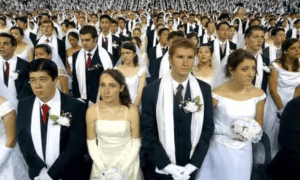
photo: Jung Yeon-Je/AFP/Getty images

Cancelled in Japan

Last month, a court in Japan revoked the tax-exempt status of the Unification Church. According to BBC News, part of the case against the church stemmed from claims that its members were required to make huge financial contributions and other financial sacrifices. The church was created in 1954 under the name “Holy Spirit Association for the Unification of World Christianity” but recently rebranded as “Family Federation for World Peace and Unification.” Its members are popularly called “Moonies” after its founder Sun Myung Moon. The church gained notoriety starting in the 1960s for its mass wedding ceremonies. And while the court ruling in Japan will likely be appealed, it does bring to question the activities of the Unification Church in this country.

Demolition of Historic Seattle Mansion

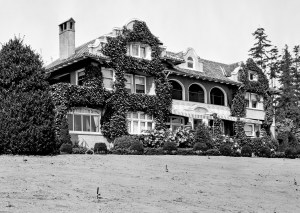
photo: MOHAI

The Unification church made local headlines last year when it announced they were selling a historic mansion in Seattle for $7 million dollars. Located in the exclusive Windermere neighborhood, the mansion was built in 1907 by Rolland Denny, a member of an early Seattle pioneer family. Named “Loch Kelden” the property was purchased by the Unification church in 1974 for $175,000 for use as a retreat center. Along with the sale announcement came news that the church intended on demolishing the structure as the developer buyers were interested only in the land and not a historic mansion. By having the church file for demolition, the developers were able to take advantage of a loophole in state law that allows churches to bypass processes which protect registered historic properties.

Meanwhile in Tacoma

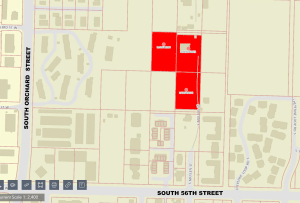
photo: Pierce County Assessor’s Office

More locally, the Unification Church appears to own a 3-acre property in Tacoma at 5230 South Mullen. According to information obtained from the County Assessor’s website, the property has a 3 bed/2 bath home and is registered to “Holy Spirit Association, Malloch David D.A., 5230 S Mullen St, Tacoma.” An online search did not result in a church existing at the location which was confirmed by visiting in person. A visit to the site along a road marked “private” did not reveal any signage or indication that it was church property. The assessed value of the property according to the County is $806,600 and would have generated $8,789 in property tax this year.

Property at 5230 South Mullen in Tacoma

BBC News article on Japan court case: https://www.bbc.com/news/articles/cge1lr7225yo

Seattle Times article on the Loch Kelden mansion: https://www.seattletimes.com/pacific-nw-magazine/a-piece-of-seattle-history-disappears-with-the-demolition-of-loch-kelden/

Tacoma City Council 2024 Report Card

It’s a difficult time to be focused on local government considering all the chaos in the other Washington right now. However, we can’t lose attention of what is going on in our own back yard with our city council. In theory, local government is where the rubber hits the street. In practice, it varies quite a bit. In this annual wrap-up of laws passed, we take a look at what the city council has been up to. In short, it can be answered that they haven’t been up to a lot – if you’re measuring by laws passed which is one of their primary purposes.

Out of 84 laws passed last year, only two were sponsored by council members. The rest came from city staff. Here’s a summary of the laws passed by the council:

ORDINANCE 28963, passed 4/30/2024: An ordinance amending Chapter 8.12 of the Municipal Code, relating to Disorderly Conduct, by amending Section 8.12.150, entitled “Littering prohibited – Penalties”, to align more closely with state law; and providing for enforcement, and establishing civil and criminal penalties for violations. [Deputy Mayor Hines]

ORDINANCE 29014, passed 12/4/2024: An ordinance amending Title 1 of the Municipal Code, relating to Administration and Personnel, by adding a new chapter entitled “Climate and Sustainability Commission”, to establish a Climate and Sustainability Commission and appoint current members of the Sustainable Tacoma Commission to the new Commission. [Council Member Walker]

Granted, nearly all of the laws passed by city staff were routine monotonous updates that probably could only come from staff. However, with a plethora of issues our city is facing, it makes one wonder why there isn’t more activity from the city council.


BY THE NUMBERS
2024 – Total laws passed: 84. Total laws sponsored by city council members: 2
2023 – Total laws passed: 66. Total laws sponsored by city council members: 5
2022 – Total laws passed: 66. Total laws sponsored by city council members: 5

The Tacoma Armchair Approach to Cleaning Up Your Neighborhood

By Erik Bjornson

After the Tacoma Mall moved into Tacoma in 1965, much of downtown and neighborhood business centers suffered neglect and some were nearly abandoned in their entirety. The city likely struck its all time low point around the late 1970s and early 1980s (Stephen Cysewski made his infamous photo tour of downtown Tacoma in 1979).

Many of Tacoma residents who had the means, moved to the suburbs leaving many areas of the city depopulated and in poor physical condition. The homes in Tacoma’s existing neighborhoods suffered decades of disinvestment. Although some progress has been made, many neighborhoods still suffer from blight, neglect and other entrenched social problems. There are relatively large numbers of empty houses, commercial buildings and vacant and blighted lots.

Yet, we all have limited time.

A. Reduce the Many Sources of Blight To Reduce Crime And Increase the Livibility of Your Neighborhood

Studies show that much crime is opportunistic and that blightful physical characteristics give visual cues that that criminal acts can be carried out without repercussions. Thus, following the “broken window” theory, removing blight in your neighborhood can reduce crime.

A cleaner neighborhood is a signpost that neighbors have taken ownership of an area that they may be also watching out for criminal activity and will act protective of the area. It also raises property values and makes your neighborhood more of a place worth caring about.

The first 7 steps can be done from the comfort of your kitchen or computer chair

1. Have the City of Tacoma remove abandoned cars from your neighborhood streets


Abandoned cars facilitate criminal activities and blight the neighborhood and are easily viewable measures of the integrity of the neighborhood. Abandoned cars are often stolen cars which have been left.

From the City of Tacoma Web site:

What is an abandoned vehicle?

Abandoned vehicles are ones that have been left on City streets and may have one or more of the following characteristics:

  • Dismantled
  • In a state of disrepair (broken windows, sitting on blocks, etc.)
  • Stripped of major parts
  • Missing license plates
  • Filled with garbage
  • Sitting in the same spot for seven or more days and appears non-operational
  • In front of a residence in which owners have moved away Most abandoned vehicles are left by people unknown to those living in the neighborhood.

Call the abandoned vehicle hotline at (253) 591-5926 (auto message).

For other car issues such as:

  • Vehicles parked illegally
  • Vehicles with expired licenses
  • Recreational vehicles parked on City rights of way

Call the Tacoma Police Department non-emergency number
(253) 798-4721
and choose option 1 for those types of vehicle problems.

2. Request that the City repair streetlights in your neighborhood

There is a well established connection between the amount of light in an area and the crime rate. The perverbial “eyes on the street” cannot monitor the street activity of an area if it is pitch dark. Also, neighborhoods with burned out lights signifies a neighborhood that no one cares to maintain, monitor or protect, information all too apparent to potential criminals.

Call the City of Tacoma at (253) 591-5287. Streetlight repair requests can also be made online here.

3. Request that the City remove garbage from empty lots and from nearby properties.

Vacant lots and boarded up houses in urban areas are magnets for a large spectrum of criminal activity.” The maxim “Nature abhors a vaccum” is readily apparent in urban areas. With little monitoring, garbage often accumulates in these areas. A vacant lot filled with garbage, often dumped illegally, signals a free pass for criminal activity.

Litter, debris, overgrown vegetation can now be made online here or by phone at (253) 591-5543 or 591-5001.

From the city website:

…leaving your garbage in undesignated areas is illegal. Illegal dumping has a severe impact on Tacoma’s safety, property values and our quality of life. It also places an economic burden on the City of Tacoma when dump sites need to be cleaned up.

Examples of illegal dumping

Items dumped on public property such as city roadways, streets and alleys. Construction materials, tires, mattresses, furniture dumped on side of road.

4. Call to have abandoned shopping carts picked up

The time duration abandoned shopping carts remain in an area signify how active neighbors are in monitoring the area, maintaining the area and in the amount of control likely to be exercised. Although they are unlikely to be used in a crime, they are an instant visual que to neighbors and potential criminals alike.

Fortunately, Tacoma has some services that will recover shopping carts for free. For other areas, call the store the cart is from if possible.

For Safeway and Save-A-Lot carts on Hilltop call Cart Recovery LLD at 1-866-906-CART. Also covers Safeways located 1112 South M St, 302 S 38th and 627 72nd St E

http://www.cartrecovery.net

5. Request that the city take nuisance abatement action against blighted buildings and lots in your neighborhood.

A blighted house which is in disrepair has a higher chance of being a facilitator of criminal activity. Vacant houses often serve as the outpost for criminal activity. It also givens visual cues as to the what the standard of behavior is tolerated in a neighborhood.

Here is the City of Tacoma’s examples of nuisances:

  • Nuisances (primarily litter and debris)
  • Junk vehicles on private property
  • Minimum Building and Structures Code (dealing with the condition or existing buildings)
  • Graffiti
  • Overgrown vegetation on private property

To report any violations please call 591-5001. To report graffiti please call our 24-hour graffiti message line at 591-5691. You can also review the Nuisance Code Fact Sheet.

Low income senior and disabled home owners may be able to have their homes painted for free or at a reduced price with assistance from Paint Tacoma Beautiful which can be contacted at 383-3056 ext 105.

6. Call to have the city remove graffiti from houses and commercial buildings

Here’s an interesting quote on graffiti:

Graffiti creates fear and costs you business and customers. The sight of graffiti can also encourage people to commit acts of vandalism. Graffiti-filled areas often don’t attract shoppers, customers, or investors. Even if your building is graffiti-free, the atmosphere in the neighborhood can impact your business.

Read the city tip sheet on grafitti removal.

  • Graffiti on public or private property within the City of Tacoma: 591-5001
  • Graffiti on buses and bus shelters: 581-8050
  • Tacoma Housing Authority (Salishan Housing Development): 207-4455

If the building is masonry and designated historic or in a historic area: Historic Preservation Office: 591-5220

7) Call the police if you see crimes occurring (911)

According to the Broken Windows theory, small crimes being allowed in an area tend to escalate. Thus, one needs to be diligent in reporting smaller crimes to head off larger crimes.

Final Thoughts

The first thing to understand is that the public peace — the sidewalk and street peace — of cities is not kept primarily by the police, necessary as police are. It is kept primarily by an intricate, almost unconscious, network of voluntary controls and standards among the people themselves, and enforced by the people themselves. …. No amount of policing can enforce civilization where the normal, casual enforcement of it has broken down.”

Jane Jacobs, Death and Life of Great American Cities.

Rather than being random, significant research on crime finds that it is largely based on perceived opportunities and is situationally based. Thus, to reduce crime, one must reduce the various components which facilitate it even if, when considered by themselves, seem trivial.

If you have followed these steps, you should already be seeing improvements in your neighborhood. To gain more improvement, a bit more effort is required.

Few of us worry about crime very much until it gets out of control. Our demands for our time are already overwhelming. To make a larger difference, consider joining your neighborhood association, start a community garden and/or join a block watch. Restoring and strengthening the the social fabric in our neighborhoods is the largest defense against crime and blight we have.

To read more about Broken Window theory, order a copy of Fixing Broken Windows: Restoring Order And Reducing Crime In Our Communities.

Erik Bjornson is the Vice Chair of North End Neighborhood Council and a founding member of the Tacoma Sun.

This article is also available as a PDF File for future reference.
Small Worlds Theory and Livable Downtown

By Paul Sparks

What is “Small Worlds”?
Small worlds is a theory of maximum connectivity. It describes a real world phenomenon found in all types of effective communicative systems (the brain, the internet, viruses, etc). It happens when individual nodes engage in small clusters or “worlds” interacting tightly with one another (“strong links”). These nodes work together in Small Worlds while still maintaining the important connections to other nodes and clusters (“weak links”). This is illustrated in the connected clusters of the small diagram to the right. Small worlds and/or scale-free networks connect individual points with the least degree of separation between them.

What is the “Livable Community” of downtown Tacoma?
A livable community is defined by the quality of relationships shared within a particular geography. These relationships partner together for the economic, social, environmental, and civic life of the place they live. Tight-knit “small worlds” enjoy the potential benefits of proximity (context, relationality, collaboration, social capital etc.) without compromising the regional and global benefits of (transparency, knowledge, perspective, and resource sharing, etc.). They are big enough to live life in (clearly larger than a block) and small enough for a high level of spontaneous relational connectivity (clearly smaller than a region).

Short Premise
Throughout the ages most of the known world has lived with both the good and bad of life in primarily tight-knit community clusters (town, neighborhood, village, tribe, clan). Even in the few larger cities that existed, lack of mobility and primitive technology did not permit people to perceive themselves individually apart from community. With the industrial revolution and the current age of knowledge production, modern human society has worked hard to push the scale to the opposite extreme. Individuals can live as “free agent” monads without connection to local people and place. Living in what author Manuel Castells refers to as “the space of flows” we have lost the relational context that enables deep social transformation, the care of the created world, and the grounded identity of place.

The Paradigmatic Crux Of The Ages
We live at the paradigmatic crux of the ages: this is the first time in history that we have the capacity to live free from the destructive ignorance and tyrannies found in the isolated communities of old. It is also the first time since the history of the industrial revolution that we are coming to realize that there are crucial problems that can only be solved by a commitment to both worlds: that of local livable community and that of regional and global connectivity.

Downtown Tacoma
Downtown Tacoma is at a critical moment for shaping its future in an exemplary way. Three variables can make all the difference:

(1) A commitment to design and shape our built environment in ways that allow community members the freedom to live life (work, play, sleep, eat, relate) in one community.

(2) A commitment as members to develop more holistic patterns of life within the livable community context of downtown.

(3) A commitment to collaborate together with the other livable communities of Tacoma for the vitality and sustainability of all.

Want To Learn More?
Small Worlds theory is one of the many emerging scientific models that point us toward this local/global (glocal) model of life. (Part 2: Coming Soon)

Small World – Just for fun Learning Party Links
Link 1: Join the Grand Experiment (become the laboratory):
http://smallworld.columbia.edu/index.html
Link 2: Power Point Learning (watch the slides):
http://www.legendmud.org/raph/gaming/smallworlds_files/frame.htm
Link 3: Amateur Learning Party (you play six degrees):
http://www.canyouhearmeyet.com/small_world_primer/small_world_entry.html
Charts and Graphs: (See the incredible work of John Cage)
http://www.sojamo.de/iv/index.php?n=10&ci=003-01