Pierce County Candidate Ken Paulson Answers Questions

Ken Paulson, candidate for Pierce County Council District #4

Editors Note: November elections are almost upon us.  Today, the Tacoma Sun posts questions submitted to Ken Paulson who is running for Pierce County District No. 4.  His opponent is Tim Farrell, the incumbent.

Pierce County District No. 4 is especially important for Tacoma as it includes downtown Tacoma.

1) Jail releases

The media has reported that the Pierce County Jail currently releases nearly all of the people who have been arrested in Pierce county into downtown Tacoma even if they are arrested in Orting or a remote area of the county.  Would you support a plan which would transport some or all of the jail releasees to the places where they were arrested or where they live when their sentence ends?

Answer:  I am for this.  I would suggest offering incentives, such as being released a day or two early, if family, relatives or friends were responsible for picking up the released offender and providing the transportation instead of Pierce County footing the transportation bill.
2) Growth management

Over the last 30 years, Pierce County has been know for suburban sprawl which has caused the loss of farmland, pollution, traffic congestion and disinvestment in Tacoma.

If you are elected, how will you address the effects of sprawl and growth management in Pierce County?  How would that plan be different, if at all, from what is in place now?

Answer:  We can’t undo what has already happened.  Therefore we must move forward.  With the high price of fuel, people may no longer want to live in the far regions of Pierce County unless their place of employment is located nearby.
People with large lots in Pierce County should be able to short-plat and have a building site(s) in their back yard.  This would increase the density where there are already houses.  Community plans need to be re-evaluated for addressing the community’s specific needs.

3)  Pierce County Felon “Dumping Ground” Issues

As you know, Tacoma and Pierce County have a disproportionate number of released felons placed by the Department of Corrections as described in the Tacoma City Club report: 30 Years of DOC in Pierce County, Was It Worth It?

If elected, what do you plan to do, if anything to reduce the number of felons placed in Tacoma and Pierce County?  Do you agree that Tacoma and Pierce County should have no more than their pro-rata share based on population?  How can the concentration of felons be reduced to its pro-rata share?

Answer:  I absolutely believe that Tacoma and Pierce County should not have more than their pro-rata share of released felons.  Why should Tacoma and Pierce County be the dumping ground?  They should be required to be located in the county of offense.  I would advocate for this to happen.

Boundries of Pierce County District 4
Boundary of Pierce County District 4

4) Elks Temple

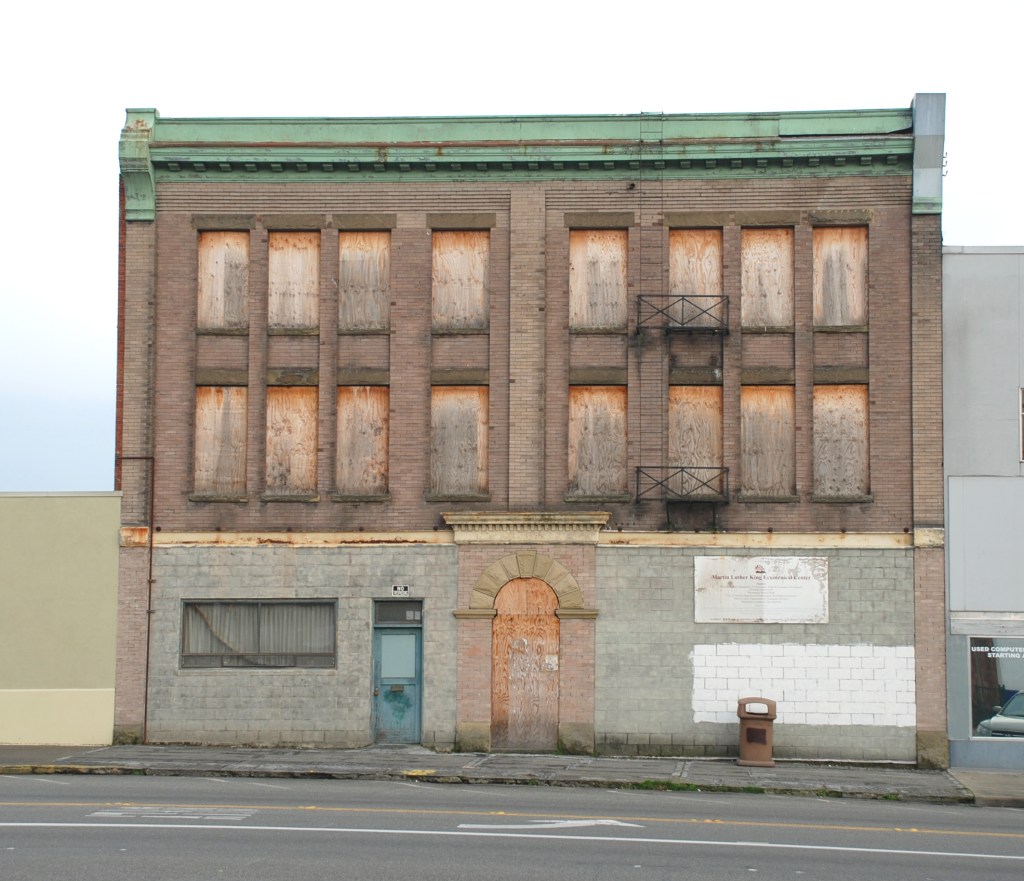
A great many Tacomans would like to see the Elks Temple restored.  There have been plans discussed to possibly turn part of the building into a transit station.

What is your position on this issue?  What plan would you support?

Answer:  It is not the mandate, function or responsibility of Pierce Transit to restore the Elks Temple.  If they didn’t plan the transit station correctly the first time, are we having the same people plan the next transit station and ending up with same results?

5) Rebuilding Tacoma

Despite the progress made, Tacoma still has a large number of vacant lots, and empty and blighted buildings relative to other west coast cities.  What role can you and Pierce County take, if you are re-elected, to support the rebuilding of downtown Tacoma and Tacoma’s mixed use centers.

Answer:  Downtown Tacoma has a great potential future.  I would gladly work with the City of Tacoma to attract new businesses and retain the existing business.  However, right now, and into the near future, money is going to be really tight for Pierce County.  In fact, most likely there will be employment reductions.  If this requires Pierce County General Fund budget money, there will be a line-up of requests.


6) Arts and Community

What artistic events in Tacoma do you enjoy and which ones have you attended?

Answer:  I have attended the 6th Avenue Arts Festival and the Proctor Arts Fair.  My wife enjoys the arts and people – and I enjoy my wife, so we attend these together.


7) Restoring Tacoma’s Streetcars

Many Tacomans support restoring Tacoma’s streetcar system.  Gas prices are now at record levels.  Pierce County plays a large role in transportation systems in Tacoma.  Do you support restoring the streetcar network in Tacoma?  What steps would need to be taken to make this happen?

Answer:  This is public vote issue.  My opinion is that buses are more versatile and able to accommodate more transportation needs.


VIII) Pollution Issues in Tacoma

The City of Tacoma is currently failing the pollution criteria set by the State of Washington. What role can Pierce County play to reduce pollution in the city limits of Tacoma?

Answer:  I don’t have an answer to this, but will listen to ideas and plans.


9) Crime Reduction Proposal by City Manager Eric Anderson

City Manager Eric Anderson has set a goal to reduce crime in Tacoma by 50 percent in 14 months.  Given the predominant role Pierce County plays on the criminal justice system, what steps will you support the County government in taking so that the City of Tacoma can succeed?

Answer:  I would advocate for harsher penalties for predators, rapists, and other life-demeaning acts of violence.  Another thought could be for both Tacoma and Pierce County to send illegal immigrants back to their country of origin as police and the criminal justice system encounter them.

Tacoma Moment of Zen: The Luzon

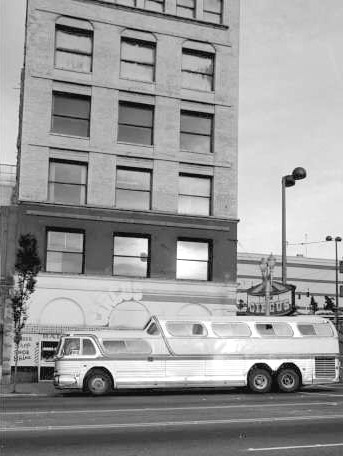
The building currently known as the Luzon Building located downtown at 15th & Pacific has been known by many names over the years: the Scandinavian-American Bank, Pacific National Bank, Metropolitan Savings Bank, Golden Chopsticks. Perhaps the name most associated with the building was the Fun Circus.

Built in 1890, the Luzon was designed by the renowned Chicago architect firm of Burnham & Root. With load-bearing exterior walls two feet thick and interior iron columns and beams forming an iron skeleton, the building was considered cutting edge in the 1880’s. This was one of the last buildings the firm built on the West Coast and was built at the same time as the famous Monadnock Building in Chicago. Both of these buildings set the stage for a new generation of buildings, the skyscraper. With the Luzon came references to Tacoma being the “little Chicago” of the West. Although the city’s politics, red light districts, and organized crime probably helped with that too.

luzon1

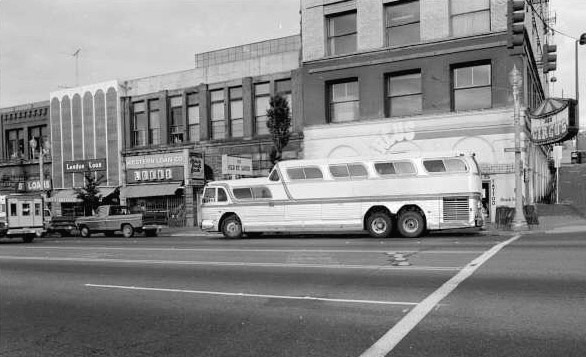
A 1979 photograph of the west side of the 1300 block of Pacific shows the history that was lost to make room for a now common site in downtown – a surface parking lot. The buildings are, left to right, the David Levin building, 1312 Pacific (built 1908) the Samuel Wolf building, 1310 Pacific (built 1889) the Baker building, 1306-08 Pacific (built 1889) and the Luzon Building, 1302-04 Pacific. In 1979, the Luzon Building was home to the Fun Circus and, prior to that, Chopsticks restaurant. It was built in 1890 and is on the City, State and National registry. It was designed by Burnham & Root, architects. The building has been vacant since 1986.

luzon2

Most recently, the Gintz Group purchased the building with plans to bring it back to its previous magnificence. As of late August 2008, the building sits surrounded by fencing and a tree growing out of its side.


Sometimes it’s easy to forget how far we’ve come. Or how far gone Tacoma was. Thankfully, Stephen Cysewski captured Tacoma at the lowest of lows on 35mm film for posterity. Check out more photos by Cysewski from the Tacoma Public Library’s database.

Which Pierce County Candidates Can Help Tacoma?

In November, Pierce County Candidates will be asking you to vote for them.

But what do we know about them? Will they do anything to help the many needs Tacoma has?


If elected which candidate can obtain something meaningful like reduce suburban sprawl, help to rebuild Tacoma and reduce the disproportionate number of felons being place in Tacoma and in Pierce County?


Tacoma is located in Pierce County


Its true. Tacoma cannot get away from the tremendous influence Pierce County government has on the city. The county runs the jail and is in the best position to hold the line on the number of felons being placed in the county and in Tacoma.

Appropriately infilling and rebuilding the city also depends on Pierce County getting suburban sprawl under control.


Here are the questions sent to Ken Paulson and Tim Farrell, candidates for Pierce County Council District No 4.

We will post the responses when they come in.


Do you see any that we missed?


Tim

Tim Ferrell

Ken Paulson

1) Jail releases

The media has reported that the Pierce County Jail currently releases nearly all of the people who have been arrested in Pierce county into downtown Tacoma even if they are arrested in Orting or a remote area of the county. Would you support a plan which would transport some or all of the jail releasees to the places where they were arrested or where they live when their sentence ends?

Answer:

2) Growth management

Over the last 30 years, Pierce County has been know for suburban sprawl which has caused the loss of farmland, pollution, traffic congestion and disinvestment in Tacoma.

If you are re-elected, how will you address the effects of sprawl and growth management in Pierce County? How would that plan be different, if at all, from what is in place now?

Answer:

3) Pierce County Felon “Dumping Ground” Issues

As you know, Tacoma and Pierce County have a disproportionate number of released felons placed by the Department of Corrections as described in the Tacoma City Club report: 30 Years of DOC in Pierce County, Was It Worth It?

If re-elected, what do you plan to do, if anything to reduce the number of felons placed in Tacoma and Pierce County? Do you agree that Tacoma and Pierce County should have no more than their pro-rata share based on population? How can the concentration of felons be reduced to its pro-rata share?

Answer:

4) Elks Temple

A great many Tacomans would like to see the Elks Temple restored. There have been plans discussed to possibly turn part of the building into a transit station.

What is your position on this issue? What plan would you support?

Answer:

5) Rebuilding Tacoma

Despite the progress made, Tacoma still has a large number of vacant lots, and empty and blighted buildings relative to other west coast cities. What role can you and Pierce County take, if you are re-elected, to support the rebuilding of downtown Tacoma and Tacoma’s mixed use centers.

Answer:

6) Restoring Tacoma’s Streetcars

Many Tacomans support restoring Tacoma’s streetcar system. Gas prices are now at record levels. Pierce County plays a large role in transportation systems in Tacoma. Do you support restoring the streetcar network in Tacoma? What steps would be needed to be taken to make this happen?

Answer:

7) Pollution Issues in Tacoma

The City of Tacoma is currently failing the pollution criteria set by the State of Washington. What role can Pierce County play to reduce pollution in the city limits of Tacoma?

Answer:

VIII) Crime Reduction Proposal by City Manager Eric Anderson

City Manager Eric Anderson has set a goal to reduce crime in Tacoma by 50 percent in 14 months. Given the predominant role Pierce County plays on the criminal justice system, what steps will you support the County government in taking so that the City of Tacoma can succeed?

Answer:

Reference: The End of Suburbia (The Entire Movie)

Plant a Tree for Every Tacoman

Tacoma is losing its trees. After a quick glance at the skyline you might not believe it, but it’s true. Recent winds and storms have taken many trees; others have fallen to development; and plenty have been removed from our parks and sidewalks because of their age.
There is no systematic effort in Tacoma to replace those lost trees and there is certainly no city-wide effort to increase the number of trees in Tacoma. This is unfortunate because trees can bring so much good.
Well-located trees can help keep the streets and sidewalks cooler. They shade our homes and result in lower energy bills. They keep the air cleaner and they soak up and filter water before it runs into our storm drains. They beautify neighborhoods, increase property values, and help pull carbon from the atmosphere.
There are, of course, heavily forested areas of our city. But our sidewalks, our urban and suburban parks, our backyards, our colleges and schools, all benefit from adding more trees.
The Green Ribbon Task Force met on Wednesday, June 25 and proposed an audacious goal for making Tacoma—quite literally—more green. The draft recommendations include at a city-wide effort to plant 20,000 trees in the next biennium. This recommendation (along with about 80 others) will go before the City Council at Tuesday’s Study Session for consideration. I would encourage everyone involved to not only implement this recommendation (along with the others) but here’s a goal I’d like to recommend. Let’s make this the target: plant a tree for every man, woman, and child in Tacoma.
Now that has a ring to it. Recent estimates put Tacoma at 201,700 residents so we’ll make that our 10-year goal. 201,700 trees by 2018. But if the Tacoma population increases in that time (as it almost assuredly will) so will our goal. There will always be more trees to plant, one for each new soul added to our city.
I recognize that in so many ways governments work to avoid goals and targets that forever remain just out of reach. But in this case, that might be just the point. Tacoma is going to continue losing trees and we need a reason to keep re-planting them.
The New York City model of tree planting brings together individuals, municipal governments and agencies, non-profits and schools to complete the task. Our community can do the same. If we set out to plant a tree for every person in Tacoma, our city is going to be a richer, more beautiful, energy-efficient place.
Erik Hanberg lives and works in downtown Tacoma. He blogs regularly at erikemery.com.

Mars in Tacoma

What does the Martin Luther King Housing Development Authority (MLKHDA), an affordable housing non-profit organization, have to do with one of the richest companies in the country? They both called the Lorenz Building at 1147 Tacoma Avenue South home.

Built in 1904, the Lorenz Building has played host to a number of companies over the years including a bakery, a floral shop, and a candy company that would eventually become the largest candy company in the world, Mars.

Frank Mars started the Mars Candy Factory, Inc in 1911 out of the family’s Tacoma home kitchen at 3312 North 27th Street. It was while Mars was in Tacoma – and possibly in the Lorenz Building – that the idea was developed for the company’s first blockbuster product, the Milky Way candy bar.


mars-candy.jpg

Mars ad in 1920s Stadium High School publication


Unfortunately, success was elusive in Tacoma and the Mars family skipped town to return to their native state, Minnesota, to the city of Minneapolis. It was here that they hit their stride and quickly outgrew their facility. Next, the company moved to Chicago to take advantage of its central location and rail access for distribution across the country where, for most of the past century, Mars has had a mostly friendly rivalry with Hershey’s.

Last month, Mars announced it had purchased the William Wrigley Jr. Company, the world’s largest chewing gum producer, for $23 billion cash deal. The two companies together are expected to generate annual sales in excess of $27 billion to unseat Cadbury Schweppes as the world’s largest confectionary manufacturer.

mars-ad.jpg

Maintaining a long lasting tradition, Mars remains a private family owned business with family members consistently ranked on the Forbes List of “The World’s Billionaires”

Meanwhile, the future of the Lorenz Building remains uncertain. MLKHDA wants out of the homeless shelter business and the city recently posted a “do not occupy” notice on the front door.


Take the Mars tour of Tacoma! While living in Tacoma, Frank & Ethel Mars called these addresses home: 952 South Sheridan Ave, 504 South Ainsworth Ave, and 3919 North 35th.

The city has a survey of historic buildings and is in the process of updating it. There’s an interesting story about the builder, Edward A. Lorenz:

Edward came from a pioneer Northwest family. He took profits from growing hops in Orting to buy up property in Tacoma. Finding the Tacoma market more lucrative than farming, he sold his 160 acre farm to the town of Orting who wanted to build a Soldiers’ home.

Edward liked to keep busy. In addition to developing commercial real estate in downtown Tacoma, Edward was also owner of a lumber mill, a steam boating company (part of the Mosquito Fleet), and a boat building company.

Related links –
Yahoo News: Mars Announces Merger Agreement with William Wrigley

Wikipedia: Mars, Incorporated

The News Tribune: Tacoma shelter’s future in doubt


MADE IN TACOMA: Mark Monlux, Illustrator Extraordinaire

made-in-tacoma-web.jpg
Celebrating people, products, and businesses that make Tacoma unique.


monluxmug.jpgMark Monlux is an award winning freelance illustrator and cartoonist. A northwest native, he has called Tacoma home for the last 16 years. After graduating with a B.A. in Graphic Art from Central Washington University in 1985 Mark entered the freelance market initially as a broad-spectrum designer. But, as more and more clients requested is drawings, he focused solely on being an illustrator. Working mainly in the fields of advertising and published his just a few names from his long history of clientele includes Microsoft, Carnation, Workman Publishing, Eating Well Magazine, Kimberly Clark, Hewlett Packard, Alaska Airlines, Reynolds and Reynolds, Toronto Dominion, Coldwell Banker, March of Dimes, Washington Mutual, and a host of agency design groups.


Recently, the Tacoma Sun sat down at the computer and asked him a few questions.


[Sun] First off, a geek question: your stuff looks too good to be purely digital. How do you do it?

[Monlux] Currently, I start with pencil sketches. Those are faxed for approval. I then do pen and ink. The pen and ink is scanned in at a high resolution, colored in Photoshop and then provided to the client as a for placement file. For a number of years I constructed my illustration in Illustrator as vector drawings. I still do that, but only when the demands of the project call for it.

[Sun] Did you ever imagine that you could make a career out of cartooning?
[Monlux] I knew very early on in life (age 4) that I was going to become what was then termed a “commercial artist”. I could always draw, but it wasn’t until after a few years as a freelance designer that I made the decision to do strictly illustration. And it was a number of years after that before I decided to focus in on the cartoon style which I find I love to do the most.

[Sun] Who were your inspirations?
[Monlux] Graham Wilson was a huge influence on me.

[Sun] How has the web impacted the quality and quantity of your work?
[Monlux] The web had a huge affect on the illustration market. Most of it negative. With royalty free and free clip art available at the click of a button the amount of work has gone down hill drastically from the time when I first entered the market.

[Sun] Any advice for any aspiring Illustrator Extraordinaires out there?
[Monlux] Be aware of the true value your art has in the marketplace. While it’s true that demand for illustration lowered, that does not mean the value of it has lowered. The key these days is to target and connect with clients who are looking for dynamic images that are tailored to them, and not just the random schlock you find on the web that everyone else and their grandmother is using.


Image credit: Art Director: Tony Ulwick, CEO Strategyn; Client: Strategyn


[Sun] As an Illustrator Extraordinaire, I’m sure you could live and work anywhere. What brought you to Tacoma and what keeps you here?
[Monlux] I moved here some 17 years ago when my wife and I decided to buy a house. The prices in Seattle were starting their first surge then. We wanted an older house with a large yard. Our search spiraled out until we found the perfect Victorian here in Tacoma. I’d just shifted my business structure to where I was doing everything by fax, modem and courier. I got myself an 800 number and sent that to clients. I never bothered to tell anyone that I was moving and lost none of my clients when I did. In fact, the process opened my thinking and I started to take on national clients, and then international clients. We are very happy with our move. I live in the Fern Hill District which has a very Mayberry feel to it. An alley runs behind my house and it is the artery of the neighborhood. Everyone visits everyone else in the garages and porches and I know all my neighbors very well.

[Sun] The ability to hold a pen or pencil with a critical eye or witty thought seems to be a fading art form. What is your hope for the future of illustrating?
[Monlux] That people will once again become demanding in what is offered up to them. If you look back at the advertising that occurred in the 60’s and 70’s
folks were very critical of what was set before them. Currently our culture is being very open to anything that appears, whenever it appear. This acceptance of the random was brought about by the internet. Folks learned how to surf, and it’s fun to do, just not very productive. Now folks are learning how to use search features to be a bit more efficient. As response the internet is building features which use your past searches to create ‘intuitive’ recommendations. I belive that as the internet grows in this direction, the average joe will once again become more discriminating about what they want offered up to them. The artist who foresee this trend, and design their presence on the web to be tuned to this trend will have a distinct advantage.

[Sun] Is it just me, or do the comics in today’s daily papers really suck?
[Monlux] With the internet the amount of web comics have shot through the roof. Many web comics do not have to be as tame or conventional as syndicated comics that fill the newspaper. Because they tap into a different revenue stream they’re not required to edit down into something that is widely palatable.

I look forward each day to opening up my email and my blog reader to read all the strips I’ve subscribed. I agree, there is a lot of bad comics out there. But, only because there are more comics. I keep hunting down and adding the ones I think are the cream. I also like to find cartoonists who are trying new and different things. Watching them improve with each strip is just as entertaining for me as the amusement of the strip itself. I’m developing a couple web comics myself, “The Comic Critic” which is a movie review in cartoon form, and “The Return of Stickman”. Both of my cartoons are anti mainstream. In The Comic Critic I use no consistent characters, this breaks the silent rule of having five core identifiable characters in a strip. In The Return of Stickman, all the characters are stick figures and sometimes the only difference between them is their names. Oh, and stickman is usually stuck in a cubical behind a desk. It’s my way of poking fun at strips that constantly use no background and just have a shelf or above the waist shot of their characters. When I see a strip like that I add it to my blog reader list.


Image credit: Art Director: Ron Pullium, Nautilus Design; Client: Flex-a-lite


[Sun] It seems like the best cartoonists are either slightly crazed or get burned out (Robert Crumb, Gary Larson, Berkeley Breathed, Garry Trudeau). How do you keep from going crazy or getting burned out?[Monlux] For a number of years I wouldn’t draw except during business hours. I wanted to be paid for every line I drew. But, the I decided to try something for a year. I bought a bunch of sketchbooks, of all sizes, and I put one in every room of the house, one in the car, and even a small one for my pocket for when I went out. I then drew in them constantly. I wanted to see if the faucet really would run dry, which was a big fear of mine. I did not place any limits on what I drew. I told myself not to care about the quality, or the ideas, just to let it stream out. To my joy and surprise the faucet never ran dry. Instead it flowed even stronger. Ideas, concepts, and gratification came faster and grew better. Sure I still drew a turd every now and then. But, it didn’t strike me negatively like it did before. Now don’t get me wrong, I still like and demand to get paid for the value of my work. If during my doodling I come up with something that I can license, that great. Certainly my client’s have taken note of how much more productive and resourceful I’ve become.

[Sun] Do you ever get “illustrators block”? What do you do to break through?
[Monlux] Drawing more and keeping the flow open is a long term solution. But, there are days when I get totally blocked. When that happens I try to get out of my head. Usually a walk will do it. If not I will read a short story or book and temporarily spend my time crawling into someone else’s head. By the time I get back to my own, the furniture looks like it’s been moved around.

[Sun] Can we expect to see you at a Frost Park Chalk Off sometime?
[Monlux] Yes. I keep planning on going but life interferes. Either I’m flying in or out of town, having the car die on me, have a crushing deadline, or like this Friday, I’m picking up my nephew to attend the Emerald City Comiccon. But, I do plan on making it one of these days. And I will dominate and lay low my competition.

[Sun] What is a question you’ve always wanted to be asked?
[Monlux] Would you like to draw an illustrated history of zombies in the cinema? Yeah, I’d really like to do that. In fact, I think I will start working on my first draft.

[Sun] GREAT! We look forward to seeing it. Thanks for taking time out to chat with us!


If you would like to see more of Mark’s work, check out his website and blog at: www.markmonlux.com

A Post-Kunstler Tacoma

I’ve been thinking about Kunstler’s recent visit. For all his bombast and bleakness, he does offer some food for thought.

The first part of Kunstler’s talk was about our reliance on fossil fuel and how we’ve come to rely on it for commuting long distances to jobs (unsustainable), to move food from other countries to our tables (unsustainable) while converting our farmland to giant warehouses (unsustainable) that are served by giant fleets of diesel trucks (unsustainable). Meanwhile, we don’t support our national passenger rail service, Amtrak, and can no longer afford to maintain our highway infrastructure.

While I agree there is a finite source of fossil fuel – they don’t make dinosaurs anymore – I don’t agree with Kunstler that passenger air flight or single occupancy vehicles will be only for the ultra-rich anytime soon. Although the recent collapse and mergers within the airline industry may prove him right. It is clear to me though is that we are not moving fast enough towards effective sustainable solutions.

Cities vs. Burbs


Sidebar:
Top 5 Cities with the Greatest Percentage Population Growth, 2000-2007
1. Snoqualmie (King Co.) 427.3%
2. Roy (Pierce Co.) 234.6%
3. DuPont (Pierce Co.) 187.3%
4. Issaquah (King Co.) 120.4%
5. Lake Stevens (Snohomish) 109.9%
source: PSRC


About 12 miles southeast of Tacoma near Bonney Lake is a master planned community called Cascadia. Over a decade in the making, the Cascadia project is an ambitious project that sits on nearly 5,000 acres and is anticipated to eventually be home to more than 16,000 people. Needless to say, much planning has gone into the Cascadia vision: open space, parks, ponds, and miles of trails. According to their website other features include, “a major conference center, the business park, a town square built with pedestrians in mind, a performance hall, a think tank focused on international understanding — the Cascadia Institute — a culinary school, a hotel and an outdoor sculpture park. It will draw on green-development principles that include the use of sustainable power and water recycling.” It’s hard to find fault with such an admirable vision. Indeed, judging by the fact that they’ve already sold over 400 lots to homebuilders without even having infrastructure in place indicates there is something compelling about this project. The project is as close to being perfect as you’re likely to see, except for one thing: it’s not supposed to be there.

According to the latest numbers released by the Puget Sound Regional Council (PSRC), suburban development accounted for over 75% of new housing development for the years 2000-2007. Put another way, less than a quarter of all new development was inside the Puget Sound Metro area which includes Tacoma, Seattle, Bellevue, Everett, and Bremerton. To implement Washington State’s Growth Management Act, the PSRC has just released the latest version of its guiding document called Vision 2040. The document was approved about a week ago by PSRC representatives from Snohomish, King, Pierce, and Thurston counties and various ports, tribes, state offices, and transit organizations.

If anyone knows what’s going on with growth in the Puget Sound, it’s the PSRC. Yet, even in their latest document their projections show housing growth for unincorporated and rural areas only 28%. Why the discrepancy? Why, despite all the cranes over Seattle’s skyline building condo tower after condo tower was Seattle’s growth less than the state average? City of Tacoma officials have known for years that something was amiss due to the fact that nearly no new housing has been built where it wants it most: in its mixed-use centers. Sure, downtown has seen much new development especially in the form of high-end condos and the Tacoma Mall area (Zen question: How is the mall a village?) has seen many new town-homes of questionable design go up. Meanwhile, there has been very little new housing built in Proctor, Sixth Ave, or Stadium – all desirable or upscale neighborhoods. Despite Seattle and Tacoma each garnering sub 5% gains for the 2000-2007 period, the PSRC did get right its forecasted total growth. Translation: the Puget Sound Metro area IS getting the increase in population it was expecting… it’s just not WHERE it was expected – or desired.

In his insightful story on Vision 2040, Crosscut writer Douglas MacDonald concludes, “This decade’s actual results to date, in other words, are farther from the expected share of regional population growth set in the Vision 2040 plan than the results across the previous decade. In the 1990s, those cities’ total growth was 96,000; for the first seven years of this decade, it is only 41,000. Seattle, for example, in that earlier decade added more than 47,000 people. Seven years into this decade, it has added 23,000. Bellevue added 11,500 (net of annexations) in the 1990s. Seven years into this decade, it has added 5,500 (net of annexations). Tacoma in the 1990s added almost 17,000. Seven years into this decade, it has added about 8,100.

Judged across two decades, we have been heading backwards from our goal of attracting much higher rates of population growth to the metropolitan cities, as Vision 2040 supposes we must in this and the three coming decades.”

Backwards?! I don’t think that was the plan! What does all this mean? Most immediately, it means that more earned dollars that should be going to places where they’re needed, like people’s bank and retirement accounts, will be needed for more infrastructure, public facilities and services, and of course, more roads.

That’s where it comes back to Kunstler: if you’re going to live outside a metro area, you will need your car. But it’s hard to drive when there’s no gas or when the price of gas continues to sky rocket as it has these past few years. Will Kunstler be right? Will the current gas trend make us rethink the future of driving? Will it make the Cross-Base Highway Project obsolete even before it’s finished? Only time will tell.

All this raises the question of what will happen to all those affordable cul-de-sac suburban homes when they become more expensive to get to and away from? As much as some new suburban developments try to mimic traditional neighborhoods, they continue to segregate uses which means residents must rely on their car to go shopping, go out to eat, go to work, go to the park, etc. Aside from being suburban developments being unsustainable due to their heavy reliance on cars, some recent articles suggest another emergency facing suburban developments: the sub-prime meltdown.

The Trend: More Going Local

In the March ’08 edition of the Atlantic magazine, Brookings fellow, Christopher Leinberger, wrote “Fundamental changes in American life may turn today’s McMansions into tomorrow’s tenements. Strange days are upon the residents of many a suburban cul-de-sac. Once-tidy yards have become overgrown, as the houses they front have gone vacant. Signs of physical and social disorder are spreading.

At Windy Ridge, a recently built starter-home development seven miles northwest of Charlotte, North Carolina, 81 of the community’s 132 small, vinyl-sided houses were in foreclosure as of late last year. Vandals have kicked in doors and stripped the copper wire from vacant houses; drug users and homeless people have furtively moved in. In December, after a stray bullet blasted through her son’s bedroom and into her own, Laurie Talbot, who’d moved to Windy Ridge from New York in 2005, told The Charlotte Observer, ‘I thought I’d bought a home in Pleasantville. I never imagined in my wildest dreams that stuff like this would happen.’”

More interestingly, Leinberger goes on to connect the decline of suburban developments with a renewed interest in urban living. He writes, “The decline of places like Windy Ridge and Franklin Reserve is usually attributed to the sub-prime mortgage crisis, with its wave of foreclosures. And the crisis has indeed catalyzed or intensified social problems in many communities. But the story of vacant suburban homes and declining suburban neighborhoods did not begin with the crisis, and will not end with it. A structural change is under way in the housing market—a major shift in the way many Americans want to live and work. It has shaped the current downturn, steering some of the worst problems away from the cities and toward the suburban fringes. And its effects will be felt more strongly, and more broadly, as the years pass. Its ultimate impact on the suburbs, and the cities, will be profound.

Arthur C. Nelson, director of the Metropolitan Institute at Virginia Tech, has looked carefully at trends in American demographics, construction, house prices, and consumer preferences. In 2006, using recent consumer research, housing supply data, and population growth rates, he modeled future demand for various types of housing. The results were bracing: Nelson forecasts a likely surplus of 22 million large-lot homes (houses built on a sixth of an acre or more) by 2025—that’s roughly 40 percent of the large-lot homes in existence today.

For 60 years, Americans have pushed steadily into the suburbs, transforming the landscape and (until recently) leaving cities behind. But today the pendulum is swinging back toward urban living, and there are many reasons to believe this swing will continue. As it does, many low-density suburbs and McMansion subdivisions, including some that are lovely and affluent today, may become what inner cities became in the 1960s and ’70s—slums characterized by poverty, crime, and decay.”

Tacoma’s Destiny

This bodes well for older cities like Tacoma that already have services and infrastructure in place – even if some of our infrastructure could use some TLC (hello Murray Morgan Bridge). I noticed a regional trend starting about ten years ago of towns and cities wanting to create a downtown they never had. Most of them were too small or to young to have a real downtown. Witness the plight of University Place as a current example. Its leaders desperately want to create a new center for the town and are learning how hard it is to create a new heart from scratch. Besides downtown, Tacoma has the advantage of already having many built-out neighborhood commercial districts – thanks to an extensive streetcar system that once connected neighborhoods together. However, there are many obstacles to overcome: decades of disinvestment by property owners; a low level of entrepreneurial sophistication and activity (which could be connected to the high number of government and non-profit employees); a lack of commercial development capacity, expertise and opportunities; dirty image based on tide flats smokestacks, to name a few.

I do believe that Tacoma turned a corner sometime recently. It has been a long time since there was a critical mass of residents who actually cared about the place and its future. This has caused some tension between the old guard and the new, but this is a natural part of the process and is to be expected. The question remains though, if Tacomans can come together, take back ownership of their neighborhoods, create community, and demand a better more livable city. Once this question is resolved we will be able to take advantage of Kunstler’s “oil free” world and give suburban developers and residents a reason to move back to the city – our city.

A (Mild) Defense of the ‘Burbs

It’s a somewhat fashionable thing right now to look down your nose at the suburbs. Environmentalists and students of urban studies (rightly) point to the energy wasted by single-family houses and the gas guzzled on the trips to the grocery store.
The critique has been in Hollywood for years, but it’s recently become much more prevalent. Look to the many recent television shows and films that have aimed to “pull back the veil” on suburbia—The X Files, Desperate Housewives, American Beauty, last year’s Little Children and Disturbia (which so obviously wants to indict suburbia, it starts its critique in the title). As far as Hollywood is concerned, the horror is in the suburbs, masked by the cookie cutter houses owned by people desperately trying to fit the mold.
Writing off the suburbs, or painting them all with the same brush, is a bad idea. Those in Tacoma who, like me, want to create a healthy downtown core should recognize that our success downtown is greatly affected by what happens in our suburbs.
I don’t want to get rid of the ‘burbs in favor of high rises. I want to make sure the urban core has a good relationship with them and encourage smart suburban growth. To do that, we need to draw distinctions between the good and the bad suburbs.
The NIMBY Problem

To the suburban dweller, the distinction between a good suburb and a bad suburb is easy: the bad suburb is the development that has leapfrogged past their own and is even farther from the city center than they are. They point across the street, “It’s that development that unnecessarily bulldozed a forest!” and “It’s that development that caused the roads to be filled with traffic.” Many move to the suburbs to “get away from it all,” and once they’ve moved out there, no one else should be allowed to come clog up their little slice of paradise.
I’m exaggerating a bit here, but the point still stands: most suburban communities want further growth curbed. It’s part of a strong NIMBY sentiment common to many suburban dwellers (the very phrase “NIMBY”—Not In My Back Yard—assumes the very suburban concept of a backyard).
The worst form of this NIMBYism results in the creation of a suburban municipality. These new suburban cities usually immediately create zoning laws that prevent the creation of multi-family housing like apartments and duplexes. It doesn’t take long before the city and the suburb are stratified along race and class lines. The city gets poorer, the city’s schools start to decline because their property tax base has dropped, and then even more suburbs want to break away. Consider Detroit: in 1950 it had 1.8 million people. Today it has one half that population (918,000 estimated), even though the entire metropolitan area has grown to 4.4 million. Is it surprising it has a high crime rate and blocks and blocks of abandoned buildings?
This is not necessarily a problem that is either liberal or conservative. Democratic mayor David Rusk in Albuquerque helped launch an aggressive annexation bid that kept Albuquerque growing faster than the city itself, ensuring that suburbs couldn’t break away and take their tax base with them. The Republican-run government in Indianapolis consolidated the City and County government in 1970. In 1975 Anchorage did the same thing and as a result the city became larger than the state of Rhode Island (apparently everything must be XXL in a state the size of Alaska).
Density & Transit

Again, not all suburbs are bad. Older, denser suburbs are more likely to be on historic mass transit lines, or will be good candidates for mass transit in the future. Their age also means that commercial development is more likely to be closer, possibly within walking distance. They are also less likely to secede from their central city.
That’s not even to say all newly-built suburban communities are bad by definition. The town of Dupont, Washington, has worked hard to create a suburban town that also avoids many of the pitfalls of suburban design (or lack of suburban design, if you’re a cynic).
It’s important to point out, too, that living in the suburbs is a trade that suburban residents accept. They are choosing a commute so they may have a backyard, choosing higher transportation so they may have lower housing costs, and choosing to be away from active nightlife so they may have a feeling of security for their family. These are not necessarily bad choices, as many suggest. I would call it a “bad choice” only when it is an unexamined choice. When is the commute so long you never get to play with your kids in the backyard? Is saving 6 hours a week commuting worth a home 700 square feet smaller?
The Future of Suburbia

The April issue of The Atlantic contained an interesting piece on one of the problems that will begin to afflict many suburbs in the coming decades: too much supply. Christopher Leinberger writes, “Arthur C. Nelson, director of the Metropolitan Institute at Virginia Tech, forecasts a likely surplus of 22 million large-lot homes (houses built on a sixth of an acre or more) by 2025—that’s roughly 40 percent of the large-lot homes in existence today.” This is due to smaller families, rising fuel costs, empty-nesters who are “right-sizing,” and young people who are less likely to seek a home in the suburbs.
Leinberger calls his piece “The Next Slum?” and suggests that the suburbs on the fringes of cities are going to hurt the worst—too much supply will send prices down dramatically in the suburbs, vacant properties will be common, and transportation costs will still be high (without the trade off in “quality of life” to make it more palatable). It’s a startling forecast, but in some parts of the US it’s already started to occur. In a development 7 miles outside of Charlotte, North Carolina, 81 of 132 houses are vacant and in foreclosure; vandals and squatters have begun taking over. In Elk Grove, California, 10,000 homes were built in 4 years—some of them valued at $500,000 just a few years ago. Many are empty and the residents still there are starting to see gang activity.
With that in mind, it makes me very happy that Washington State adopted the Growth Management Act in 1990 and that Pierce County followed up this past year by adopting Transferable Development Rights to help protect farms and forests. By designating large tracts of land that may not be further developed, the State has taken the first step to curb sprawl. This is actually good for homeowners, suburban homeowners especially. It means that a new development can’t leapfrog past you anymore, unless it had filed its permits more than 10 years ago (which, admittedly, many did). It means that while the local housing supply will keep expanding, the number of large-lot suburban house will not, which will help your property values. It also means that it gets easier for the City and the County to plan where people are going to be, which will help mass transit options improve and become a more viable option for the suburban dweller.
Pierce County expects to add another 250,000 people in the next 12 years according to Washington’s Office of Financial Management. That’s a 40% increase in our population in 12 years. With the limits on growth, we will house those residents by building infill projects within the City of Tacoma and its neighboring towns. More density, more multi-family housing, and (hopefully) better transit to link them all together. Even with that growth, Tacoma’s suburbs won’t go away. But they won’t get bigger either. Creating better transit options into them will help suburbs remain a viable option for certain families and tie them to downtown.
So I don’t want to disparage suburbs or those who want to live in them. I do wish that some of Tacoma’s neighbors—Fife, Lakewood, University Place, and Ruston—would someday consider annexation into Tacoma instead of walling themselves off from us, but I also know that’s probably a long way off. We need to encourage good suburbs and better mass transit options into the densest suburban communities. We need to make sure that sprawl stops, too, and that the forests and farmland in Pierce County can stay rural. If we can effectively keep the suburbs from expanding even farther, Tacoma’s downtown core will grow that much stronger for it.
Erik Hanberg lives and works in downtown Tacoma. He blogs regularly at erikemery.com.

Alleys As Assets

By Morgan Alexander

court-c.jpg

Part of 3 in a series on commercial development in Tacoma.

I’ve been thinking about alleys lately. This topic came up about a year ago over on exit133.com and again in some recent articles. I’ve always been a fan of alleys but became very interested in them several years ago while taking an urban planning course at the University of Washington. Since then, alleys have become one of my (many) obsessions. Especially after learning that public right-of-ways (streets, alleys, sidewalks and parking strips) make up about a quarter of the land mass in most cities – Tacoma included.

Of these right-of-ways, alleys receive the least amount of thought and attention. Out of sight, out of mind. As a result, not much thought has been given to include alleys in the broader context of issues such as sustainability, urban revitalization, and the environment.

Green Alleys
A New York Times article last year declared Chicago the alley capital of America and went on to outline Chicago’s plans to retrofit 2,000 miles of alleys with environmentally sustainable materials under a Green Alley initiative. The article continues, “In a green alley, water is allowed to penetrate the soil through the pavement itself, which consists of the relatively new but little-used technology of permeable concrete or porous asphalt. Then the water, filtered through stone beds under the permeable surface layer, recharges the underground water table instead of ending up as polluted runoff in rivers and streams.”

Tacoma is sometimes referred to as “Little Chicago.” Reading the New York Times article immediately brought to mind Tacoma’s effort to clean up the Thea Foss Waterway. A former designated Superfund site, many years and many millions of dollars have been poured into cleaning up this long abused waterway. Officials thought they were good to go when tests revealed that whatever polluted the waterway in the first place continues to do so today. One can only imagine the state of the soil underneath much of downtown from 100 years worth of dumping toxic chemicals directly into the ground.

One solution to help flush the pollution out of the soil could be by converting our alleys to permeable concrete like Chicago is doing.

Alley Density
Another way we can make better use of alleys is by utilizing their potential to create walkable neighborhoods. Mother-in-law apartments – or Accessory Dwelling Units as they are called in planner-speak – are nothing new. Yet for some reason, whenever the topic of increasing density comes up, NIMBYs rise up and scare Tacoma’s politicians, who generally have weak constitutions anyway.

Here’s an example from Toronto of a “laneway house” built in an alley. True, it’s not the prettiest house, but it’s better than nothing! According to the website, “one estimate puts the amount of units that could be added if the city’s 2,433 alleys were all opened to residential construction at roughly 6,000.” While this number seems optimistic, serious consideration should be given to this idea as it is a low impact way of adding density to our neighborhoods.

Only by increasing density will we be able to create walkable neighborhoods with thriving business districts that have the amenities we need.

Urban Alleys
Tacoman’s hate references to Seattle, but here’s another one: Post Alley. Most people are familiar enough with this iconic little alley that runs through the Pike Place Market. In just a few blocks it features a dozen restaurants, bars, two theaters, a travel hostel, and other shops. The closest thing Tacoma has to it is Opera Alley which doesn’t even come close. But it has the potential to.
My mother-in-law loves to tell the story of how her dad would give her a nickel and she would head over to an ice cream shop that used to be located on Court C between 9th & 11th. It’s hard to imagine Court C as a thriving commercial alley, but it once was. Now, its buildings are vacant and boarded up. Waiting.

Photo Essay:
20080216_021.jpg
Distinct signage lets you know you are someplace special.

20080216_019.jpg
Opera Alley’s narrow street and zero lot line adds character and is helps create a walkable neighborhood.

20080216_020.jpg
No chains here. Over the Moon Cafe, has strong presence despite the size of its small storefront.

20080216_018.jpg
Embellish (aka “The Purple Building”) moved to this alley location on Court D after its former building was converted into condos.

20080216_017.jpg
The new Roberson Condo building on Court D off of 7th Street looked to the past for inspiration and incorporated live work units in the alley.

20080216_014.jpg
Boarded up alley retail at 11th & Court C.

20080216_012.jpg
Another view of 11th & Court C.

20080216_011.jpg
More underutilized space on Court C (between 9th & 11th).

20080216_010.jpg
The building with the red door has been for sale on the market for a number of years. More potential retail could be there.

20080216_009.jpg
Former location of the now defunct African-American Museum. This retail space is on the alley side of the Pythian Temple.

20080216_007.jpg
Side view of Pythian Temple showing “ghost billboards.”

20080216_008.jpg
This alley used to be filled with life. Will Tacoma’s turn come again?

Get Cooking at the Urban Gourmet

dsc_0975.JPG

During my recent obsession into the world of sourdough bread making, I found myself in the market for an oil mister. This gave me a perfect excuse to pay a visit to the Urban Gourmet store on 6th Ave.

While going through the ins-and-outs of different models with the knowledgeable staff, I happened to peak through a door in the rear of the store. Inside the room was a brightly lit kitchen fit for a TV show, theater style seating, and a fully loaded kitchen with a gas range at the center of it all. “What is that?” I asked. “That’s our cooking class kitchen,” I was told. Then I saw the overhead camera focused on the range broadcasts out to two flat screen televisions. A ceiling mounted mirror ensures there is not a bad seat in the house.

When asked about the kitchen, one of the owners, Robin Jensen, said the plan to offer cooking classes was there from the start. But they had to wait for the kitchen build-out until last September when the space became available. By November, they were off and cooking. Since then, the kitchen has been getting a good work out. Besides classes, the kitchen is rented out for private events and parties. I was told that there’s even a TV show called “Cooking with Ros” that is recorded on site. The show is shown on Comcast. “Unfortunately, I haven’t had a chance to see it since we have Click!” Robin said.

There have been many offerings by chefs and owners of local favorite restaurants including Stadium Bistro in the Stadium District, Marzano Italian Restaurant in Parkland, and Gateway to India on 6th Ave. Other demonstrations include tea tastings and knife sharpening and knife techniques. They are even thinking about hosting kids cooking classes or even a kids cooking camp in the summer.

When I stopped in to take pictures on the evening of February 27th, Chef Peter Weikel of Stadium Bistro was well into working his way through the menu. Entitled, “French Country Elegance,” the menu included Pacific Day Boat Black Cod Wrapped in Prosciutto and Cowl Fat with Fresh Tarragon, Caramelized Fennel and Leak Risotto with Petite Bask Sheep Milk Cheese, and Scratch Made Eclairs with Fresh Lemon Curd and Noel White Chocolate. Wow!

With a glass of wine poured for me I settled in to watch the Pete show – and what a show it was! To my left was Cheryl Tucker, editorial writer for the TNT, and a couple chairs to my right sat an elderly woman who was celebrating her birthday (note to self: wife’s birthday is coming up). The dozen or so people in attendance had a great time and ate some amazing food. It was especially entertaining bantering with Pete as he narrated the class and learning about his fear of the non-rising eclairs (it happened recently).

Alas, the Urban Gourmet is currently sans website. They took it down for updating, but it should be back up in about a month or so. They are also in the process of putting together their Spring 2008 newsletter which will have class listings and other special events.

Upcoming classes (call for confirmation):
March 6: Baking with Kris O’Leary
March 7: Mastering Salmon with Troy Reich
March 11: Chef William of Babblin’ Babs Bistro
March 17: Gateway to India

Urban Gourmet
2602 B 6th Ave
Tacoma, WA 98406
253-272-3111

——————————————————————–

dsc_0967.JPG
Not your mother’s kitchen: the chef’s island easily seats a dozen people and two wall mounted flat screen TVs make sure you don’t miss any of the action. Another nearby island seats six to eight people while a few smaller islands fill out the space.
dsc_0970.JPG
Chef Pete wraps the cod in waffer thin prosciutto.

dsc_0969.JPG
Notice the ceiling mounted mirror.

dsc_0968.JPG
The fish gets a massage.

dsc_0973.JPG
Almost done! Out of the pan and into the oven.

dsc_0974.JPG
Putting the finishing touches on.

dsc_0975.JPG
Touch my puff pastry.

MADE IN TACOMA: Michael Veseth, The Wine Economist

MADE IN TACOMA: Celebrating people, products, and businesses that make Tacoma unique.

made-in-tacoma-web.jpgBy: Morgan Alexander

veseth.jpg

Recently, I came across a website that caught my attention because it touched on two favorite obsessions of mine: wine and Tacoma. The Wine Economist is a book in the works website by Michael Veseth, Professor of International Political Economy at UPS. Why would an Economics Professor at a small local private college be writing about wine, something near and dear to my heart? Intrigued, I had to learn more.

Tacoma Sun: Please give us a little background on yourself.

Veseth: I’m a native Tacoman – high school at Lincoln and college at UPS, where I teach today.  I’ve studied, taught, lectured, lived and traveled across the U.S. and around the world, but I always come back to Tacoma.  It’s home.

I love teaching at the University of Puget Sound because the students are great and my colleagues are supportive. UPS is a place that has changed with the times (it was CPS when I was growing up here) but has always somehow managed to be just what students need at each particular moment. I like the University’s ability to adapt and grow combined with its steadfast commitment to achievement, intellectual integrity and the development of students as complete human beings.  I see my work with students at UPS as a way to continue the tradition of the great high school and college teachers who helped me so much.

Tacoma Sun: I love the topic of the new book. It could have been coffee, cheese… or hamburgers, why did you choose wine?

Veseth: You are exactly right. Globalization and global market forces are all around us and all we really have to do is to look closely at our own lives to learn something about how the personal and local connects us to grand global forces.  I could write about almost anything and it would teach me something about globalization and the global/local connection.  In fact I have written about hamburgers and coffee, basketball and soccer, and the used clothes that you give to Goodwill and found something interesting and unique in each case.

I’m writing about wine now for a number of reasons.  First, a lot of people are interested in wine and so I can reach them and maybe teach them better through wine than I could writing about global interest rate spreads and covered interest arbitrage.  More importantly, a close examination of the wine market reveals a number of contradictory stories and I am deeply interested in trying to reconcile simplified dominant narratives of globalization (such as the McDonaldization theory) with the complex reality I find all around me.

You have only to spend a few minutes in the wine aisle of your local supermarket to appreciate some of globalization’s effects.  The wine department at Tacoma Boys on 6th Avenue has more than 3000 different wines from about 30 different countries. Washington wines, however, are the largest single group on the shelves; global choice hasn’t crowded out local producers so much as it has created a larger market for their products.  The variety and diversity of choice is amazing and the questions that are raised – who produced these wines, how, and how did they get here – are endless.  Globalization is there in your wineglass, I like to say.  Drink up!

I can’t deny that I find wine research pleasant, too, especially since so many of my former students are active in the wine industry in one way or another.  My wine research has given me the opportunity to reconnect with former students and to change places with them.  Now they are teaching me about their particular businesses just as I once taught them as students.  Who wouldn’t enjoy an opportunity like that?

TacomaSun: What are some opportunities, and challenges, you see around the corner for our homegrown wine industry?

Veseth: I write about Washington wine frequently on my blog The Wine Economist (wineeconomist.wordpress.com) and in fact I’m helping to organize an international conference of wine economists that will be meeting in Portland in August to discuss the Pacific Northwest industry among other things.

The Washington wine industry is in extremely good position for the opportunities that lie ahead.  The dominant winemaker, Chateau Ste. Michelle, has achieved national and even international distribution and its success has uncorked opportunities for Washington wine in general.  Washington is one of only two important wine regions that I can think of (New Zealand is the other) that does not compete in the low cost commodity wine market (Two Buck Chuck drinkers, you know what I mean).  Most wine regions sell both commodity and quality wine.  Washington has benefited from a strong focus on premium and super-premium wine at a time when these are the fastest growing global market sectors.

That said, I think Washington wines still have trouble breaking into new markets because of a lack of a distinct regional identity.  What does it mean to be a Washington wine?  This is a liability as the wine shelves of the world become even more crowded and consumers search for a reason to buy one bottle instead of another.  The Washington “brand” needs strengthening.

Tacoma Sun: Wow! I had no idea there was even a title of wine economist! Do you have any idea how many there are in the world?

Veseth: The American Association of Wine Economists has several hundred members, I understand, and there are a lot  more of us around the world.  I’m helping the association organize a conference in Portland in August and I guess they expect about 300 people to attend from the US, Europe and Australia and maybe other places too.  http://www.wine-economics.org/  The email list for conference announcements has about 4000 names, I’m told, but I think that includes both academic and industry people and perhaps food economists, too.  So I don’t have a solid number for  you, but it is a surprisingly large group given the narrow (but deeply interesting) topic.   Wine economics is very important.  The famous Master of Wine examination is 1/3 about the economics of wine, 1/3 about its history and geography and 1/3 about sensory analysis of wine.

Tacoma Sun: I’m a budding winemaker with dreams of starting my own wine empire. I read that the number of Washington wineries has increased 400% over the past 10 years. Meanwhile, wine consumption is only growing at something like 4%. What do you think of this? Should I quit now while I’m ahead?

Veseth: It depends on what you hope to achieve.  I have written that consolidation in the wine market seems to be producing a “missing middle” effect.  Big winemakers are successful because of economies of scale in marketing branded goods and in distribution.

Small winemakers (one or two thousand cases) can still be quite successful if their wines are good because they can internalize labor costs (friends and family) and handle distribution personally through direct “cellar door” sales.  This business model keeps out of pocket costs low and allows a higher yield on sales.  Higher wine volumes (middle-sized wineries) mean substantial labor costs and the necessity to accept bigger discounts to get your wines into the distributor system.  This makes it problematic to make the middle work.  It can work, but it’s a different business model.

There are good opportunities for small scale wineries, especially if you take the time to get training on the business side as well as in winemaking.  The community college in Walla Walla offers good one-day seminars to help you understand the economics of your operations and how to meet the many regulatory requirements on production and sales, especially inter-state sales.

The Carlton Winemakers Studio in Carlton, Oregon is an interesting experiment in filling the missing middle of the wine market.  It is something like a wine cooperative where several smaller winemakers share facilities and start up or grow bigger without taking huge risks.  I am cautiously optimistic that it is a model that can be reproduced elsewhere.  Maybe you should be thinking about a wine cooperative in Tacoma rather than going it alone?

There are a several boutique wineries in the South Sound area – more than most people imagine.  They are invisible to us for the most part because of the very local and personal nature of their production and distribution. You have to seek them out because they don’t have tasting rooms with parking for tour buses and they don’t necessarily appear on the published wine maps.  But they are there.   If you want to see “cottage industries” like these you have to look very closely around you and train your eyes to see what you don’t expect rather than what you know you’ll find. This is harder than it sounds, but it pays off.

Tacoma Sun: In you’re previous book, Globaloney, you explored myths about globalization and that “all globalization is local”. Should Tacoma get out of the Port business and into something else? Are we putting all our eggs in one basket?

Veseth: International trade created Tacoma and sustains it today, so I am a big fan of the Port of Tacoma. I edited a book for the New York Times a few years ago as part of their “Twentieth Century in Review” series.  They gave me 100 years of everything published in the New York Times  – news stories, photographs, editorials, book reviews, obituaries, the works.  My challenge was to tell the story of the rise and fall and rise again of the global economy through, as it turned out, more than 400 articles and about 150 images.  When I went looking for stories about globalization in the pre-World War I era I was not surprised to find Tacoma in the center of it.  The most important stories about trade with Japan and China were published with a Tacoma, Washington dateline.  Interestingly, these stories reflected the same combination of optimism and anxiety that we find in discussion of international trade today.

Tacoma Sun: What do you love about Tacoma?

Veseth: I love the neighbors and the neighborhoods.  I grew up in the South End and I loved the sense of community I found there.  I go back to the Lincoln International District a lot and I take out-of-town students there so that they can get a feel for how diverse Tacoma really is.  I live near UPS now because I like being able to see my students, former students and co-workers every day on the street, in the shops and at the library.

And I like being less than an hour away from Seattle, the mountains or Hood Canal.  Tacoma’s the center of the world… my world, anyway.

The Tacoma Armchair Approach to Cleaning Up Your Neighborhood

By Erik Bjornson

After the Tacoma Mall moved into Tacoma in 1965, much of downtown and neighborhood business centers suffered neglect and some were nearly abandoned in their entirety. The city likely struck its all time low point around the late 1970s and early 1980s (Stephen Cysewski made his infamous photo tour of downtown Tacoma in 1979).

Many of Tacoma residents who had the means, moved to the suburbs leaving many areas of the city depopulated and in poor physical condition. The homes in Tacoma’s existing neighborhoods suffered decades of disinvestment. Although some progress has been made, many neighborhoods still suffer from blight, neglect and other entrenched social problems. There are relatively large numbers of empty houses, commercial buildings and vacant and blighted lots.

Yet, we all have limited time.

A. Reduce the Many Sources of Blight To Reduce Crime And Increase the Livibility of Your Neighborhood

Studies show that much crime is opportunistic and that blightful physical characteristics give visual cues that that criminal acts can be carried out without repercussions. Thus, following the “broken window” theory, removing blight in your neighborhood can reduce crime.

A cleaner neighborhood is a signpost that neighbors have taken ownership of an area that they may be also watching out for criminal activity and will act protective of the area. It also raises property values and makes your neighborhood more of a place worth caring about.

The first 7 steps can be done from the comfort of your kitchen or computer chair

1. Have the City of Tacoma remove abandoned cars from your neighborhood streets


Abandoned cars facilitate criminal activities and blight the neighborhood and are easily viewable measures of the integrity of the neighborhood. Abandoned cars are often stolen cars which have been left.

From the City of Tacoma Web site:

What is an abandoned vehicle?

Abandoned vehicles are ones that have been left on City streets and may have one or more of the following characteristics:

  • Dismantled
  • In a state of disrepair (broken windows, sitting on blocks, etc.)
  • Stripped of major parts
  • Missing license plates
  • Filled with garbage
  • Sitting in the same spot for seven or more days and appears non-operational
  • In front of a residence in which owners have moved away Most abandoned vehicles are left by people unknown to those living in the neighborhood.

Call the abandoned vehicle hotline at (253) 591-5926 (auto message).

For other car issues such as:

  • Vehicles parked illegally
  • Vehicles with expired licenses
  • Recreational vehicles parked on City rights of way

Call the Tacoma Police Department non-emergency number
(253) 798-4721
and choose option 1 for those types of vehicle problems.

2. Request that the City repair streetlights in your neighborhood

There is a well established connection between the amount of light in an area and the crime rate. The perverbial “eyes on the street” cannot monitor the street activity of an area if it is pitch dark. Also, neighborhoods with burned out lights signifies a neighborhood that no one cares to maintain, monitor or protect, information all too apparent to potential criminals.

Call the City of Tacoma at (253) 591-5287. Streetlight repair requests can also be made online here.

3. Request that the City remove garbage from empty lots and from nearby properties.

Vacant lots and boarded up houses in urban areas are magnets for a large spectrum of criminal activity.” The maxim “Nature abhors a vaccum” is readily apparent in urban areas. With little monitoring, garbage often accumulates in these areas. A vacant lot filled with garbage, often dumped illegally, signals a free pass for criminal activity.

Litter, debris, overgrown vegetation can now be made online here or by phone at (253) 591-5543 or 591-5001.

From the city website:

…leaving your garbage in undesignated areas is illegal. Illegal dumping has a severe impact on Tacoma’s safety, property values and our quality of life. It also places an economic burden on the City of Tacoma when dump sites need to be cleaned up.

Examples of illegal dumping

Items dumped on public property such as city roadways, streets and alleys. Construction materials, tires, mattresses, furniture dumped on side of road.

4. Call to have abandoned shopping carts picked up

The time duration abandoned shopping carts remain in an area signify how active neighbors are in monitoring the area, maintaining the area and in the amount of control likely to be exercised. Although they are unlikely to be used in a crime, they are an instant visual que to neighbors and potential criminals alike.

Fortunately, Tacoma has some services that will recover shopping carts for free. For other areas, call the store the cart is from if possible.

For Safeway and Save-A-Lot carts on Hilltop call Cart Recovery LLD at 1-866-906-CART. Also covers Safeways located 1112 South M St, 302 S 38th and 627 72nd St E

http://www.cartrecovery.net

5. Request that the city take nuisance abatement action against blighted buildings and lots in your neighborhood.

A blighted house which is in disrepair has a higher chance of being a facilitator of criminal activity. Vacant houses often serve as the outpost for criminal activity. It also givens visual cues as to the what the standard of behavior is tolerated in a neighborhood.

Here is the City of Tacoma’s examples of nuisances:

  • Nuisances (primarily litter and debris)
  • Junk vehicles on private property
  • Minimum Building and Structures Code (dealing with the condition or existing buildings)
  • Graffiti
  • Overgrown vegetation on private property

To report any violations please call 591-5001. To report graffiti please call our 24-hour graffiti message line at 591-5691. You can also review the Nuisance Code Fact Sheet.

Low income senior and disabled home owners may be able to have their homes painted for free or at a reduced price with assistance from Paint Tacoma Beautiful which can be contacted at 383-3056 ext 105.

6. Call to have the city remove graffiti from houses and commercial buildings

Here’s an interesting quote on graffiti:

Graffiti creates fear and costs you business and customers. The sight of graffiti can also encourage people to commit acts of vandalism. Graffiti-filled areas often don’t attract shoppers, customers, or investors. Even if your building is graffiti-free, the atmosphere in the neighborhood can impact your business.

Read the city tip sheet on grafitti removal.

  • Graffiti on public or private property within the City of Tacoma: 591-5001
  • Graffiti on buses and bus shelters: 581-8050
  • Tacoma Housing Authority (Salishan Housing Development): 207-4455

If the building is masonry and designated historic or in a historic area: Historic Preservation Office: 591-5220

7) Call the police if you see crimes occurring (911)

According to the Broken Windows theory, small crimes being allowed in an area tend to escalate. Thus, one needs to be diligent in reporting smaller crimes to head off larger crimes.

Final Thoughts

The first thing to understand is that the public peace — the sidewalk and street peace — of cities is not kept primarily by the police, necessary as police are. It is kept primarily by an intricate, almost unconscious, network of voluntary controls and standards among the people themselves, and enforced by the people themselves. …. No amount of policing can enforce civilization where the normal, casual enforcement of it has broken down.”

Jane Jacobs, Death and Life of Great American Cities.

Rather than being random, significant research on crime finds that it is largely based on perceived opportunities and is situationally based. Thus, to reduce crime, one must reduce the various components which facilitate it even if, when considered by themselves, seem trivial.

If you have followed these steps, you should already be seeing improvements in your neighborhood. To gain more improvement, a bit more effort is required.

Few of us worry about crime very much until it gets out of control. Our demands for our time are already overwhelming. To make a larger difference, consider joining your neighborhood association, start a community garden and/or join a block watch. Restoring and strengthening the the social fabric in our neighborhoods is the largest defense against crime and blight we have.

To read more about Broken Window theory, order a copy of Fixing Broken Windows: Restoring Order And Reducing Crime In Our Communities.

Erik Bjornson is the Vice Chair of North End Neighborhood Council and a founding member of the Tacoma Sun.

This article is also available as a PDF File for future reference.

Small Worlds Theory and Livable Downtown

By Paul Sparks

What is “Small Worlds”?
Small worlds is a theory of maximum connectivity. It describes a real world phenomenon found in all types of effective communicative systems (the brain, the internet, viruses, etc). It happens when individual nodes engage in small clusters or “worlds” interacting tightly with one another (“strong links”). These nodes work together in Small Worlds while still maintaining the important connections to other nodes and clusters (“weak links”). This is illustrated in the connected clusters of the small diagram to the right. Small worlds and/or scale-free networks connect individual points with the least degree of separation between them.

What is the “Livable Community” of downtown Tacoma?
A livable community is defined by the quality of relationships shared within a particular geography. These relationships partner together for the economic, social, environmental, and civic life of the place they live. Tight-knit “small worlds” enjoy the potential benefits of proximity (context, relationality, collaboration, social capital etc.) without compromising the regional and global benefits of (transparency, knowledge, perspective, and resource sharing, etc.). They are big enough to live life in (clearly larger than a block) and small enough for a high level of spontaneous relational connectivity (clearly smaller than a region).

Short Premise
Throughout the ages most of the known world has lived with both the good and bad of life in primarily tight-knit community clusters (town, neighborhood, village, tribe, clan). Even in the few larger cities that existed, lack of mobility and primitive technology did not permit people to perceive themselves individually apart from community. With the industrial revolution and the current age of knowledge production, modern human society has worked hard to push the scale to the opposite extreme. Individuals can live as “free agent” monads without connection to local people and place. Living in what author Manuel Castells refers to as “the space of flows” we have lost the relational context that enables deep social transformation, the care of the created world, and the grounded identity of place.

The Paradigmatic Crux Of The Ages
We live at the paradigmatic crux of the ages: this is the first time in history that we have the capacity to live free from the destructive ignorance and tyrannies found in the isolated communities of old. It is also the first time since the history of the industrial revolution that we are coming to realize that there are crucial problems that can only be solved by a commitment to both worlds: that of local livable community and that of regional and global connectivity.

Downtown Tacoma
Downtown Tacoma is at a critical moment for shaping its future in an exemplary way. Three variables can make all the difference:

(1) A commitment to design and shape our built environment in ways that allow community members the freedom to live life (work, play, sleep, eat, relate) in one community.

(2) A commitment as members to develop more holistic patterns of life within the livable community context of downtown.

(3) A commitment to collaborate together with the other livable communities of Tacoma for the vitality and sustainability of all.

Want To Learn More?
Small Worlds theory is one of the many emerging scientific models that point us toward this local/global (glocal) model of life. (Part 2: Coming Soon)

Small World – Just for fun Learning Party Links
Link 1: Join the Grand Experiment (become the laboratory):
http://smallworld.columbia.edu/index.html
Link 2: Power Point Learning (watch the slides):
http://www.legendmud.org/raph/gaming/smallworlds_files/frame.htm
Link 3: Amateur Learning Party (you play six degrees):
http://www.canyouhearmeyet.com/small_world_primer/small_world_entry.html
Charts and Graphs: (See the incredible work of John Cage)
http://www.sojamo.de/iv/index.php?n=10&ci=003-01

The Value of Tacoma’s Old Buildings

By: Morgan Alexander

Part 2 in a series on economic development in Tacoma.

One of the side effects of being in the shadow of the Seattle-metro area is that an abundance of older buildings, many eligible for historic status, have been spared the fate of the wrecking ball. Love them or hate them, Tacoma has a LOT of old buildings.

Some are quite significant and have names you may have heard: Winthrop Hotel, Elks Temple, Luzon, and of course Union Station. Still, there are many others that aren’t quite as stately, yet no less significant: the Horsfall Building, built in 1919 in the Lincoln District or the Pochert Building at 1110-1112 Martin Luther King Jr. Way, designed by C.A. Darmer in 1904. Darmer is better known for other projects including the Tacoma Hotel, Harmon, the original Pierce County Courthouse, Columbia (Heidelberg) Brewery, Pacific Brewing & Malting Co. Complex, Olympus Hotel, Waddell, Meeker Mansion, Tacoma News Tribune, Carnegie Library, Carlton Hotel, to name only a few.

Heritage Tourism
Many Tacomans may take for granted how many fine old buildings we have, but visitors don’t. Many visitors during the last Tall Ships Festival were overheard commenting on all “the neat old buildings.” However, for many Tacomans there remains a perception that old buildings are a reminder of the past and that it’s time to move on, which is too bad. Indeed, some cities capitalize greatly on their history and incorporate it into their marketing – Port Townsend is a great local example. In fact, last year the State of Washington Department of Archaeology & Historic Preservation released a report indicating that heritage tourism contributes hundreds of millions of dollars annually in this state.

“The National Trust defines ‘cultural heritage tourism’ as traveling to experience the places, artifacts and activities that authentically represent the stories and people of the past and present. This is a broad definition, but it’s fair to say that the interests of heritage travelers generally include visits to historic districts and privately-owned historic buildings, including hotels and bed and breakfasts, as well as museums and sites with guided tours and central admissions. Heritage sites in Washington range from historic homes that are entirely staffed by volunteers and open only part of the year to large federally-funded National Historic Sites administered by the National Park Service. Historic districts and vibrant historic downtown areas also serve as important heritage tourism attractions.”

“Heritage and other forms of tourism generate economic benefits for local economies because visitors to the area spend money on entrance fees, food and drink, transportation, gas, and lodging, among other things. These direct expenditures represent new money for the area and support local jobs and income, as well as generating additional employment and income through local multiplier effects. The heritage tourism portion of this study is primarily concerned with identifying the total (direct, indirect, and induced) economic impacts associated with spending by heritage tourists visiting Washington State.”

“Heritage tourists spent an estimated 8.7 million visitor days in Washington State in 2004, with average expenditures per day of $72.40. This resulted in total annual spending statewide of about $633 million, with much of this spending concentrated in the lodging, eating and drinking, and retail sectors.”

“Almost half (48.5 percent) of all visitor spending in Washington was in King County in 2004, with about 6.2 percent in Pierce County and 5.9 percent in Spokane County.”
* Washington Sate Department of Archaeology & Historic Preservation

Neighborhood Vitality
By their nature, old buildings have an easily overlooked advantage to new buildings: they’re cheap! New construction, on the other hand, is not cheap. In Tacoma, you can expect to pay $25-$30 per foot to rent new office or retail space. Older buildings range from $9-$18 per foot – about half that of new construction. What does this mean? It means older buildings are more affordable to small local businesses and entrepreneurs. National chains can afford the more expensive space because they have the power of a brand name but also because they have the wherewithal to weather a down economy much longer than a small local business.

Retaining and re-using older buildings creates a rich urban fabric and is crucial to local entrepreneurs and businesses. For example, if I wanted to rent a 1,500 square foot retail or office space on MLK today, I could either pay $650 a month for renting in an older building, or I could lease space in a new building, such as the one proposed at 11th & MLK, for $2,250 a month. If you were starting a new business, which would you choose? But it’s not just about money, many people desire the character, simplicity, and integrity that are only found in older buildings.

In a study commissioned by the City of Tacoma, the Browne’s Star Grill Building on MLK was found to be structurally sound, though in need of some TLC. This building played a significant role in the development of the historic “K” Street business district. And it may be hard to tell in its current state, but under the grime and boarded up storefront sits a proud building with more character in its two stories than in many of the high-rises going up today. Many cities dream of having classic old buildings like this! And there are many other examples like this. While other local cities such as University Place and Mill Creek struggle to create walkable main street neighborhoods from scratch, Tacoma’s old commercial centers silently wait to rise again.

It has been said that tourists don’t go to Europe to see new buildings – they want to see the old! Old buildings give neighborhoods character. They stabilize neighborhoods and encourage economic development. If historic preservation can turn our downtown around, then wouldn’t we want to do the same for our neighborhood business districts?

Going Green
There is more value to old buildings than just nostalgia. In many cases, they are irreplaceable. The materials and craftsmanship simply are not available to today’s developers. You can’t build another Browne’s Star Grill building because the brick they used is not made any more. Even if you could find the brick, today’s zoning would not allow it to be built – it has no off-street parking. Why would the original builders not feel compelled to incorporate parking? Because streetcars used to run right in front of the building! But that’s another topic.

Jane Jacobs wrote in her seminal book, “The Death and Life of Great American Cities,” “The economic value of new buildings is replaceable in cities. It is replaceable by the spending of more construction money. But the economic value of old buildings is irreplaceable at will. It is created by time.” While there is much talk these days about “green building,” we sometimes forget that the “greenest” buildings are the ones we already have. Building materials constitute the single largest category in our landfills.

A Gentle Way to Grow

By: Morgan Alexander

Part 1 in a series on economic development in Tacoma. 

Bahama Nails sign in window

Following the plight of a little nail shop has got me thinking about how we think about growth.

Growth comes in two forms: incremental and punctuated. Incremental growth occurs gradually over time and is more organic. Punctuated growth is marked by sudden and dramatic change. Humans, by our nature, are mesmerized by punctuated change – as long as it’s not happening to us! Think of cities evacuating due to a volcanic eruption, the devastation of a community from a major flood, earthquakes wrecking havoc on a region’s infrastructure, or a six story building going up where most of the surrounding buildings have only one story. You get the idea. Conversely, humans like consistency and gradual change, if any change at all. It is safe to say that humans generally don’t like a great deal of change, especially when it’s happening to us.

How does this relate to the recent case of a Vietnamese family filing for a change of land use for their home-based nail salon in the Proctor District?

This home business in particular exists in a single family dwelling located at the corner of N. 26th & Madison Street. The other three corners are all commercial structures with fairly low impact businesses operating in them- two banks and financial service company. While it is understandable that we would want to keep commerce from encroaching too much on neighborhoods, we must ask ourselves what our aim is.

Without a doubt, the Proctor District is one of the more stable and successful business districts in Tacoma. Rental rates are high and vacancy rates are usually near zero and the availability of commercial zoned properties for sale are also quite rare. However, the last significant development in the Proctor District occurred nearly a decade ago with little new development since. This is a classic case of pent-up demand in the marketplace.

Through the Growth Management Act, the State of Washington mandates that the City designate urban growth areas and plan accordingly. According to the City’s Growth Strategy, the population is predicted to increase to 255,240 by the year 2022. Based on the current population of 201,700, the city of Tacoma should be adding 3,569 new living units every year.

Clearly, increased density in many of our neighborhoods is not happening as was expected from our land-use zoning system. While some of the business districts have witnessed a revival of sorts, we have added very little density. Density is necessary in order to create vibrant business districts, walkable neighborhoods, and sustainable transportation systems such as streetcars.

There is a fear in Tacoma that there needs to be some sort of buffer between commerce and residential.

Commerce and residential do not need to be mutually exclusive. They can peacefully exist and even prosper side-by-side. The perception that there needs to be a line dividing commerce from residential is one inherited from 50 years of suburban-based urban planning – a one size fits all approach that only works in suburbia.

There are examples showing the symbiotic relationship between commercial and residential all over town. The Rosewood Cafe is a great example of a business with a fiercely dedicated neighborhood following within a single family neighborhood context. If they were to build the Rosewood Cafe building today and open for business, it would be illegal. Why? Because our policies declare it so. Since the build sat vacant for so long, it had lost its “right” to be zoned commercial. Get it? I don’t. As it was explained to me by a city planner, the Rosewood Café is only open today because of lax enforcement from a previous era of city government. It would be a tough sell today.

Back to the nail salon. One of the arguments brought forth against allowing expanding the home-based nail salon business into a regular business operation were concerns about signage, parking, and exterior building modifications. Seems reasonable. However, it appears that the use of the building is being confused with the building itself. One solution is to address these topics through a policy update. If the use is low impact and family friendly, which is desirable in this location, it shouldn’t be too difficult to create guidelines addressing neighborhood concerns for a win-win situation.

Somehow, all of our historic business districts evolved without the tight zoning controls that have been in place for the past 50 year. They grew naturally over time, not overnight. That’s the way it is around the world – even London, Paris, and New York started with small home-based shops. With an awareness of how our business districts came to be, we gain an understanding of the way to grow them: incrementally.


Bahama Nails in Proctor District
Bahama Nails, 4002 N. 26th Street. The owners of this home-based business would like to hire employees. rosewood-corner.jpg
The Rosewood Cafe, 3323 N. 26th Street, built 1931. The Rosewood Cafe is near the Proctor District and is surrounded by single family homes. They serve beer and wine along with a simple menu. Although they have minimal off-street parking, their overall impact on the neighborhood is very low in terms of adverse impact. The building is what we now call “mixed-use” as it has apartments in back of the storefront. Small commercial buildings such as this one are located all around Tacoma and were built along what was once one of the most extensive streetcar networks in the country. Located at intervals along the streetcar route, the buildings provided goods and services to the neighborhood and to streetcar passengers.Jasminka (front)
The Jasminka store at 3820 N 26th in the Proctor District. The store and facade was built in 1970 according to county records. However, the original structure – a house with a storefront added – was built in 1905.Jasminka (back)
Alley view of the Jasminka store. This structure was built in 1905.ice-cream-shop-f.jpgThe Proctor District Ice Cream Shop located at 3812 North 26th Street. According to county records, the facade of the building dates from 1975. However, the original structure which began as a house is over 100 years old.2007-10-26-1r.jpg
Alley view of the Proctor District Ice Cream Shop. This part of the structure was built around 1905 and probably provided living quarters for the original shop owner.Collector’s Nook (front)
A long time Tacoma business, the Collectors Nook is located at 213 North I Street. The storefront was built in 1927.Collector’s Nook (back)
Alley view of the Collectors Nook building. Behind the Collectors Nook store is actually two old houses (double house). The structure seen in this photo dates from about 1888 (213 N. I), while the house hiding behind the tree is from 1889 (211 North I).

It’s Time for Tacoma to Repair its Maimed Streetscape By Rebuilding the North Park Plaza Parking Garage

North Park Plaza Parking Garage

Perhaps no other action by the City of Tacoma has caused so much long term damage to the downtown streetscape as much as the construction of the North and South Plaza Parking garages.

Touted as “urban renewal” and as a solution to Tacoma’s perceived lack of parking downtown, several blocks of Tacoma’s historical buildings on Pacific Avenue were razed in the 1960s with great fanfare. In their place, the city constructed brutish cement slab parking garages which Mayor Baarsma has accurately described as “tombstones.”

Where retail storefronts once invitingly greeted pedestrians, visitors are now faced with garage entrances and exits, frequent curb cuts, blank walls and empty caverns, all foreboding to street life. Worse, much of the North Park Plaza Parking garage is simply a foreboding darkened cavern of sorts and a frequent site of “unintended uses.” It is difficult to image a more repulsive visitors and residents alike are forced to endure who walk by the North Parking Garage. Not surprisingly, the area is avoided whenever possible.

The few retails spaces under the parking garages are recessed back under the garage itself resulting in dark storefronts. The escalators through the parking garage failed years ago leaving only a walkway and a tunnel with blind corners creating a dangerous environment which is perceived as such.

The north wall of the Northern Parking garage is presents a large blank cement wall against a small grass area on the corner of 9th and Commerce which facilitates that area to being haven for criminal activity, fights and bizarre behavior and consuming much of the resources of the police.

Not surprisingly, much of the retail underneath the parking garages has failed. The Tacoma Daily Index has labeled the area under the South Parking Garage “The Dead Zone.”

Perhaps one of the most prudent acts of the Tacoma City Council in recent memory has been to start the renovation and expansion of the South Parking Garage. The plans are to add an additional floor of parking and topped with 2 floors of Class A office space. The front of the retail spaces will be extended out so that they are appropriately flush with the building. Restoring the South Parking Garage will restore an entire block of the streetscape in downtown Tacoma.

Yet the North Park Plaza is even more foreboding and repugnant to any sort of street life than the South parking garage. The dark and cavernous garage covering half a block presents one of the most repellant streetscapes one could imagine. Understandably, most people avoid the area. The City of Tacoma should promptly work to replace or restore the North Park Plaza parking garage as soon as possible. Because the North Park Plaza parking garage is a public facility, it is incumbent on the city restore the building.

Tacoma’s elected leaders and citizens alike have expressed a desire to attract a large employer to Tacoma preferably locating in the downtown area. Tacoma’s success at doing so will be greatly related to how attractive of a city we have which would want an employer to move here.

Here’s what a streetscape should look like.

Street