
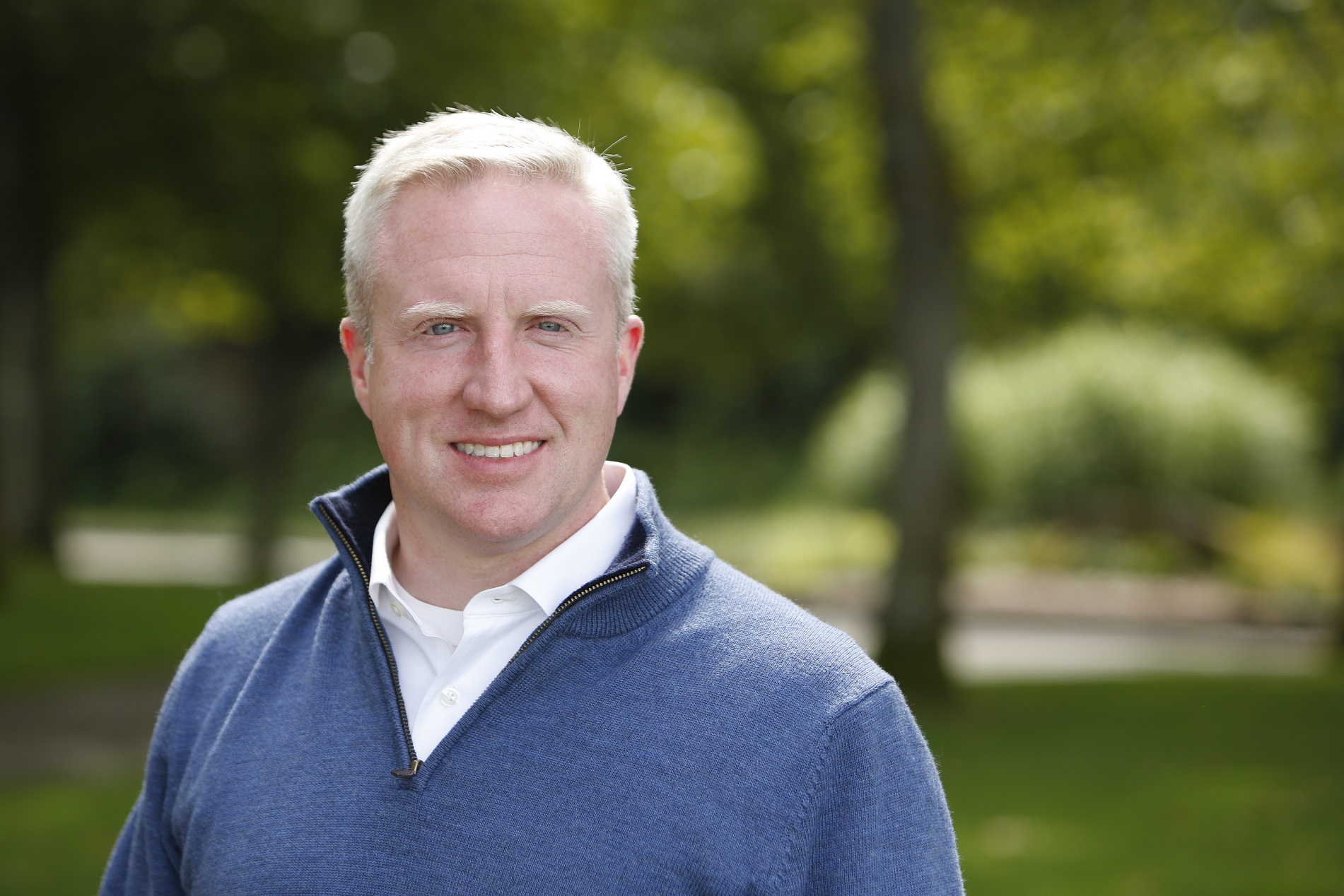
Below are the questions and responses sent to Robert Thoms candidate for Tacoma City Council Position 2, formally held by Washington State Legislator Jake Fey. Robert Thoms was appointed to this seat nearly a year ago and is running for this position as well. The questions being asked to city council candidates this year from the Tacoma Sun are very specific and address such issues as parking, feather sign regulation/ban, and the barriers to the efforts rebuilding Tacoma. Patricia Lacy Davis is running against Thoms for the seat and gave her responses to the same questions here.
1) What education and experience do you have to qualify to be a member of the Tacoma City Council? What books have you read that you believe that would give you insights as to how to be an effective councilmember?
Answer:
My education has centered around public policy and leadership, as well as around my experiences as Commander in the U.S. Navy. I attended the Department of Defense Informational School and National Defense University Joint Professional Military Education (JPME) program for officers. I also have a Bachelor of Arts in Political Science from State University of New York. I am completing my Master’s in Organizational Leadership from Gonzaga University.
My greatest education, though, has been decades of experience working around public policy and as a Navy Officer. Between 2000 and 2007, I worked as statewide Deputy Director for Senator Maria Cantwell. I was proud to open up Tacoma’s first Senate office in over 30 years to handle the specific opportunities of Tacoma businesses and constituents and to help advance Tacoma’s causes on the state and federal level. In Senator Cantwell’s office, I championed a number of successful efforts: making ASACRO take responsibility for clear-up efforts for its pollutive smelter in North Tacoma, opening the Crystal Judson Family Justice Center, and funding the “D” Street Overpass helping to open up commerce and waterfront access as well as protecting the Dome District. I understand how to develop public policy partnerships with the participation of leaders as the local, state, and federal levels. Moreover, I’ve built important relationships with public policy leaders that I am happy to leverage for Tacoma’s future.
As for books: Aftershock, The Next Economy & America’s Future, both by Robert Reich, Steven Covey’s Seven Habits of Highly Effective People (always use as a reference), and Freakonomics. Now reading Jane Jacobs’ classic, The Death and Life of Great American Cities, and many cool Star Wars books each night with my 1st grader. These books – (well, maybe not the Star Wars) – all represent my passions. I like to understand the methods and thoughts of successful leadership, and apply it using my experience, and a creative, collaborative, and thoughtful approach to policymaking. It’s what I’ve been doing for decades in public service. I am proud of the results, and look forward to continuing my work during this critical period for Tacoma’s future.
2) Growth management:
Question: Over the last 30 years, Pierce County has been known for suburban sprawl which has caused the loss of farmland, pollution, traffic congestion and disinvestment in Tacoma. During the last 10 years, Tacoma has grown less than 5000 residents while Spokane grew by 13,000 and Pierce County grew by 95,000. If you are elected, would you work to add more density to the City of Tacoma? How would your plan, if any, be different from what is in place now?
Answer:
Density is key. We have, over the last handful of years, increased the opportunities to create density in the downtown core and mixed-use centers. These are decent fist steps; however, in order to truly get the density and amenities necessary to grow I believe we need to support a better economic policies in Tacoma. I will fight hard to get the type of amenities Tacoma deserves. We need to break through the current cycle where our resident have to drive 30 minutes north to shop and spend money because we don’t have the necessary amenities locally. This is often approached as a “chicken and egg problem”: do you build the retail or the density first? I don’t believe this is an either/or proposition. Having the right amenities is important not only to drive density but also vital to job growth, especially in our state and within the high tech and advanced manufacturing sectors. This exact point was recently made on NRP regarding how Google decided to expand its Washington State footprint. http://kuow.org/post/google-breaks-ground-kirkland-expansion. We can’t reply on corporations to provide their own amenities when considering Downtown Tacoma; we have to build our own vibrancy.
.
As a Tacoma City Councilman, I will fight to assure we have contiguous blocks of development: whether it be retail (anchor tenants being ideal) or housing and businesses and great food options. I will continue to develop policies that incentivize institutional investment in Downtown Tacoma. For instance, the city must keep up with the growth of UWT and partner with them. My goal is to double the enrollment of UWT within the decade. There are many tools we can use: including empowerment zones, hub zones, tax-increment financing, and LIDs as just a start, but, I bring experience in doing this exact reinvestment into a downtown. I ran Senator Cantwell’s office in Spokane from 2000-2003 when River Park Square was conceived, developed and the vision of a vibrant downtown came to fruition. I know it can be done, but it takes leadership, investment and a commitment to results and, as your Councilman, I am already leading across all these fronts. It’s important to build density, but it’s equally important to realize that vibrant communities entail more than building extra housing units. Tacoma is in a unique position because we have a good manufacturing base to hold onto remaining opportunities in the manufacturing-based economy. We must strive more to take advantage of America’s consumer-based economy; in many ways, we are only at the ground floor of taking advantage of Tacoma’s economic opportunities.
.
In my few months on the Council, I have already put these plans into action. I helped spearhead Tacoma’s first-ever Transportation Master Plan, and corresponding Transportation Commission, which will help to develop a long-term strategy for Tacoma’s roads, buses, bikes, and rail. I have worked with UWT to develop an Entrepreneurial Incubator for Veterans, a program that allows those participating to take products to market versus standard course work, a true economy building opportunity. This can be partnered with the FabLab to literally take a concept, to product manufacture to marketplace all within a few blocks in Downtown Tacoma. Currently, UWT has great ability to expand in the enrollment of those using the most robust GI Bill in our nation’s history, the Post-9/11 GI Bill. We could expand threefold the number of students coming from JBLM alone to UWT and our regional educational institutions. These are good first steps, many of them creating important tools by which we can grow Downtown infrastructure, business, and amenities. I will continue to build public policies and partnerships to drive this progress.
.
Finally, we should sustain partnerships with our existing downtown businesses. Not only am I willing to listen, I’m willing to do the hard, practical work necessary to make this happen. I was a leader on the City’s first ever Locality Preference passed by the Council earlier this year to help articulate our intent to support our local businesses. The State has made it hard for us to provide a preference, so I pushed through ordinance 28140 on March 26th this year, to create locality and sustainability factors in the evaluation and award of City contracts. The ordinance can be viewed at http://cms.cityoftacoma.org/cityclerk/Files/CityCouncil/RecentLegislation/2013/RL20130326.pdf.
A big part of working with local business is just getting the job done. I’ve also rolled up my sleeves and helped install a sidewalk cafe at Amocat after helping them with permitting issues. I’ve personally gone to bat over licensing and permitting challenges for our small businesses. I will continue championing local businesses, as we expand our amenities to create a vibrant, populous Downtown.
3) “Feather Sign” Regulation
Question: The Tacoma City Council recently passed an ordinance to ban feather signs in some parts of Tacoma. Some businesses such as Brown and Haley use feather signs and believe they increase sales. The city of Tacoma has purportedly held off on enforcing the feather sign law until some revisions or a repeal is considered. If elected Tacoma City Council, what regulation, if any would you support concerning feather signs in Tacoma. What areas, if any, should they be banned in?
.
Answer: If certain districts want to have limits on feather signs, I’m open to that, as my job is to represent the interest of my constituents as Councilman. However, I oppose a blanket ban, as I have not been convinced an outright ban is supported by businesses or citizens. I met with several businesses – including Brown and Haley and other downtown merchants – who had already invested in feather signs. I do not believe we need a citywide ban, especially with so many having already invested in such signs.
.
On a related note, I am pleased we are having a good discussion on signage. Having the new signs promoting our waterfront have been a welcomed addition and worth celebrating.
4) Parking Management
Question: Because of varied demand, Seattle has 9 different priced parking zones with based on demand. Olympia maintains 4 different priced zones. Portland 4. Even Spokane has two different rates for parking. Yet the City of Tacoma continues to charge the same rate for parking despite wildly different demand for parking in downtown Tacoma. Failing to vary rates on demand has resulted in large parking vacancy almost void of vehicles (such as on S. 7th by Puget Sound Pizza) and other areas which a parking space can rarely be found (such as in front of the UWT on Pacific Ave) What efforts would you support, if any, to have the City of Tacoma vary rates in downtown Tacoma to more closely track demand in that area?
.
Answer:
I have traveled all over the world and lived in numerous states during my time in the Navy and I know these are many different ways to address such issues. It’s my experience that having different inter-city parking rates is sound policy. The parking discussion in the City of Tacoma is still at the infancy stage in my opinion, but it is an important discussion. I worked hard to create the first-ever Transportation Master Plan, ensuring that parking must be a major component of this plan. Earlier this year, we set aside $500,000 to create this plan in partnership with the Transportation Commission to build upon the work done to date on this issue. We need to have a realistic discussion about how to practically implement paid parking, ensure off-street parking, and forge a path for future growth in parking needs as Downtown grows. Parking was a critical component in landing State Farm in Tacoma, and we can’t always try and cobble together parking needs at the last moment. To attract additional investment and confidence in Tacoma, we must have a plan that can provide the right parking regime. Our neighborhoods are also in need of parking support, so revisiting permit parking, etc., should be a part of this discussion moving forward. We can get it right, and our Master Plan will ensure a pragmatic approach where we recognize one size does not always fit all.
.
5) Rebuilding Tacoma
.
Question: Despite the progress made, Tacoma still has a large number of vacant lots, and empty and blighted buildings relative to other west coast cities. In fact at least two new surface level parking lots have been created downtown in the last couple of years (the Sauro site and the site where the Luzon building was). What role can you and the City of Tacoma take, if you are elected, to support the rebuilding of downtown Tacoma and Tacoma’s mixed use centers?
Answer: If I’d been on the City Council, I would have opposed the Sauro development. The failure to save the Luzon building, and adequately develop that spot, is a failure of leadership and vision for Tacoma in my opinion.
.
While I’m on the Council, I am going to have a plan that goes block-by-block to create development opportunities to increase density, increase jobs, and increase the amenities that Tacomans deserve. I will settle for nothing less than ensuring we don’t have vacant “holes” throughout our city that create a ‘Jack-O-Lantern effect.’ We, as a City, have done well with mixed-use centers in neighborhoods, but we’ve lagged behind with our vision and execution Downtown. Because I represent Downtown and believe Downtown has the capacity to be developed, I will continue to search for every policy tool, partnership opportunity, to promote investment in our urban core. I look forward to learning from the many great urbanists who call Tacoma home, so we can all lean our shoulders in toward shared goals to ensure progress and success. I have already begun to partner with our neighborhood councils to convene meetings, like the one I called on July 10th to address concerns for a strategy to address crosswalks.
6) What specific policy would you seek to have passed in the City of Tacoma, if any, if elected to the city council?
.
Answer: Although I have only been serving on the City Council since January, I have already worked hard to have the city focus on several public policies that I’m very proud of.
.
Uniform school zones – I have heard a lot of concern about public safety, especially as it relates to assuring that Tacoma is a comfortable, walkable city. This legislation will assure that speed zones near Tacoma’s schools are reasonable and consistent.
.
Transportation Master Plan – I expressed concern in my first week on Council about Tacoma’s ability to plan its transportation future long-term. The Transportation Master Plan is an important tool in our policy toolkit. It helps to develop long-term plans, with the input of a Transportation Commission, for Tacoma’s multimodal transit concerns – from sidewalks and parking, to buses, rail, and even Amtrak. This sort of long-term planning is critical to making sure Tacoma has the amenities it needs to grow and prosper. We invested $500,000 to ensure we have Tacoma specific control and coordination of transportation work in our City, never again will Amtrak, Sound Transit, BNSF etc. perform projects in our City that are not dovetailed into our master plan so we leverage such investments and ensure they meet our local transportation needs, that is just as important, if not more, than any regional need.
Fiscal Sustainability Commission – The Fiscal Sustainability Task Force provides a mechanism for members of the Government Performance and Finance Committee, along with private and public sector partners, non-profit interests and labor partners, to closely examine the City’s revenue structure and budget challenges.
.
“Local preference” provision – I worked on this issue for many years with leaders like Al Lynden and Chuck Heller and on March 26th 28140 on March 26th this year, to create locality and sustainability factors in the evaluation and award of City contracts. http://cms.cityoftacoma.org/cityclerk/Files/CityCouncil/RecentLegislation/2013/RL20130326.pdf. This is the sort of simple incentive that encourages economic growth and development in Tacoma.
I’ve worked with the UWT to create the first-ever Veteran’s Entrepreneurial Program. This program is the first in the nation of its kind, and its firs. It allows veterans and service members to use their GI Bill toward the creation of business plans and products. I will work on policies that try to expand, from 11% to as much as 50%, the use of the GI Bill at our local universities. There is no reason why our universities in Pierce County should not be the universities of first choice to the service members and veterans of JBLM. This is the sort of community engagement that will help expand UWT, a critical asset for Downtown Tacoma.
.
Of course, there’s a lot more work to be done. Just to give one example, I’d like to make a run at addressing the Harbor Maintenance Tax that the Port of Tacoma pays for dredging needs we don’t need because we are a deep water port. This is a federally mandated tax that is harming our Ports in the Northwest. I want to partner with our federal delegation to ensure we address this competitive advantage it has given Canadian ports over their American competitors. This would be achieved by imposing the equivalent of the Harbor Maintenance Tax on international cargo passing from Canada across the U.S. border. Overseas cargo headed for the United States by railroad or highway would pay its fair share; Vancouver and Prince Rupert would thus lose the artificial benefit they get from the Harbor Maintenance Tax. This challenge represents tens of millions of dollars of potential additional revenue for the Port. This money could be used by the Port to go toward local needs like road and infrastructure, such as improving Port of Tacoma Road.
.
To put it briefly, there are a lot of steps Tacoma can take to better-use its resources and assets, and to plan strategically for the future. I’ve lived all around the world, and I chose Tacoma as my home, and the place to raise my family. It’s the most important decision I’ve ever made. I made it for a reason. I’m deeply invested in Tacoma, and passionate about finding ways for Tacoma to make lasting investments in itself. Please join me in making Tacoma better.
7) What policy decision, if any, has the Tacoma City Council taken in the last 10 years do you disagree with? How would you have handled the issue differently if at all?
.
Answer: There are certainly decisions I would have made differently. I would have liked to see the City, in concert with the County, ensure the Luzon didn’t fall down and, if that could not be avoided, that we lead in a solution to ensure something took its place.
I also am a firm believer in monitoring projects within my district. While I’m on City Council, I will assure District 2 that any project near the size and scope of a Wal-Mart will not take shape without Council awareness and oversight. I plan to be laser-focused on partnering with those seeking to live, work, and do business in Tacoma. I will seek to assure that the Council keeps its ear to the ground more than ever before.
To that end, I encourage anyone with questions, comments, or concerns to email me at info@votethoms.org. Thank you all for the great conversations and the chance of serve.
– Councilman Robert Thoms
__________________
More more information on Robert’s campaign, see his campaign page.
Previously posted : Patricia Lecy-Davis gives her response to the same questions via the Tacoma Sun.

 The Tacoma Sun